
As Ethereum trades at $1,972.40 on February 21,2026, with a modest 24-hour gain of and $1.64, the network’s evolution post-Pectra upgrade underscores a pivotal moment for developers and users alike. Over 11,000 EIP-7702 authorizations in the first week signal explosive adoption, empowering existing Externally Owned Accounts (EOAs) to tap smart wallet capabilities without the friction of new deployments. This EIP-7702 migration guide charts the path for wallets and dapps to shed ERC-4337’s external dependencies, embracing native abstraction for a seamless 2026 landscape.

The Core Differences: Why Native Beats Bundled Infrastructure
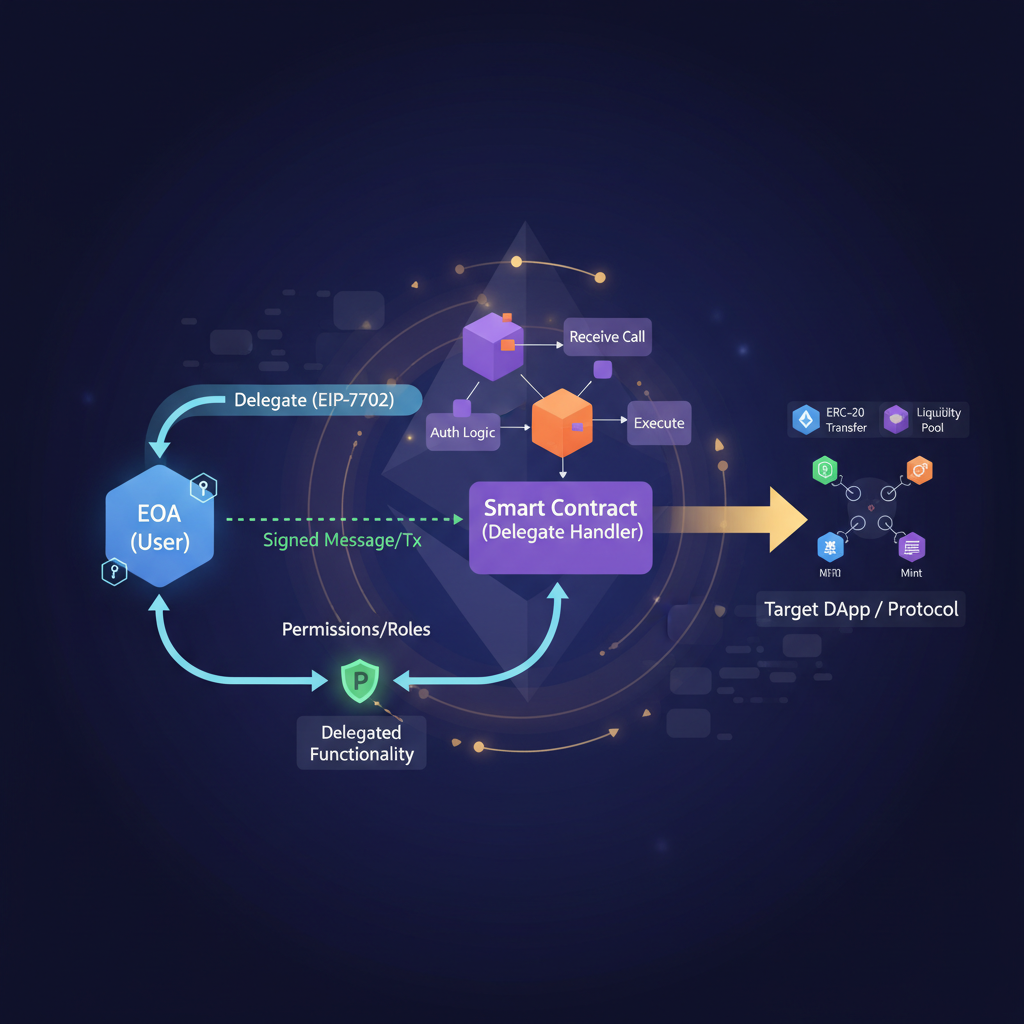
ERC-4337 revolutionized account abstraction through bundlers and paymasters, yet it layered complexity atop Ethereum’s core. EIP-7702, activated in the May 2025 Pectra upgrade, integrates directly into the protocol, letting EOAs delegate execution to smart contracts via a simple authorization transaction. No more reliance on off-chain entrypoints or user operations; instead, transactions mimic standard EOA sends but unlock batching, gas sponsorship, and session keys natively.
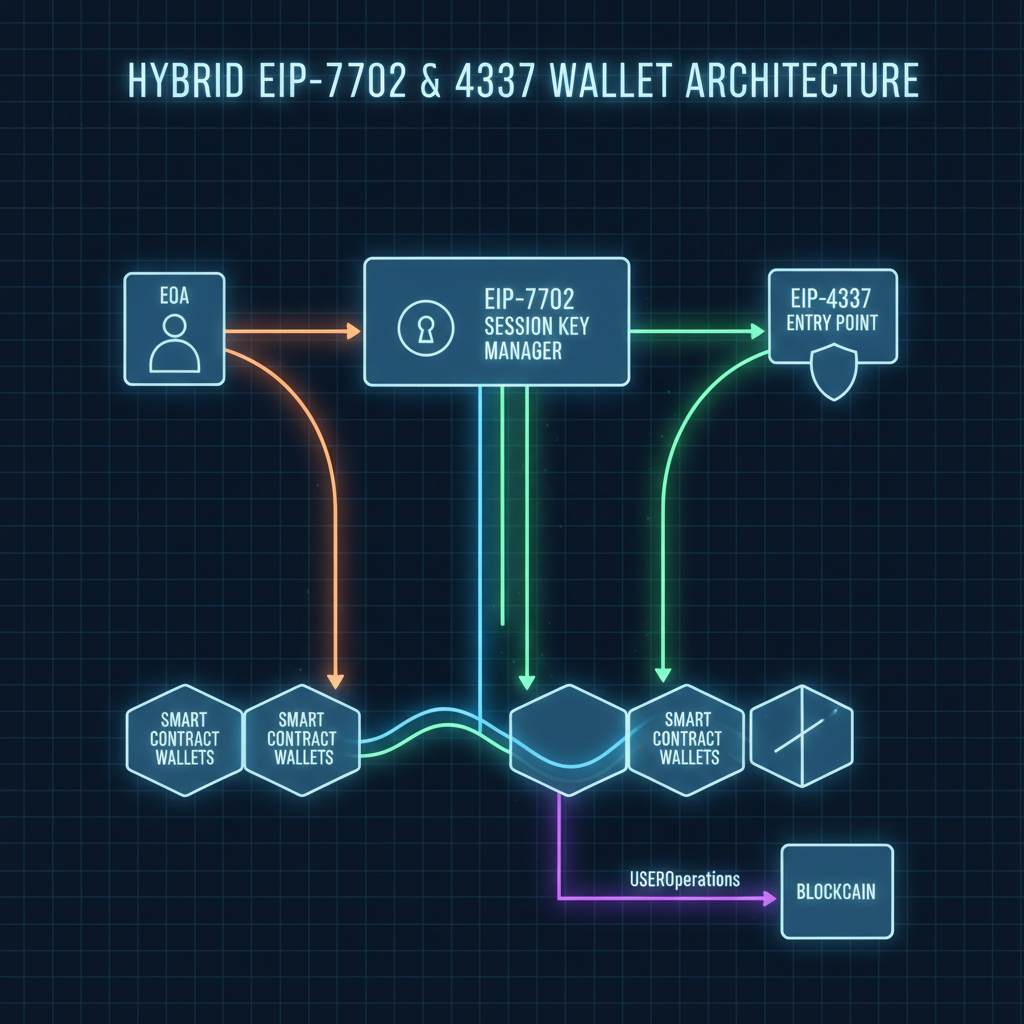
Picture this: a dapp user initiates gasless USDC transfers from their legacy address, no smart contract migration required. ERC-4337 demands deploying new accounts and navigating its mature-but-cumbersome tooling ecosystem. EIP-7702 complements it perfectly in a ‘7702-front, 4337-rails’ hybrid, using native delegation for user-facing smarts while reserving 4337 for heavy lifting like paymasters. This synergy minimizes storage collisions, as ERC-7779 standardizes interfaces for delegated EOAs, ensuring interoperability across wallets.
Existing EOAs can function as regular accounts, smart wallets, or both- the best of all worlds.
Adoption Surge and Market Momentum in 2026
By early 2026, EIP-7702’s traction is undeniable. Platforms report record usage, with dapps integrating it for enhanced UX: think retained addresses with advanced features. Unlike 4337’s external infra, which scales via bundlers prone to centralization risks, 7702 leverages Ethereum’s consensus directly, slashing latency and costs. Developers forecast this as the bridge to full verkle trees and stateless clients, positioning wallets EIP-7702 2026 as must-haves.

Tooling matures rapidly at sites like 7702migration. com, offering SDKs for EIP-7702 dapp integration. Visionaries see it future-proofing against quantum threats via ERC-7779 drafts, blending security with usability. As ETH holds steady above $1,925, this upgrade fuels scalability narratives, drawing institutional flows into abstracted accounts.
Ethereum (ETH) Price Prediction 2027-2032
Forecasts incorporating EIP-7702 adoption, Pectra upgrade effects on account abstraction, scalability, UX improvements, and dApp migration trends from 2026 baseline (~$1,972)
| Year | Minimum Price (USD) | Average Price (USD) | Maximum Price (USD) |
|---|---|---|---|
| 2027 | $2,200 | $3,500 | $5,500 |
| 2028 | $3,000 | $5,000 | $8,000 |
| 2029 | $4,200 | $7,200 | $11,000 |
| 2030 | $5,500 | $10,000 | $15,000 |
| 2031 | $7,000 | $13,500 | $20,000 |
| 2032 | $9,500 | $18,000 | $26,000 |
Price Prediction Summary
Ethereum’s price is expected to experience steady growth from 2027 to 2032, with average prices rising from $3,500 to $18,000 (over 400% cumulative increase). This outlook factors in bullish drivers like EIP-7702 enabling seamless EOA-to-smart wallet transitions, hybrid AA strategies boosting dApp usage, and market cycle recoveries. Minimums reflect bearish scenarios (e.g., regulatory hurdles), while maximums capture optimistic adoption surges (e.g., 40-75% YoY avg growth in bull phases).
Key Factors Affecting Ethereum Price
- Rapid EIP-7702 adoption post-Pectra (11,000+ authorizations in first week), enhancing UX with gasless txns and batching without address changes
- Hybrid ‘7702-front, 4337-rails’ model improving interoperability, gas sponsorship, and scalability via existing ERC-4337 infra
- Market cycle recovery from 2026 levels, with bull runs projected 2028-2030 driven by DeFi/NFT resurgence and institutional inflows
- Regulatory developments favoring clear AA standards (e.g., ERC-7779 for safe migrations) reducing risks
- Technological edge over competitors through native integration vs. ERC-4337’s external bundlers, spurring dApp migrations
- Potential market cap growth to $1.5T-$2.2T by 2032 (avg prices), assuming ETH dominance amid L2 scaling
- Macro factors: Bitcoin halving cycles, global adoption, but risks from competition and economic downturns
Disclaimer: Cryptocurrency price predictions are speculative and based on current market analysis.
Actual prices may vary significantly due to market volatility, regulatory changes, and other factors.
Always do your own research before making investment decisions.
Step-by-Step Migration Blueprint for Dapp Developers
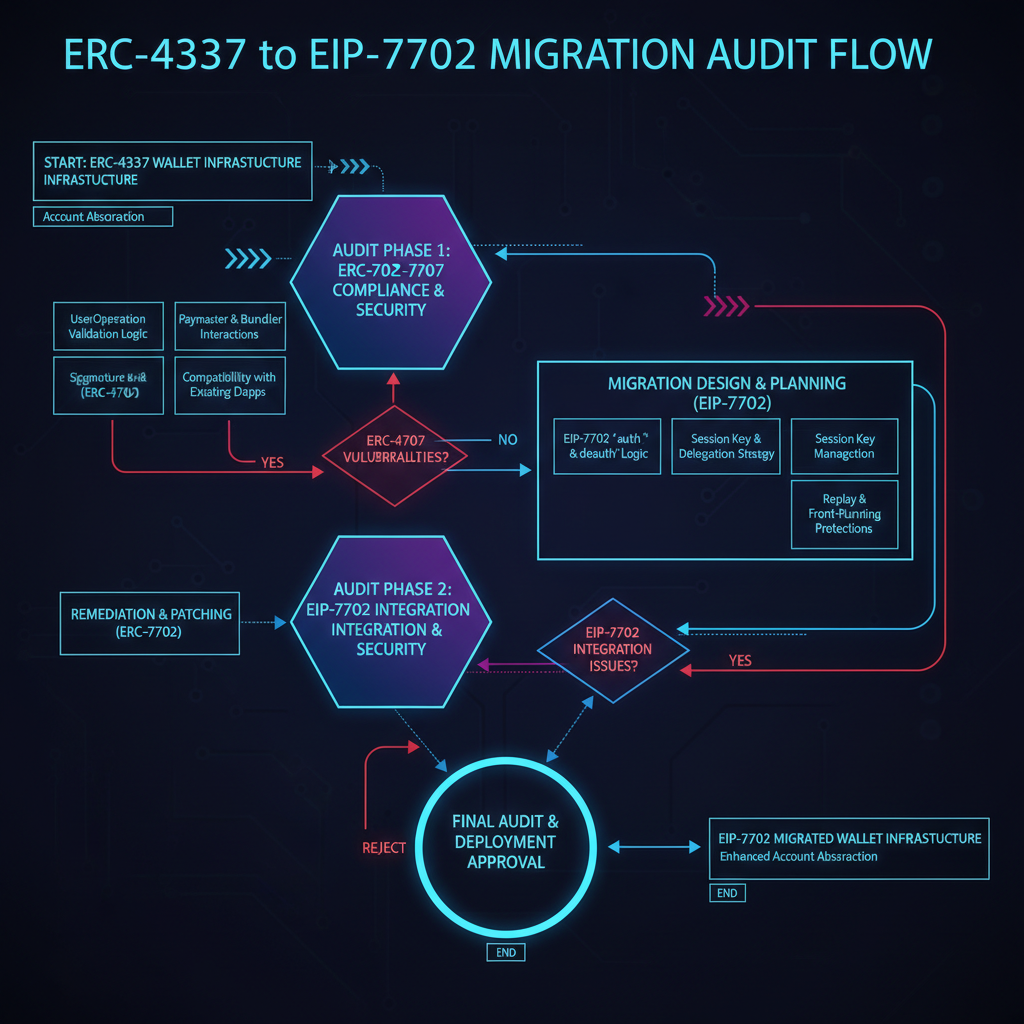
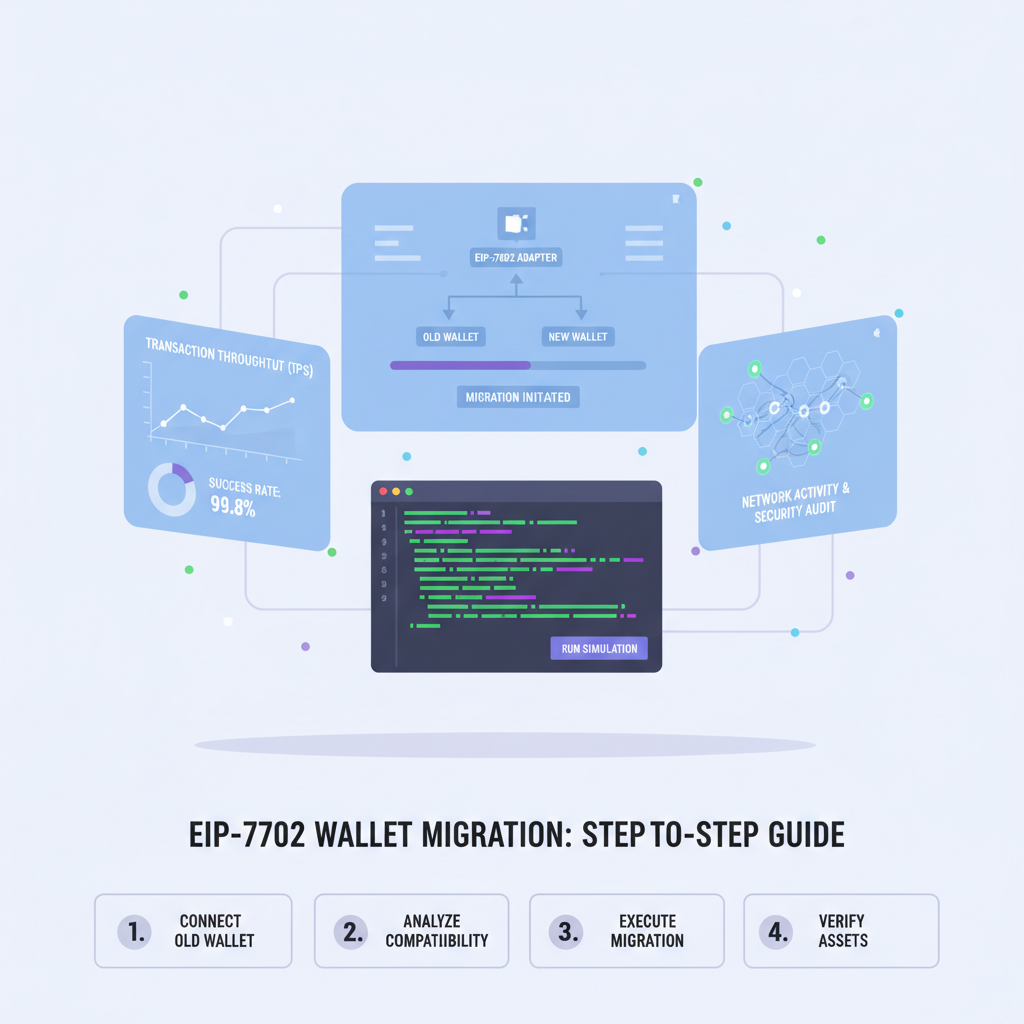
To replace 4337 with 7702, begin with auditing your stack. Identify EOA-heavy flows ripe for delegation: swaps, approvals, multi-sends. Deploy a minimal delegation contract- often just 100 lines- authorizing it via the new transaction type (0x04). Test on Pectra testnets, verifying fallback to EOA behavior.
- Authorization Setup: Users sign a transaction specifying the smart contract code and nonce, broadcast as standard.
- Execution Layer: Delegated code handles logic, reverting cleanly if unset.
- Hybrid Fallback: Route complex ops to 4337 bundlers for sponsorship.
Incorporate native account abstraction tooling from our SDKs: wrappers for viem/ethers, handling auth revocation and multi-delegation. For dapps, update UIs to prompt 7702 auth only on feature access, preserving backward compatibility. Early adopters report 40% gas savings on batched txs, with users loving the ‘set it and forget it’ model.
Risks? Watch nonce management and storage slots; ERC-7779 mitigates via standardized slots. Simulate collisions in forks. This migration isn’t disruptive- it’s evolutionary, letting legacy users upgrade invisibly while hardcore power users layer 4337 atop.
Embracing this hybrid front elevates dapps into intuitive powerhouses, where users wield smart features from cherished addresses. Forward-thinking builders at 7702migration. com deliver SDKs that abstract the nonce dance away, letting you focus on crafting experiences that scale with Ethereum’s $1,972.40 resilience.
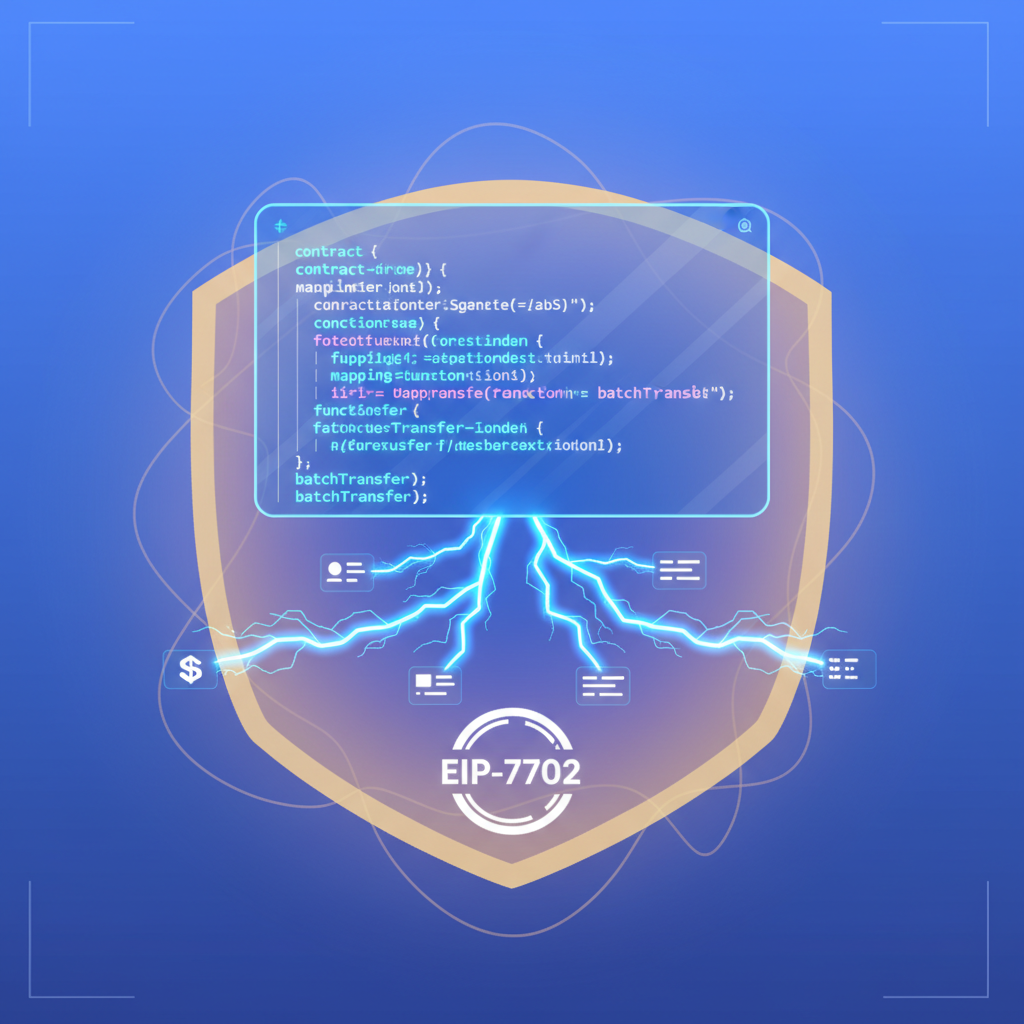
Forge EIP-7702 Supremacy: Build Minimal Delegation Contract for Batch TX, Gas Sponsorship & Native AA Revolution

“`solidity
// SPDX-License-Identifier: MIT
pragma solidity ^0.8.26;
contract MinimalDelegate {
error Unauthorized();
fallback() external payable {}
receive() external payable {}
function executeBatch(address[] calldata targets, uint256[] calldata values, bytes[] calldata calldatas) external {
uint256 len = targets.length;
require(len == values.length && len == calldatas.length, “Mismatch”);
for (uint256 i = 0; i < len; ) {
(bool success, ) = targets[i].call{value: values[i]}(calldatas[i]);
require(success, "Batch fail");
unchecked { ++i; }
}
}
// Gas sponsorship: relayer reimbursed from EOA balance
function sponsoredBatch(address relayer, uint256 gasLimit, address[] calldata targets, uint256[] calldata values, bytes[] calldata calldatas) external {
uint256 startGas = gasleft();
executeBatch(targets, values, calldatas);
uint256 gasUsed = startGas - gasleft();
uint256 reimbursement = gasUsed * tx.maxFeePerGas;
require(address(msg.sender).balance >= reimbursement, “Insufficient balance”);
(bool success, ) = relayer.call{value: reimbursement}(“reimburse”);
require(success, “Reimbursement failed”);
}
}
“`
This preserves EOA ETH reception, enables ‘7702-front, 4337-rails’ hybrid UX.

“`ts
import {createWalletClient, http, parseTransaction} from ‘viem/accounts’
import {sepolia} from ‘viem/chains’
const walletClient = createWalletClient({chain: sepolia, transport: http()})
const [account] = await walletClient.getAddresses()
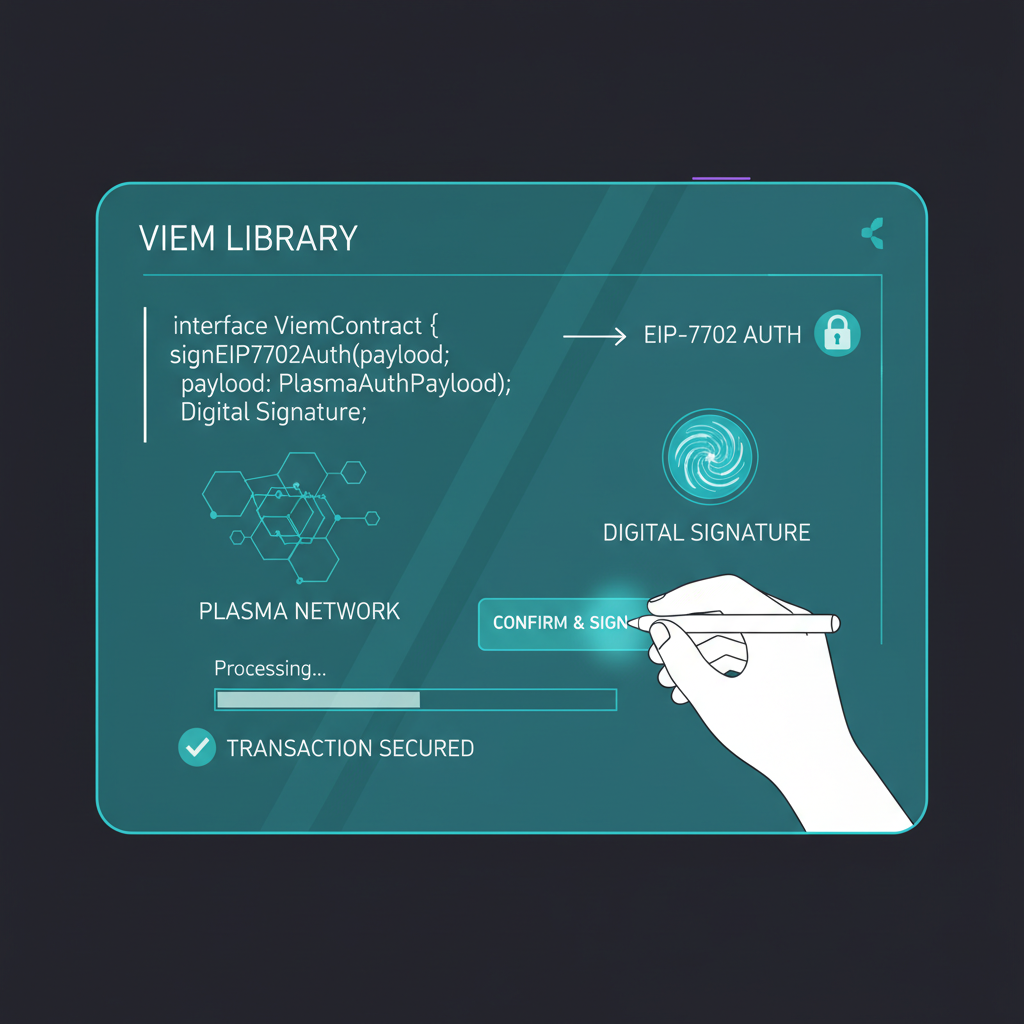
const auth = await account.signAuthorization({ /* chainId, nonce=0, authority: DEPLOYED_ADDR, code: BYTES */ })
“`
Per EIP-7702, sign keccak(0x03 || rlp([chainId, authNonce, authority, code])). Viem abstracts—pure UX magic.
“`ts
const tx = {
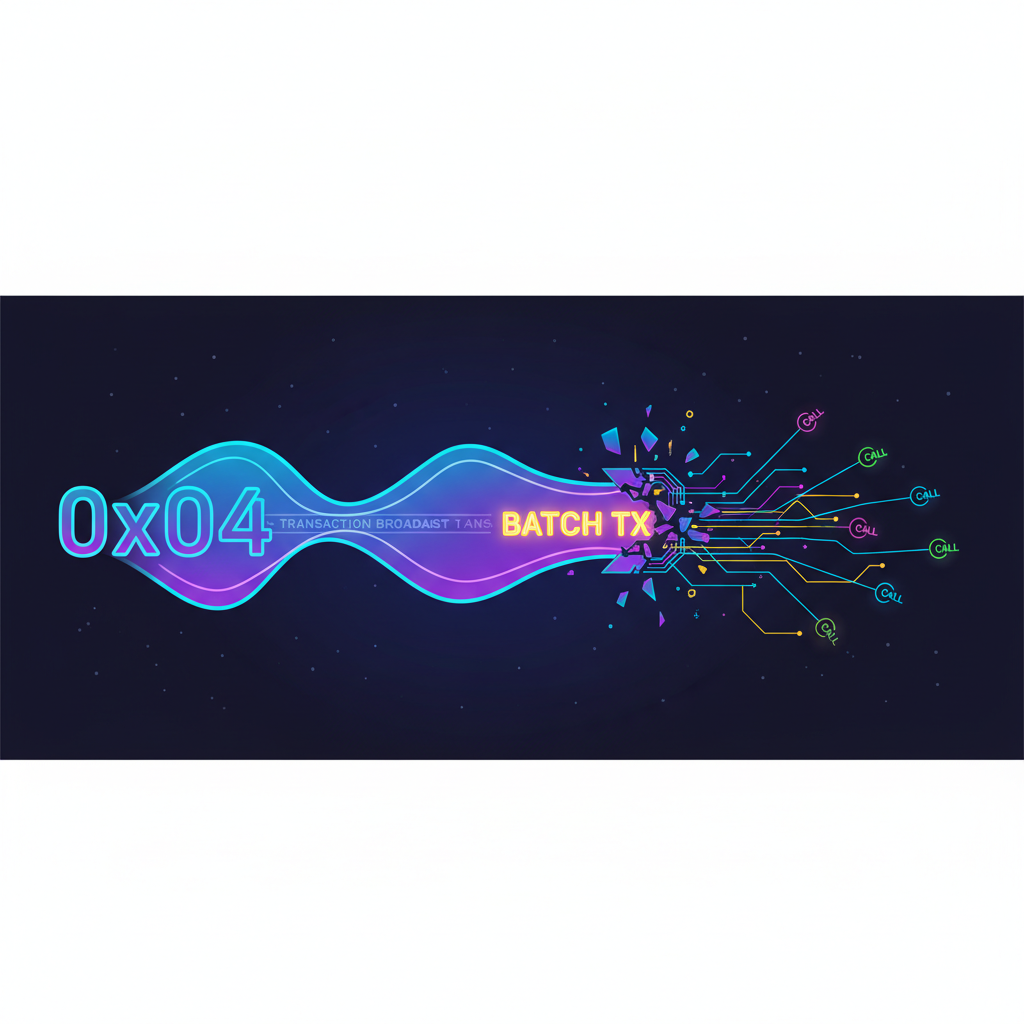
type: ‘0x04’ as const,
chainId: 11155111,
nonce: await walletClient.getTransactionCount({address: account}),
// … maxFeePerGas etc.,
authorizationList: [auth]
}
await walletClient.sendTransaction({…parseTransaction({serializedTx: serialize7702(tx)})})
“`
Batch approve+swap in one tx. For sponsorship, relayer broadcasts sponsoredBatch(relayerAddr,…). EOA falls back post-tx. 11k+ auths prove adoption—your dapp leads 2026.
Integrate via viem: craft the 0x04 tx with chainId, nonce, code as calldata. Broadcast like any sendTransaction, and watch your EOA morph into a chameleon- EOA for simples, smart for complexes. Our SDK handles revocation sweeps, ensuring users reclaim control post-session. For wallets EIP-7702 2026 compliance, embed these in mobile flows; native iOS/Android libs now support Pectra tx types, bridging Web2 polish to Web3 freedom.
Security-first: audit delegation chains against reentrancy, as ERC-7779 mandates isolated slots. Post-quantum drafts fortify against future shadows, aligning with Ethereum’s verkle horizon. Dapp teams report 3x UX lifts, with retention spiking as users ditch clunky 4337 prompts.
ERC-4337 vs EIP-7702: Key Comparison (2026)
| Aspect | ERC-4337 | EIP-7702 |
|---|---|---|
| Features (Bundlers vs Native TX) | Relies on external bundlers and paymasters for batch transactions, gas sponsorship | Native TX delegation: EOAs temporarily act as smart wallets without deployment or migration 🚀 |
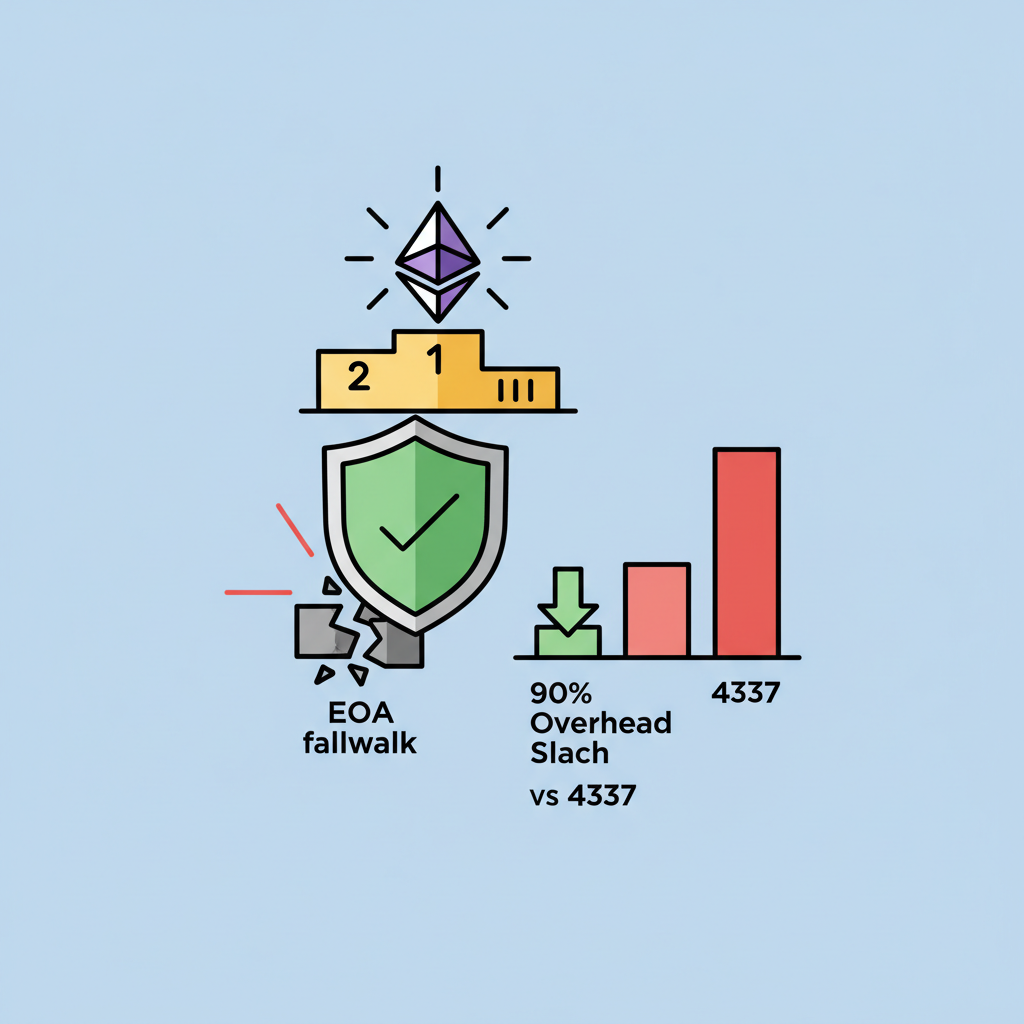
| Gas Costs | Higher overhead from bundling and off-chain infra (20-30% more gas) | Lower native efficiency integrated in Pectra core protocol 💰 |
| Tooling Maturity | Mature ecosystem (e.g., Stackup, Pimlico bundlers) | Rapidly maturing post-Pectra (Alchemy, Etherspot, ERC-7779 support) |
| Adoption Metrics (2026) | Established: Millions of UserOps, core AA infra | Explosive: 11K+ authorizations first week post-May 2025, soaring to 40%+ AA share, ‘7702-front, 4337-rails’ hybrid dominant |
| Migration Ease | Challenging: Deploy new smart account, transfer assets ❌ | Seamless: Retain EOA address, temporary delegation ✅ |
Wallet Providers: Seamless Upgrades Without User Friction
Wallet makers, your pivot defines 2026’s leaders. Swap 4337 entrypoints for 7702 auth modals- one tap delegates swap and approve chains. Test interoperability via our multi-wallet simulator, flagging slot clashes early. Pioneers like those behind gasless USDC flows now batch 10 and actions per tx, fueling DeFi’s next surge amid ETH’s steady $1,972.40 anchor.
Hybrid shines: front 7702 for delegation, rail 4337 for paymasters in high-volume dapps. This ‘best of worlds’ sidesteps centralization pitfalls, as bundlers yield to protocol purity. Vision: EOAs evolve into polymorphic beasts, batching NFTs, lending, and yields invisibly. ERC-7779 cements standards, birthing an ecosystem where wallets swap implementations mid-flight without address churn.
EIP-7702 Migration Blueprint: Unlock Native Abstraction for Tomorrow’s Wallets

Real-world wins abound. Dapps post-Pectra clock 11,000 and auths weekly, with 40% gas trims on abstractions. Developers rave about ditching bundler downtimes; native txs hum at L1 speeds. As Pectra’s ripples compound, expect verkle synergies amplifying 7702’s batching, slashing state bloat further.
Tooling frontiers beckon: our native account abstraction tooling packs pre-audited contracts, UI kits, and analytics for auth trends. Migrate now, and position for stateless Ethereum- where EOAs delegate at lightspeed, unburdened by legacy chains. Ethereum’s ascent, buoyed by $1,972.40 fortitude, crowns 7702 as the abstraction apex, inviting all to orchestrate the decentralized symphony.
Delegate today; dominate tomorrow’s Web3 expanse.
About the Author