
EIP-7702 migration limits to account for
EIP-7702 enables Externally Owned Accounts (EOAs) to delegate execution to smart contracts, offering a smoother path to account abstraction than ERC-4337 for existing users. However, adoption is not yet universal, and specific technical constraints apply to how authorizations are managed and executed. This guide outlines the practical limits, compatibility requirements, and tradeoffs you need to consider before integrating EIP-7702 into your application.
EIP-7702 migration choices that change the plan
Choosing between EIP-7702 and ERC-4337 depends on your existing user base and infrastructure. EIP-7702 is ideal for applications wanting to upgrade standard wallets to smart accounts without changing the user's address. ERC-4337 is better for new projects requiring complex gas sponsorship or modular validation logic that operates outside the base layer.
| Factor | What to check | Why it matters |
|---|---|---|
| Fit | Match the option to the primary use case. | A good deal still fails if it does not fit the job. |
| Condition | Verify age, wear, and service history. | Hidden condition issues erase upfront savings. |
| Cost | Compare purchase price with likely upkeep. | The cheapest option is not always the lowest-cost option. |
How to Choose Between EIP-7702 and ERC-4337
EIP-7702 and ERC-4337 both enable smart account features, but they take different paths. EIP-7702 upgrades the Ethereum protocol to let Externally Owned Accounts (EOAs) delegate execution to smart contracts. ERC-4337 operates at the application layer, using a separate transaction pool and bundler network. Your choice depends on whether you prioritize native integration or flexibility.
EIP-7702 requires users to sign a special authorization message to link their EOA to a smart contract. This works natively in wallets that support the new transaction type. ERC-4337 requires a Smart Account (AA) wallet, which is a new address entirely. If your users already hold private keys in standard EOAs, EIP-7702 offers a smoother migration path without changing addresses.
EIP-7702 transactions are processed in the main mempool, meaning they share the same gas dynamics as standard transfers. This can be cheaper during low congestion. ERC-4337 uses a separate bundler network, which adds overhead. However, ERC-4337 allows for gas sponsorship, where dApps pay for the user’s transactions. If your app plans to subsidize gas, ERC-4337’s architecture is more mature for this use case.
Both standards support batching and social recovery. EIP-7702 is limited to features that can be executed from the EOA context. ERC-4337 supports more complex logic, such as modular validation and paymasters, because it is a full smart contract standard. If you need advanced session keys or complex conditional logic, ERC-4337 provides a richer toolkit.
| Feature | EIP-7702 | ERC-4337 |
|---|---|---|
| Deployment | Protocol upgrade (Pectra) | Smart contract (no upgrade) |
| User Address | Same EOA address | |
| Gas Payment | User pays native ETH | User or Sponsor pays |
| Complex Logic | Limited to EOA context | Full smart contract flexibility |
Decision Framework
Choose EIP-7702 if you want to upgrade existing user wallets without changing their addresses or requiring new onboarding flows. It is ideal for apps that want to add smart account features to a broad, existing user base.
Choose ERC-4337 if you need complex validation logic, gas sponsorship, or want to avoid protocol-level dependencies. It is the better choice for new projects building from scratch or those requiring advanced modular features.
Watchouts for EIP-7702 Adoption
EIP-7702 changes how EOAs sign transactions by allowing them to temporarily act as smart contracts. While this simplifies account abstraction, it introduces specific risks that developers and users must understand. Misleading claims about "seamless" upgrades often hide the complexity of authorization management.
Authorization Misunderstandings
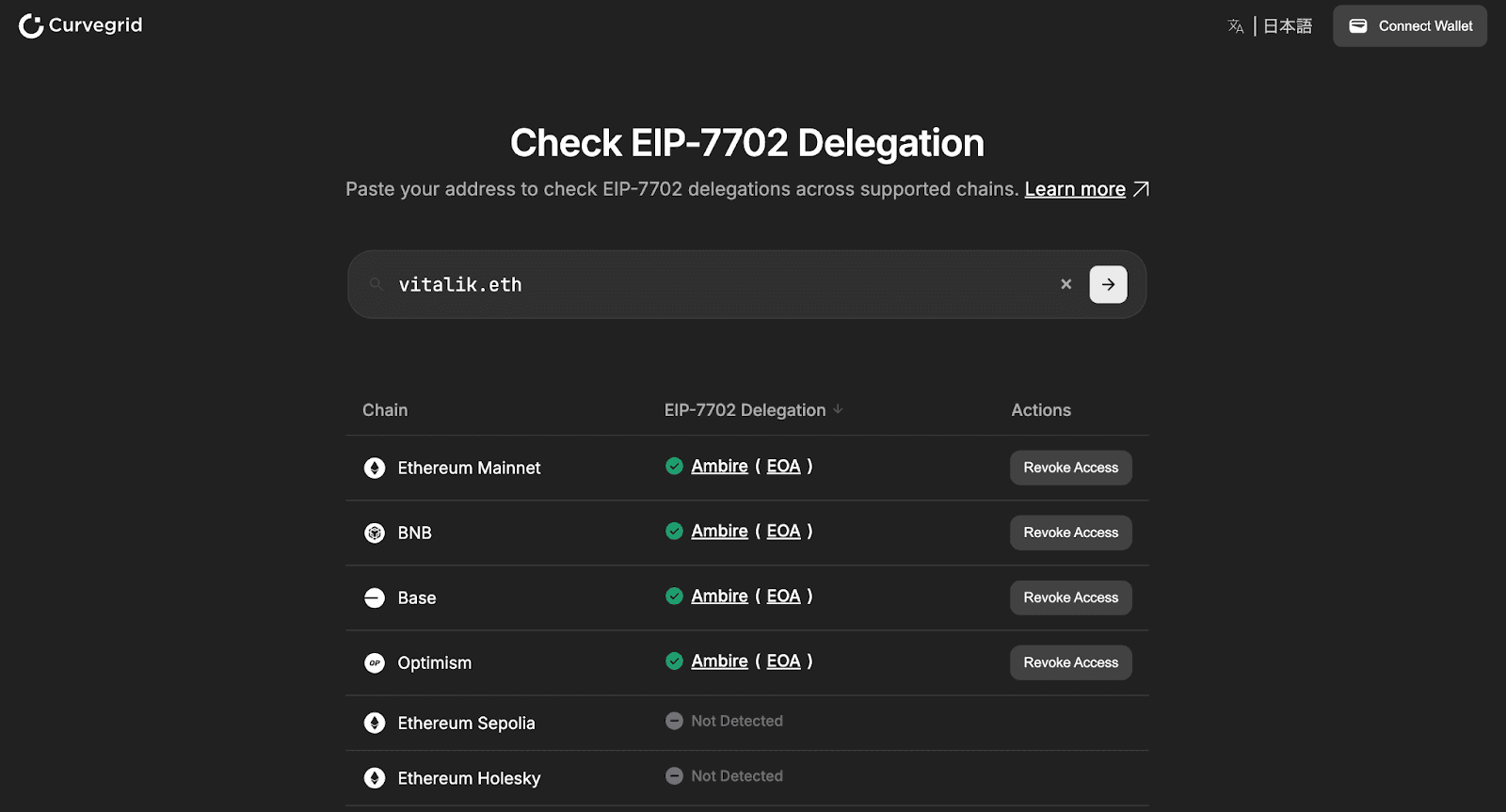
A common mistake is assuming EIP-7702 authorizations are permanent. They are not. Each authorization is a one-time delegation that expires after the first use or when explicitly revoked. If a user signs an authorization without understanding the scope, they may inadvertently grant excessive permissions to a contract. Always verify the target contract address and the specific functions being delegated.
Comparison with ERC-4337
| Feature | EIP-4337 (ERC-4337) | EIP-7702 |
|---|---|---|
| Implementation | User Operation pool (no chain upgrade) | Protocol-level change to EOA behavior |
| Address | New contract address per user | Same EOA address |
| Complexity | High (requires bundlers/paymasters) | Lower (native EOA support) |
| Adoption | Mature, widely supported | Emerging, requires wallet updates |
EIP-4337 operates outside the main execution layer, requiring bundlers to package transactions. EIP-7702 integrates directly into the EOA, making it feel like a native feature. However, EIP-7702 requires a hard fork, which can create fragmentation during the transition period.
Wallet Compatibility Risks
Not all wallets support EIP-7702 yet. Using an unsupported wallet can result in failed transactions or unexpected behavior. Check the WalletBeat EIP-7702 tracker for the latest compatibility status. Always test transactions on a testnet before deploying to mainnet to ensure your wallet correctly handles the new authorization type.
Decision Guide
Choose EIP-4337 if you need immediate, upgradeable smart account features without waiting for protocol changes. Choose EIP-7702 if you prioritize native EOA compatibility and lower transaction complexity, and are willing to wait for broader wallet support. For most new projects, EIP-4337 remains the safer, more mature choice in 2026.
EIP-7702 migration: what to check next
Before switching your workflow, it helps to clarify how the protocol upgrade actually works under the hood. EIP-7702 is now enabled by default on Ethereum mainnet, meaning the underlying infrastructure is live. However, "enabled" does not mean every wallet or dApp has updated its front-end to support the new transaction types yet.
Is EIP-7702 implemented?
Yes. The Pectra upgrade activated EIP-7702 on mainnet. You can use it immediately if your wallet supports the new transaction format. The network accepts the new Type-4 transactions, but user adoption depends on software updates from wallet providers.
What are EIP-7702 authorizations?
Authorizations are the mechanism that lets an EOA "borrow" logic from a smart contract. Instead of migrating your address, you sign a special authorization message. This record is stored on-chain, temporarily delegating execution rights to a smart account without changing your public key or address.
What is the difference between EIP 4337 and EIP-7702?
ERC-4337 is a user operation standard that runs entirely in the mempool, requiring no protocol changes. It relies on bundlers to package transactions. EIP-7702 is a protocol-level change that modifies how the Ethereum Virtual Machine processes transactions, allowing EOAs to act like smart contracts directly.
Which wallets support EIP-7702?
Support is expanding rapidly. Major players like Safe and Biconomy have integrated the standard. You can check the live compatibility list at WalletBeat to see which specific interfaces currently process 7702 transactions.
No comments yet. Be the first to share your thoughts!