

In the steady march toward a more intuitive Ethereum ecosystem, EIP-7702 emerges as a thoughtful bridge for wallet developers. This proposal allows externally owned accounts to delegate execution to smart contracts temporarily during a single transaction. No need for permanent changes or asset shuffles. Developers can now layer account abstraction tooling onto legacy wallets, blending the familiarity of EOAs with the power of smart accounts. When fused with ERC-4337 bundlers and paymasters, it paves the way for gas sponsorship and batched operations, easing the path for EIP-7702 wallet migration.
EIP-7702 Unlocks ERC-4337 for Existing Wallets
EIP-7702 introduces transaction type 0x04, letting EOAs point to a code field that executes smart logic just for that block. This conservatively enhances security; users retain control post-transaction. From Gelato's docs, it complements ERC-4337 by enabling EOAs to opt into UserOperations without full conversion. Biconomy highlights how this adds smart features to wallets seamlessly. For wallet builders, it's a narrative shift: migrate without disruption, leveraging bundlers for aggregation and paymasters for sponsorship.
EIP-7702: Seamlessly Transforming EOAs into Smart Wallets with ERC-4337 Bundlers
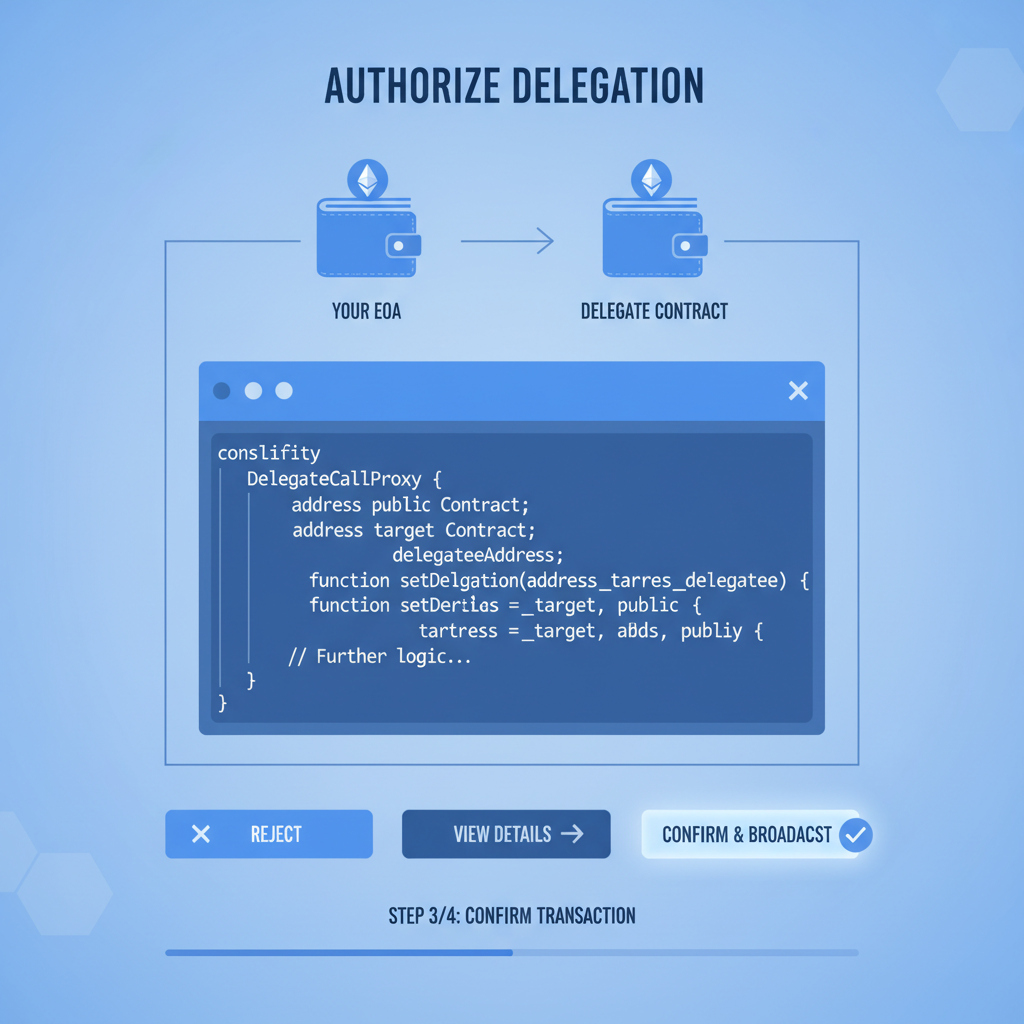

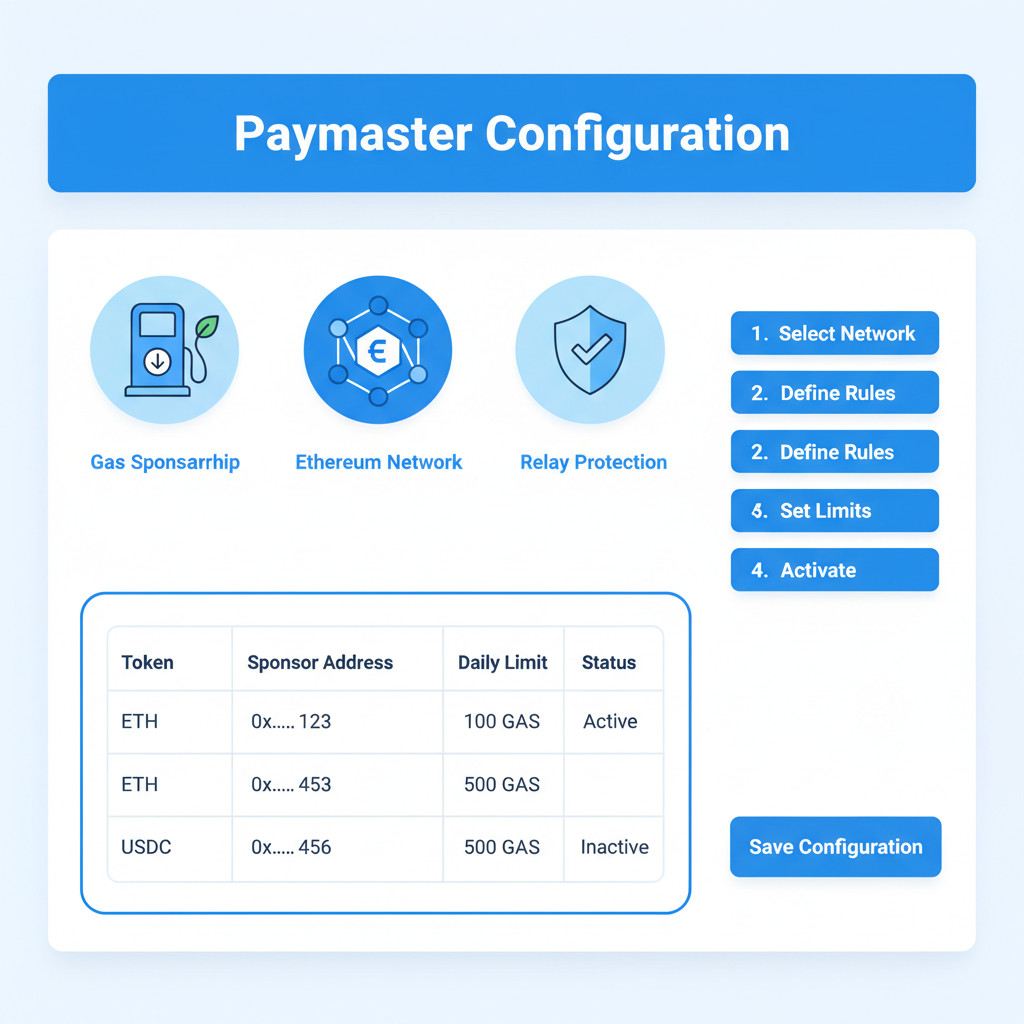
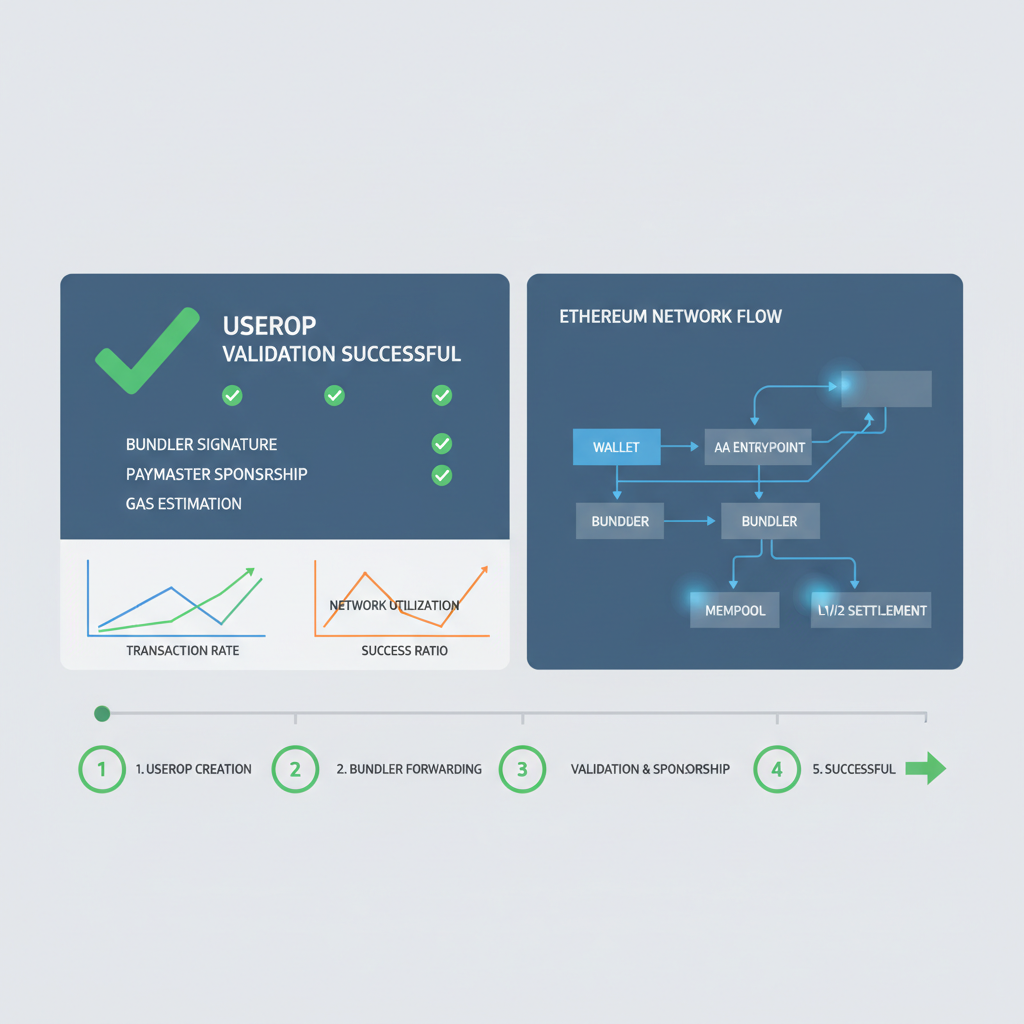
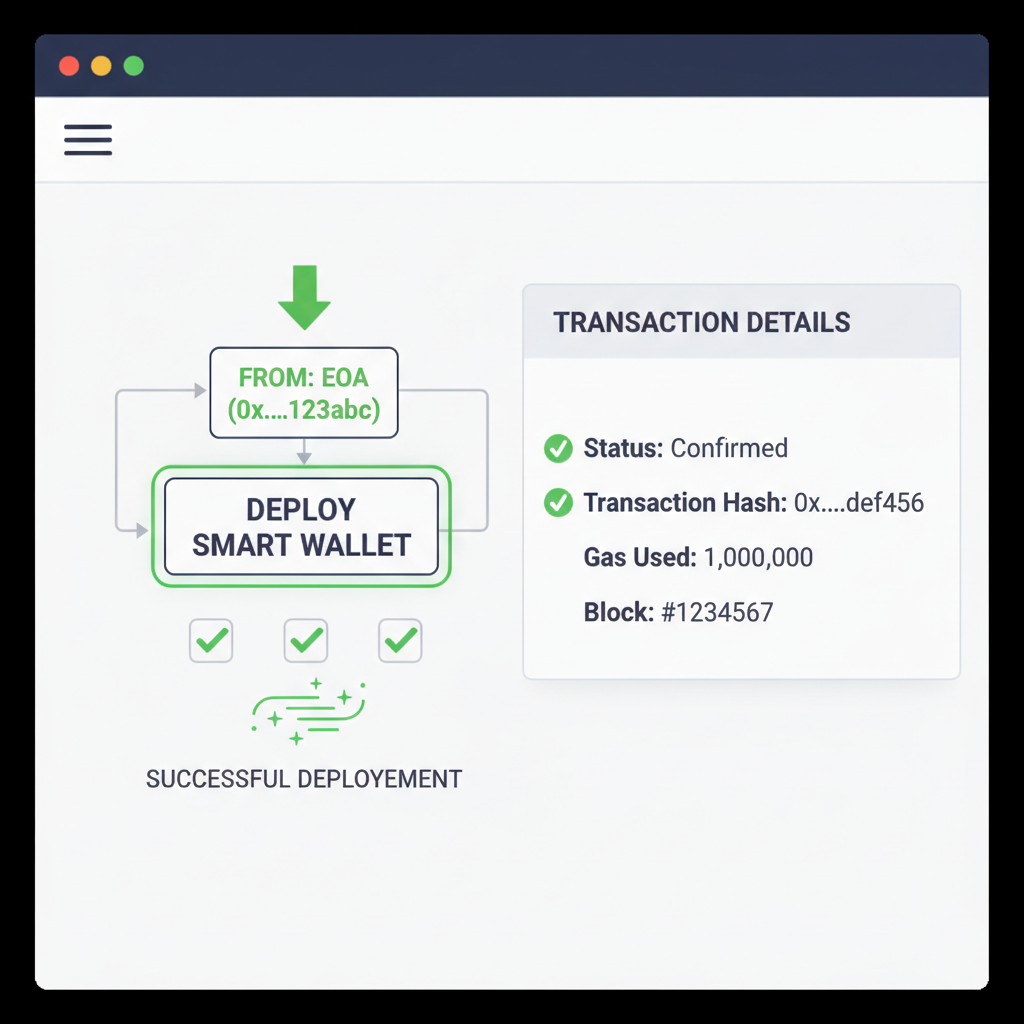
Consider the developer journey. Traditional EOAs lack batching or sponsorship. ERC-4337 solved this for smart accounts via EntryPoint contracts. EIP-7702 extends that infrastructure to EOAs on the fly. Ethereum. org notes wallets will whitelist delegation contracts, a prudent safeguard. This synergy demands robust bundler paymaster migration tools, ensuring compatibility with standards like EntryPoint v0.8.0 from Etherspot's Skandha Bundler.
Navigating ERC-4337 EIP-7702 Integration Challenges
Integration isn't automatic. Bundlers must handle 7702 authorizations as UserOps, paymasters verify sponsorships across both standards. Coinbase docs affirm they work together: EIP-7702 injects ERC-4337 support into EOAs. Alchemy's guide contrasts it favorably with EIP-3074, praising cleaner code and no state bloat. Privy emphasizes setting EOA code temporarily, preserving addresses. Yet, pitfalls loom: unwhitelisted contracts risk rejection, and chain-specific nuances vary.
Wallet providers must prioritize Ethereum wallet upgrade SDKs that abstract these complexities. Gelato and others provide relay SDKs bridging the gap. The result? Users enjoy zero-gas onboarding, cross-chain ops, all from their EOA. This conservative approach future-proofs dapps without alienating users wedded to key-based wallets.
Top Tools Powering Seamless Transitions
Selecting the right ERC-4337 EIP-7702 integration toolkit is crucial. Here, six standouts shine for wallet migrations: Pimlico Bundler SDK excels in reliable UserOp bundling with EIP-7702 auth support. Biconomy Smart Account SDK offers plug-and-play smart accounts, sponsoring gas via paymasters. Stackup ERC-4337 Bundler delivers scalable aggregation, handling 7702 delegations effortlessly. Gelato Relay SDK simplifies sponsorship across chains. Alchemy Account Kit streamlines embedded wallets with bundler hooks. ZeroDev Kernel SDK provides modular kernels for custom logic atop EOAs.
Comparison of Top EIP-7702 Wallet Migration Tools for ERC-4337 Integration
| Tool | Bundler Support | Paymaster Integration | EIP-7702 Compatibility | Ease of Migration |
|---|---|---|---|---|
| Pimlico Bundler SDK | ✅ | ✅ | ✅ | ⭐⭐⭐⭐⭐ |
| Biconomy Smart Account SDK | ✅ | ✅ | ✅ | ⭐⭐⭐⭐⭐ |
| Stackup ERC-4337 Bundler | ✅ | ✅ | ✅ | ⭐⭐⭐⭐ |
| Gelato Relay SDK | ✅ | ✅ | ✅ | ⭐⭐⭐⭐⭐ |
| Alchemy Account Kit | ✅ | ✅ | ✅ | ⭐⭐⭐⭐ |
| ZeroDev Kernel SDK | ✅ | ✅ | ✅ | ⭐⭐⭐⭐⭐ |
These tools form a robust ecosystem, each tailored to specific migration needs while upholding the conservative ethos of incremental upgrades. Pimlico Bundler SDK, for instance, prioritizes reliability in bundling UserOperations, now augmented with native EIP-7702 authorization handling. It's the choice for developers wary of downtime, offering granular control over simulation and validation before submission.
Leveraging SDKs for Real-World Migrations
Biconomy Smart Account SDK takes a broader view, embedding paymaster sponsorship directly into smart account flows. This means wallets can sponsor gas for users without them noticing, a subtle power move for retention. I've seen it shine in high-volume dapps, where seamless ERC-4337 EIP-7702 integration cuts friction. Stackup ERC-4337 Bundler, meanwhile, scales effortlessly; its architecture absorbs 7702 delegations without reconfiguration, ideal for enterprise wallets eyeing volume.
Gelato Relay SDK bridges chains effortlessly, sponsoring operations across L2s while respecting EIP-7702's temporary delegation. Alchemy Account Kit embeds this into familiar wallet interfaces, hooking bundlers with minimal code changes. ZeroDev Kernel SDK appeals to the tinkerers, letting you layer custom kernels atop EOAs for bespoke logic. Together, they democratize account abstraction tooling, but picking one demands weighing your stack's maturity.
Migrating EOAs to EIP-7702: Pimlico Bundler & Biconomy Paymasters Guide

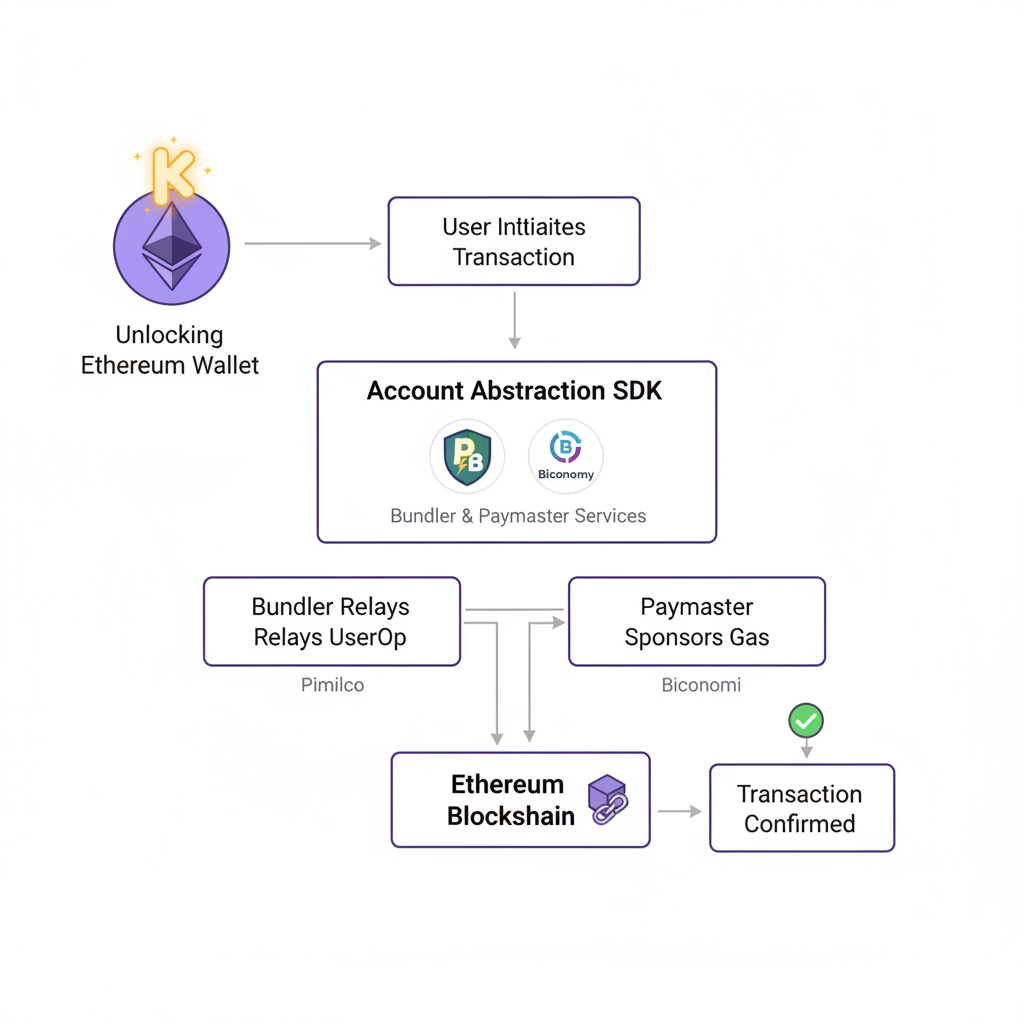
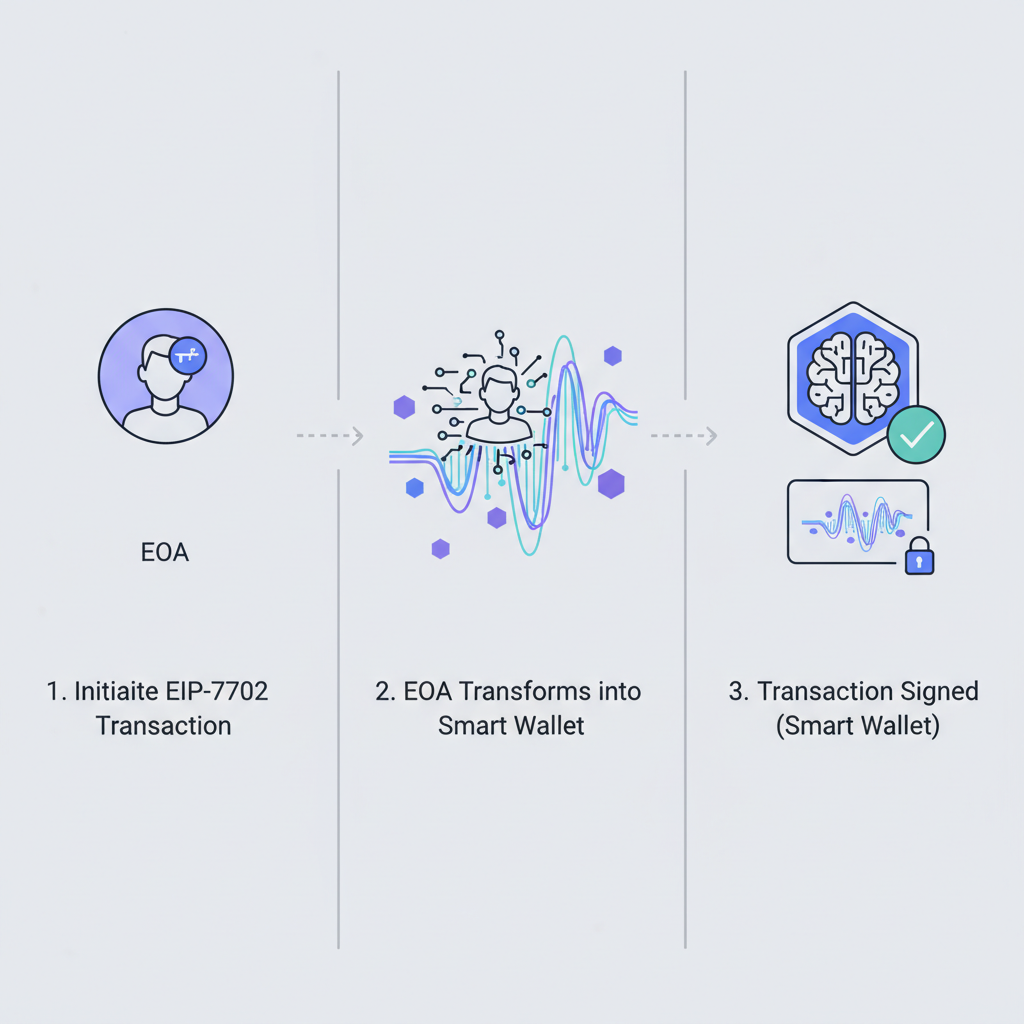
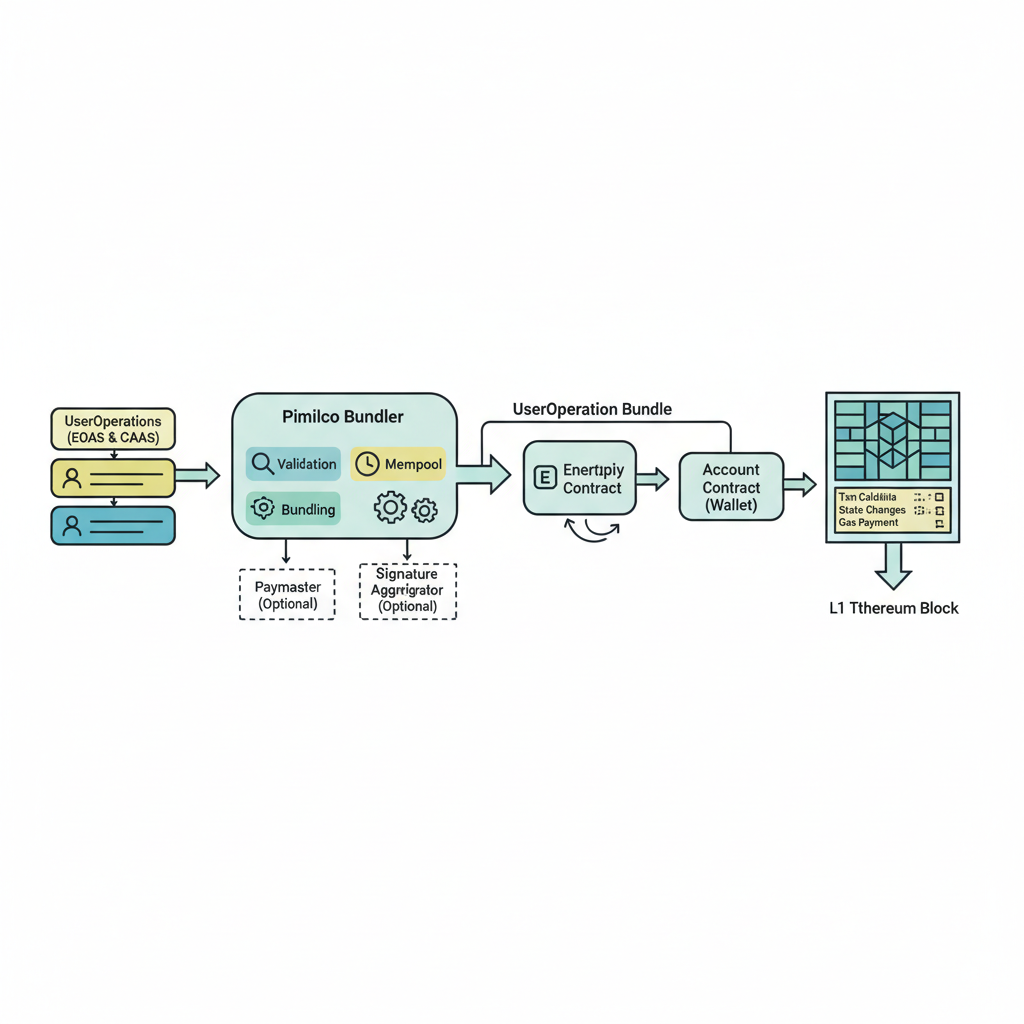
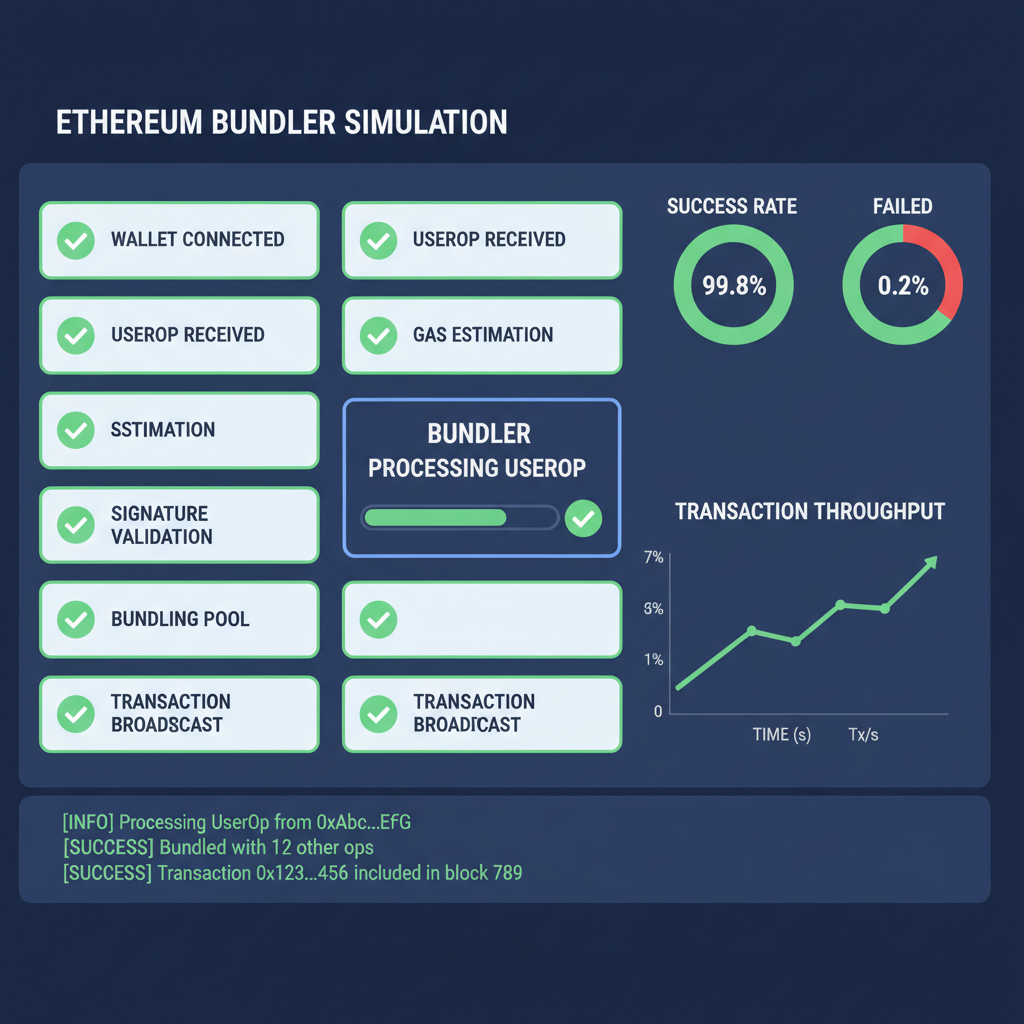
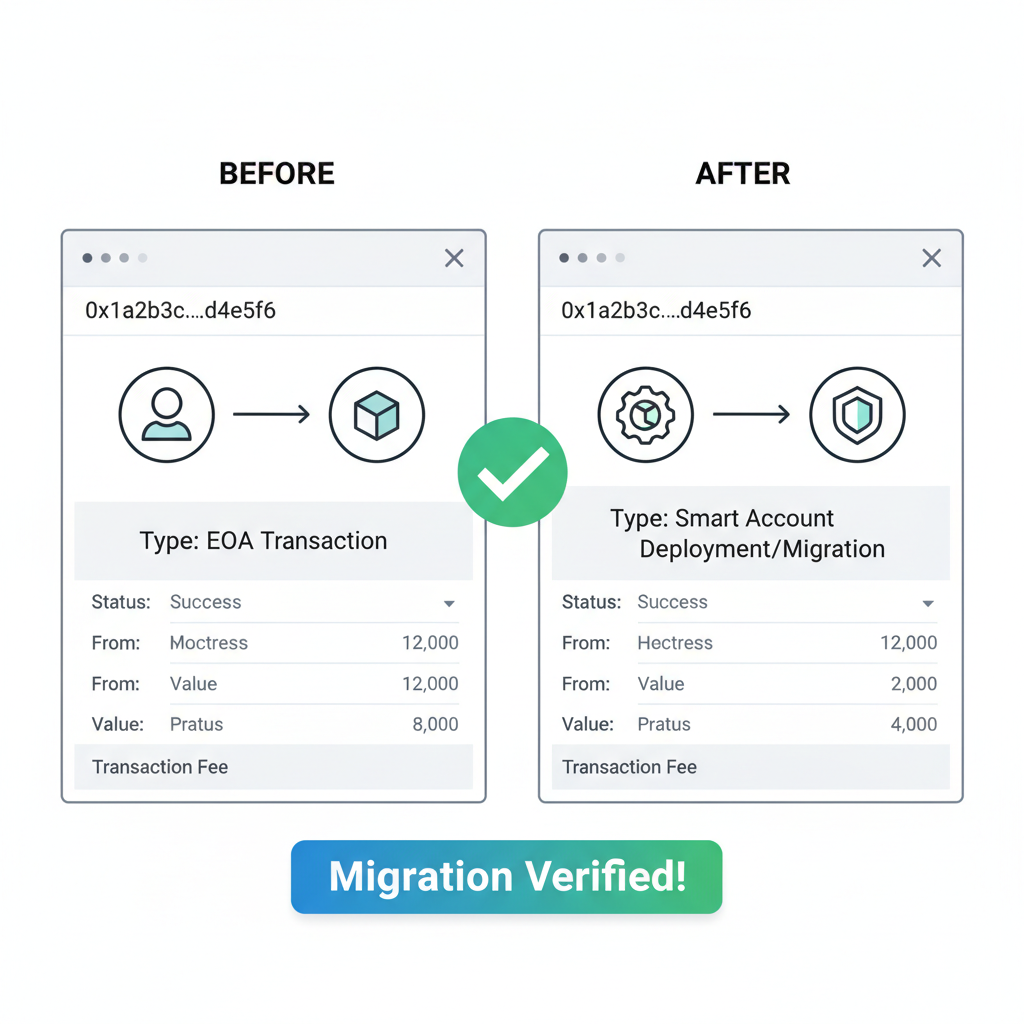
Consider a practical migration. Start with whitelisting delegation contracts per Ethereum. org guidelines, then integrate a bundler like Pimlico to process 7702 txs as UserOps. Paymasters from Biconomy or Gelato verify sponsorships, ensuring no user funds touch gas. This narrative unfolds without drama: EOAs gain batching, sponsorship, and even social recovery, all reversibly.
Code in Action: A Conservative Integration
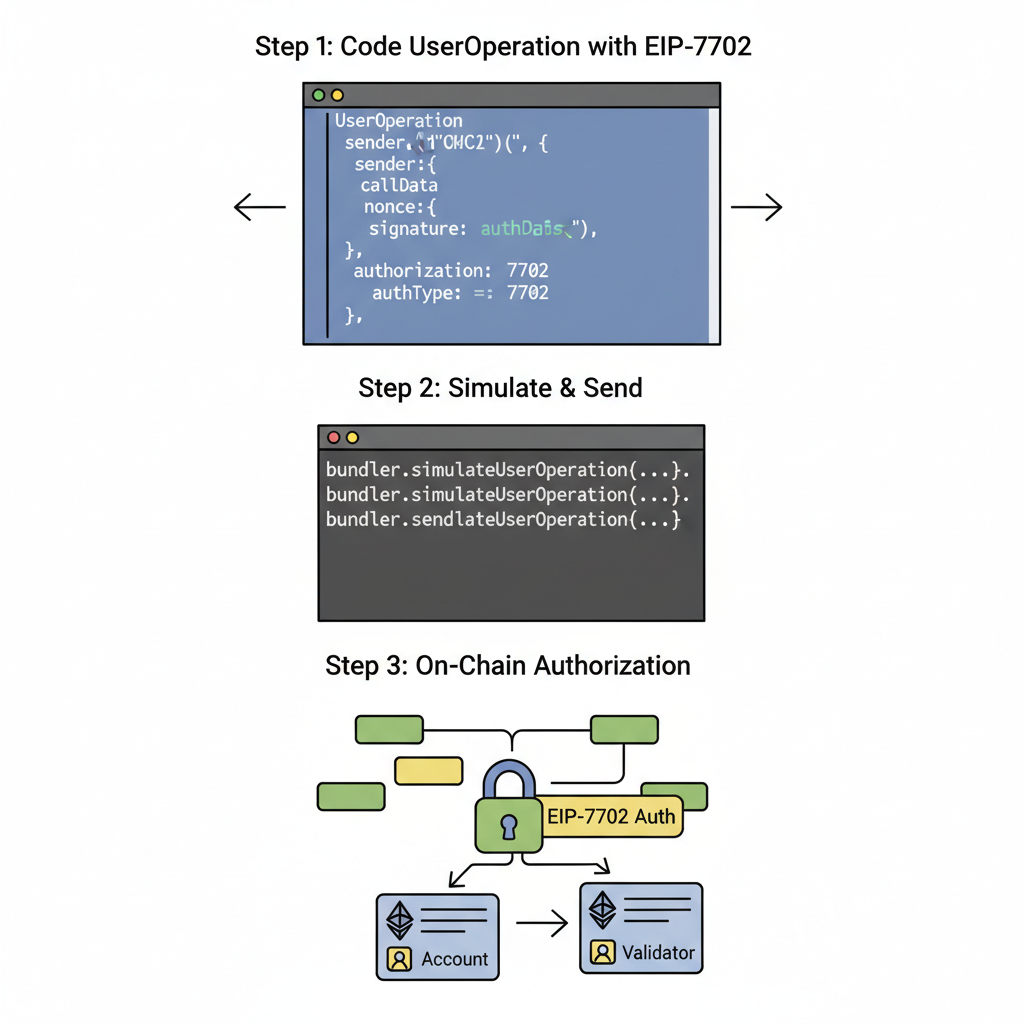
Hands-on implementation reveals the elegance. Here's a snippet adapting an EOA signer with Pimlico's bundler for 7702 delegation, paired with Stackup for aggregation. It simulates the UserOp, sponsors via paymaster, and submits conservatively, falling back to legacy tx if needed.
Constructing an EIP-7702 UserOp with Pimlico Bundler and Biconomy Sponsorship
When migrating wallets using EIP-7702, integrating ERC-4337 bundlers and paymasters offers a gas-efficient path forward. Consider this measured approach with the Pimlico Bundler SDK and Biconomy paymaster: we sign a delegation authorization thoughtfully, craft a sponsored UserOp for the migration task, simulate it carefully to validate, and prepare for submission. This ensures reliability without unnecessary risks.
import { createBundlerClient } from 'permissionless';
import { http } from 'viem';
import { sepolia } from 'viem/chains';
import { privateKeyToAccount } from 'viem/accounts';

// Configuration - Replace with your actual values
const PIMLICO_BUNDLER_URL = 'https://bundler.pimlico.io/v2/sepolia/rpc?apikey=YOUR_PIMLICO_API_KEY';
const BICONOMY_PAYMASTER_URL = 'https://paymaster.biconomy.io/api/v2/sepolia/YOUR_POLICY_ID.json'; // Biconomy sponsorship policy
const EOA_PRIVATE_KEY = '0xYOUR_EOA_PRIVATE_KEY';
const SMART_ACCOUNT_ADDRESS = '0xYOUR_SMART_ACCOUNT_ADDRESS';
const DELEGATION_CONTRACT = '0xYOUR_EIP7702_DELEGATION_CONTRACT_ADDRESS';

async function createEIP7702UserOp() {
  // Initialize clients
const bundlerClient = createBundlerClient({
    chain: sepolia,
    transport: http(PIMLICO_BUNDLER_URL),
  });

  const eoaAccount = privateKeyToAccount(EOA_PRIVATE_KEY);

  // Step 1: Generate EIP-7702 delegation authorization (simplified signing)
  // In practice, use rlp.encode([chainId, addressNonce, yParity, authority]) as message
  const chainId = 11155111n; // Sepolia
const addressNonce = 0n;
  const yParity = 0;
  const delegationMessage = `EIP-7702 delegation to ${DELEGATION_CONTRACT} nonce ${addressNonce}`;
  const delegationSignature = await eoaAccount.signMessage({ message: delegationMessage });
  console.log('Delegation auth signature:', delegationSignature);

  // Step 2: Prepare partial UserOp for migration (e.g., fund or setup via delegated execution)
  const partialUserOp = {
    sender: SMART_ACCOUNT_ADDRESS,
    nonce: 0,
    initCode: '0x', // Already deployed
    callData: '0x...', // Calldata for migration action, incorporating delegation logic
    maxFeePerGas: 200000000000n,
    maxPriorityFeePerGas: 1000000000n,
  };

  // Step 3: Get sponsorship from Biconomy paymaster
  const sponsorResponse = await fetch(BICONOMY_PAYMASTER_URL, {
    method: 'POST',
    headers: { 'Content-Type': 'application/json' },
    body: JSON.stringify({
      jsonrpc: '2.0',
      id: 1,
      method: 'pm_sponsorUserOperation',
      params: [partialUserOp, { type: 'paymaster' }],
    }),
  });
  const sponsorData = await sponsorResponse.json();
  const { paymasterAndData, preVerificationGas, verificationGasLimit, callGasLimit } = sponsorData.result;

  // Complete UserOp
  const userOperation = {
    ...partialUserOp,
    paymasterAndData,
    preVerificationGas,
    verificationGasLimit,
    callGasLimit,
  };

  // Step 4: Simulate the UserOp with Pimlico bundler
  const simulation = await bundlerClient.simulateUserOperation({
    userOperation,
    entryPoint: '0x5FF137D4b0FDCD49DcA30c7CF57E578a026d2789', // EP v0.7
  });

  console.log('UserOp simulation result:', simulation);

  // Next: Sign the UserOp with your smart account signer and sendUserOperation
  // const signedUserOp = await smartAccountClient.signUserOperation(userOperation);
  // const uoHash = await bundlerClient.sendUserOperation(signedUserOp);

  return { userOperation, simulation };
}

// Usage
// createEIP7702UserOp().catch(console.error);
Having simulated successfully, the next step involves signing the UserOperation with your smart account's logic—perhaps incorporating the delegation signature—and dispatching it via the bundler. This conservative workflow minimizes failures, allowing users to delegate execution seamlessly while sponsors cover costs. Always test on testnets like Sepolia first, and manage API keys securely.
This code underscores a key opinion: true power lies in modularity. ZeroDev's kernel lets you extend this further, injecting custom validation. Alchemy's kit wraps it for non-devs, while Gelato relays ensure L2 compatibility. Challenges persist, like bundler policy alignment or paymaster policy risks, but these SDKs mitigate through battle-tested abstractions.
Reflect on the broader shift. EIP-7702 doesn't upend wallets; it enriches them thoughtfully. Users keep addresses, devs gain Ethereum wallet upgrade SDK leverage. From Openfort's demos to Substack guides, the consensus builds: pair with ERC-4337 for tomorrow's UX. Pitfalls, like unhandled reverts in delegations, yield to rigorous testing via these tools.
Wallet builders, prioritize based on needs. Pimlico for precision bundling, Biconomy for sponsorship depth, Stackup for scale. Gelato for multi-chain, Alchemy for simplicity, ZeroDev for customization. This toolkit arsenal ensures bundler paymaster migration feels evolutionary, not revolutionary. As Pectra nears, early adopters position ahead, blending EOA familiarity with smart account prowess in Ethereum's unfolding story.




No comments yet. Be the first to share your thoughts!