
What EIP-7702 does for existing wallets
EIP-7702 represents a fundamental shift in how Ethereum accounts function, bridging the gap between simple key pairs and complex smart contracts. Before this update, Externally Owned Accounts (EOAs) were limited to signing transactions. They could not hold code, manage storage, or execute logic. EIP-7702 changes this by allowing these existing EOAs to temporarily delegate their execution rights to a smart contract.
This mechanism is often described as "account abstraction for EOAs," but it is more accurate to view it as a temporary delegation. When you sign an authorization message, your EOA grants a specific smart contract the ability to act on its behalf for a set duration. During this window, your address behaves like a smart contract, enabling features that were previously impossible for standard wallets. Once the authorization expires or is revoked, the account reverts to its original state. This opt-in model ensures that users do not lose ownership or control of their funds.
The practical impact of this capability is significant for daily blockchain interaction. By allowing EOAs to delegate to smart contracts, EIP-7702 enables advanced features like transaction batching, gas sponsorship, and session keys. Users can sign one transaction that executes multiple actions, reducing friction and costs. Similarly, developers can sponsor gas fees on behalf of users, removing the need for users to hold native ETH for transaction fees. This flexibility makes the blockchain more accessible without requiring users to migrate to entirely new wallet architectures.
Importantly, EIP-7702 does not require a migration. You do not need to transfer funds to a new address or adopt a different wallet provider to benefit from these features. The same EOA address can opt into smart contract functionality whenever needed. This seamless integration lowers the barrier to entry for account abstraction, allowing the broader Ethereum ecosystem to adopt smarter, more flexible account models without disrupting existing user habits.
ERC-4337 vs EIP-7702 architecture
The core difference between these two approaches lies in how they handle the Ethereum account model. ERC-4337 operates entirely outside the consensus layer by introducing a separate smart contract account and a dedicated mempool. EIP-7702, by contrast, modifies the Externally Owned Account (EOA) directly through a new transaction type that allows the account to temporarily set its own code.
ERC-4337 requires users to deploy and fund a new smart contract wallet. This account processes transactions through a specialized mempool, allowing for features like paymasters and account recovery without changing the underlying protocol. The trade-off is complexity: users must learn to manage a new address and rely on third-party bundlers to process their operations.
EIP-7702 removes this friction by allowing existing EOAs to delegate execution to a smart contract. Users sign an authorization message that temporarily grants their EOA smart account capabilities. This means no new address is created, and the user retains their original EOA identity while gaining access to smart contract features like session keys or multi-sig logic.
The table below compares the fundamental architectural differences between the two standards.
| Feature | ERC-4337 | EIP-7702 |
|---|---|---|
| Account Type | New smart contract account | Existing EOA with delegated code |
| Transaction Flow | UserOps via bundler mempool | Standard transactions with authorization |
| Address Change | Yes, new address required | No, same EOA address |
| Protocol Level | Mempool layer (L2/external) | Consensus layer (L1) |
| Migration Required | Yes, full migration | No, opt-in authorization |
How the authorization flow works
EIP-7702 changes how Ethereum handles user accounts by letting an Externally Owned Account (EOA) temporarily act like a smart contract. Instead of deploying a new wallet contract, you sign a special authorization message. This message tells the network which smart contract code your EOA should run for the next transaction.
This process is opt-in and reversible. You retain full control over your private keys and can revoke this delegation at any time. Think of it as handing a valet key to a parking attendant: they can drive the car, but they don’t own it, and you can take the key back whenever you want.
The flow involves three clear steps: signing the authorization, setting the code, and optionally revoking it.
You start by creating a signed authorization message using your EOA’s private key. This message specifies the address of the smart contract you want to delegate to. Unlike standard transactions, this doesn’t move funds; it simply registers your intent to use smart contract logic for future actions.
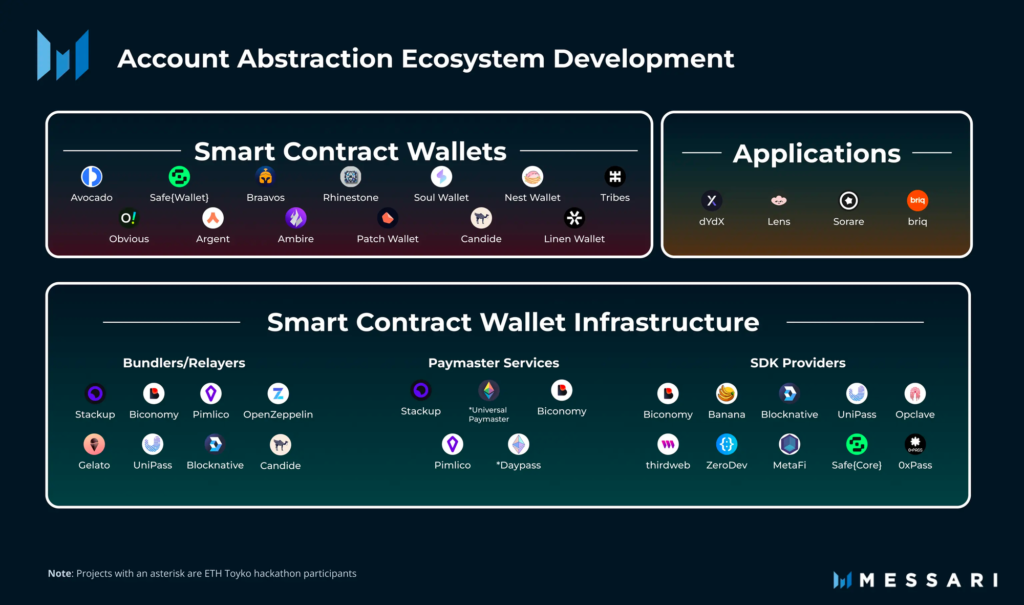
When you submit a transaction that includes this authorization, the Ethereum network validates the signature and updates your EOA’s state. Your account now has associated code and storage, effectively becoming a smart contract for the duration of that session. You can interact with dApps that require smart account features without leaving your original address.
To stop using smart contract features, you can revoke the authorization. This is done by signing a new message that clears the code association. Once revoked, your EOA returns to its standard state, relying solely on its private key for execution. This revocation ensures you can always revert to the simplest, most secure form of account management.
This mechanism bridges the gap between simple EOAs and complex ERC-4337 accounts. It allows existing wallets to gain advanced features like session keys or social recovery without forcing users to migrate to a new contract address. The authorization remains on-chain until explicitly revoked, providing a transparent and user-controlled upgrade path.
Choosing the right abstraction layer
The 2026 EIP-7702 migration is an opt-in upgrade, not a forced replacement. It allows existing externally owned accounts (EOAs) to temporarily delegate execution to smart contracts. This creates a hybrid model where legacy wallets gain smart capabilities without changing addresses. However, this flexibility comes with specific trade-offs compared to the full smart account architecture of ERC-4337.
Use EIP-7702 when you want a seamless transition for existing users. It is ideal for wallets that need to add features like session keys or gas sponsorship without requiring users to migrate their funds to a new contract address. The primary advantage is backward compatibility; users keep their familiar address while accessing enhanced functionality. This approach minimizes friction for mainstream adoption, as it leverages the existing EOA infrastructure.
Choose ERC-4337 when you need complex logic from day one. This standard deploys a separate smart contract account that holds funds and processes transactions through a dedicated mempool. It supports advanced features like social recovery, multi-signature requirements, and sponsored transactions that EIP-7702 cannot natively provide. If your application requires robust account recovery mechanisms or sophisticated permissioning, ERC-4337 is the more robust foundation.
The two standards are not mutually exclusive. You can use EIP-7702 for immediate upgrades to existing EOAs while planning a longer-term migration to ERC-4337 smart accounts for power users. This layered approach allows developers to balance ease of adoption with advanced functionality. The decision ultimately depends on whether you prioritize seamless legacy integration or full smart account control.
Wallet support and migration status
EIP-7702 went live on Ethereum mainnet on May 7, 2025, as part of the Pectra hardfork. While the protocol layer is active, wallet support is still rolling out. Major wallets like Rainbow and Safe have begun integrating the necessary signing logic, allowing users to delegate execution to smart contracts. You can check the latest compatibility status on WalletBeat.
It is important to clarify that this is not a forced migration. Your existing EOA address remains unchanged. Instead, EIP-7702 is an opt-in feature. You choose when to sign an authorization message to temporarily delegate your account to a smart contract. This approach contrasts with ERC-4337, which requires deploying a separate smart account contract to hold funds and process operations.
The two standards are not mutually exclusive. EIP-4337 provides a full smart account infrastructure, while EIP-7702 adds smart capabilities to your existing key. As wallet integration deepens, users will have the flexibility to choose the path that best fits their security and usability needs.
-
Verify your wallet supports EIP-7702 authorization signing
-
Test delegation with a small transaction
-
Update RPC nodes if you are a dapp developer
No comments yet. Be the first to share your thoughts!