
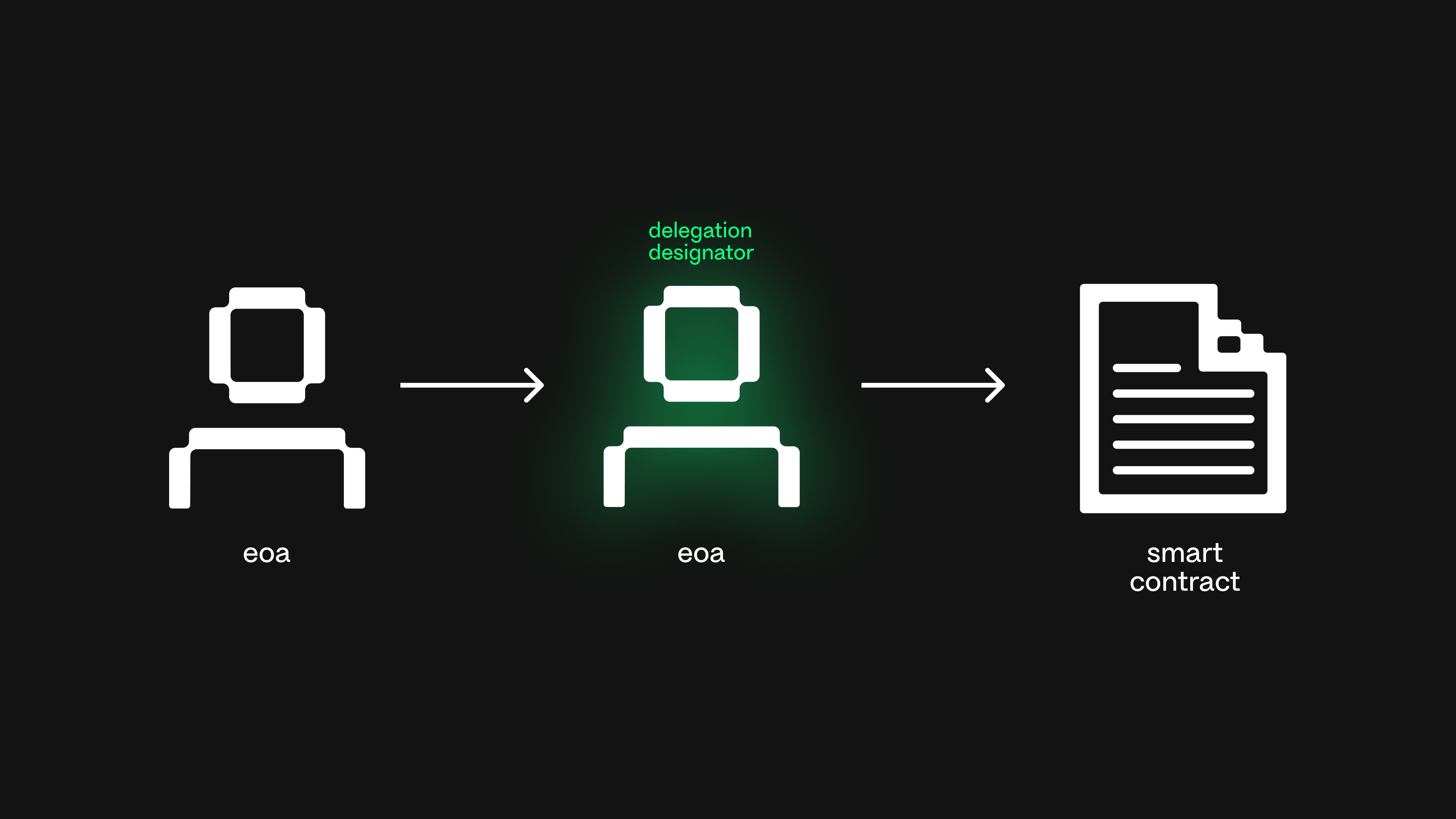
EIP-7702 activation and adoption status
The Ethereum network underwent a significant structural shift with the activation of EIP-7702 as part of the Pectra hardfork on May 7, 2025. This upgrade represents the most consequential change to the Ethereum account model in recent years, allowing every existing externally owned account (EOA) to temporarily set its own code. By gaining the capabilities of a smart contract without changing addresses, users can now leverage account abstraction features directly from their standard wallets.
It is important to clarify that the term "EIP-7702 migration 2026" refers to software updates and wallet integration, not asset transfers. There is no permanent migration required. Users do not need to move funds to a new address or perform any on-chain migration steps to benefit from these changes. As noted by Openfort, an EOA upgraded via 7702 can plug directly into ERC-4337 bundlers and paymasters with no address migration, preserving the familiar user experience while unlocking new functionality.
This authorization mechanism works by allowing EOA owners to delegate execution to a smart contract. A user signs a special authorization message from their EOA, which is then recorded on the Ethereum network. This temporary delegation enables features like session keys, batch transactions, and sponsored gas fees, bridging the gap between simple key management and advanced smart account capabilities.
The integration of EIP-7702 with ERC-4337 has pushed smart wallet adoption forward. While ERC-4337 defines the standard interface for smart accounts, EIP-7702 provides the protocol-level upgrade that allows EOAs to become smart accounts. This combination has simplified the path for wallet providers like Safe and Openfort to offer enhanced security and usability features without forcing users to abandon their existing keys.
ERC-4337 versus EIP-7702 architecture
The Ethereum ecosystem is currently navigating the EIP-7702 migration 2026, a transition that redefines how users interact with the network. At the center of this shift is a structural choice between two distinct paths to account abstraction: ERC-4337 and EIP-7702. Understanding the architectural differences between these standards is essential for developers and users evaluating gas efficiency, security models, and user experience.
ERC-4337 operates as a layer-2 standard. It does not require changes to the Ethereum protocol itself. Instead, it introduces a new transaction type that is processed by specialized nodes called bundlers. These bundlers package user operations and submit them to the mempool. The core innovation is the separation of the account logic (the smart contract wallet) from the execution logic. Users interact with a "paymaster" to sponsor fees, enabling gasless transactions. However, this abstraction adds complexity: users must hold ERC-20 tokens for gas, and every transaction requires extra calldata, which increases the base cost of execution.
EIP-7702, implemented in the Pectra hardfork, takes a different approach by upgrading the protocol level. It allows Externally Owned Accounts (EOAs)—the standard wallet addresses controlled by private keys—to temporarily delegate execution to a smart contract. This is achieved through a new transaction type containing an "authorizations" field. When a user signs this authorization, their EOA gains the ability to execute code from a smart contract wallet for a limited number of blocks. This method keeps the account address as a simple EOA while unlocking smart contract features like session keys and batched transactions.
The primary distinction lies in how each standard handles identity and gas. ERC-4337 creates a new account type (the smart contract wallet) that exists independently of the EOA. EIP-7702 enhances the existing EOA without changing its address or fundamental structure. For the EIP-7702 migration 2026, this means users can adopt advanced wallet features without migrating their funds to a new contract address, reducing friction and security risks associated with contract deployment.
The table below outlines the technical differences between these two architectures.
| Feature | ERC-4337 | EIP-7702 |
|---|---|---|
| Implementation Layer | Layer-2 (Bundlers) | Protocol Upgrade |
| Account Type | Smart Contract Wallet | Upgraded EOA |
| Gas Payment | ERC-20 or Native (Paymaster) | Native ETH |
| Address Change | Yes (New Contract Address) | No (Same EOA) |
| Security Model | Contract Logic | Code Delegation |
Both standards are critical to the evolution of Ethereum wallets. ERC-4337 offers a flexible, deployable solution that works across multiple chains without protocol changes. EIP-7702 provides a more integrated, lower-overhead experience by leveraging the base layer. The choice between them depends on whether a project prioritizes cross-chain compatibility or native protocol efficiency.
Gas fee implications for smart EOAs
The EIP-7702 migration 2026 represents a structural shift in how Ethereum accounts handle execution, moving away from the rigid separation between Externally Owned Accounts (EOAs) and smart contract accounts. By allowing EOAs to temporarily delegate code execution to a smart contract, this upgrade fundamentally alters the gas economics for common user actions. Instead of paying for complex smart contract deployment and maintenance, users can leverage the EOA’s existing address structure while accessing smart account features like session keys and social recovery.
Session Keys and Reduced Overhead
Traditional smart contract accounts (ERC-4337) require users to deploy and interact with a contract that holds their assets. Every interaction involves checking the contract’s logic, signature validation, and state updates. EIP-7702 simplifies this by allowing an EOA to set its code once, effectively becoming a smart contract for the duration of a session or until revoked.
This "code delegation" reduces gas overhead for frequent interactions. For example, signing a session key for a dApp typically requires multiple transactions or a complex multi-sig setup. With EIP-7702, the EOA can authorize a smart contract to act on its behalf, bundling these operations into a single transaction type. This consolidation lowers the cumulative gas cost compared to managing a full smart contract wallet from scratch.
Social Recovery Efficiency
Social recovery is a critical safety feature for smart accounts, allowing users to regain access if they lose their private key. In pure smart contract accounts, implementing this often requires complex logic and multiple signatures, increasing gas costs for both setup and execution. EIP-7702 allows EOAs to adopt this logic without the initial deployment cost of a smart contract.
Users can delegate their EOA to a recovery contract, enabling them to set up guardians and recovery mechanisms directly from their existing address. This approach avoids the need for address migration or complex contract interactions, making social recovery more accessible and cheaper. The result is a more efficient gas model for security-critical operations, aligning with the goals of the EIP-7702 migration 2026 to improve user experience and reduce transaction costs.
Comparison of Gas Models
To understand the impact, consider the gas costs for a typical user action: setting up a session key for a dApp.
| Feature | Pure Smart Contract Account | EIP-7702 Smart EOA |
|---|---|---|
| Setup Cost | High (Deployment + Initialization) | Low (Authorization Transaction) |
| Session Key Setup | Multiple Transactions | Single Transaction |
| Social Recovery | Complex Logic, Higher Gas | Delegated Logic, Lower Gas |
| Address Change | Yes (New Contract Address) | No (Same EOA Address) |
This comparison highlights the efficiency gains of EIP-7702. By reducing the need for complex contract interactions and leveraging the EOA’s existing structure, users can perform smart account features with lower gas fees. This makes EIP-7702 a significant step toward broader adoption of smart account functionalities, as it removes the primary barrier of high initial costs and complexity.
Wallet and dapp integration requirements
The EIP-7702 migration 2026 introduces a new transaction type that allows Externally Owned Accounts (EOAs) to temporarily delegate execution to smart contracts. This shift fundamentally alters how wallets and decentralized applications must handle signing, transaction construction, and state validation. For developers, the immediate priority is updating core libraries to recognize and process the new authorization signatures correctly.
Update signing libraries for authorization signatures
Wallets must implement support for the new EIP-7702 transaction type, which includes an authorizations field. This field contains signed messages from the EOA, authorizing a specific contract code to execute on its behalf. Signing libraries need to verify these signatures against the EOA's current code state and ensure the authorization is valid for the target contract. Failure to properly validate these signatures can lead to unauthorized code execution or transaction failures. Developers should refer to the official EIP-7702 specification for the exact signature format and validation logic.
Adjust transaction construction and gas estimation
Transaction construction logic must be updated to include the authorization list when creating EIP-7702 transactions. Gas estimation becomes more complex because the gas cost now includes both the execution of the delegated code and the verification of the authorizations. Wallets should integrate with providers that support EIP-7702 gas estimation to avoid underestimating costs, which could lead to failed transactions. The Safe documentation provides detailed guidance on how to handle these changes in multi-signature contexts.
Verify on-chain code state before execution
Before executing a delegated transaction, wallets and dapps must verify the on-chain code state of the EOA. This ensures that the authorization is still valid and that the delegated code has not been revoked or changed. This step is critical for security, as it prevents unauthorized access if the EOA's code state changes between signing and execution. Wallets should implement checks to confirm that the current code hash matches the hash specified in the authorization. This verification process adds a layer of security but also increases the complexity of transaction validation.
Handle signature revocation and expiration
EIP-7702 authorizations are temporary and can be revoked by the EOA owner. Wallets must handle cases where an authorization is revoked before the transaction is mined. This requires checking the current code state of the EOA at the time of transaction execution. If the authorization is no longer valid, the transaction should fail gracefully. Developers should also consider implementing expiration mechanisms for authorizations to limit the window of vulnerability. This approach ensures that even if an authorization is compromised, its impact is limited.
Test with real-world scenarios
Comprehensive testing is essential before deploying EIP-7702 support in production. Developers should test their wallets and dapps with a variety of scenarios, including successful authorizations, revocations, and edge cases. Testing should include interactions with popular smart contracts that support EIP-7702 to ensure compatibility. The Openfort blog offers insights into common pitfalls and best practices for testing EIP-7702 integrations. Rigorous testing helps identify and resolve issues before they affect users.
Common questions about EIP-7702
The EIP-7702 migration 2026 landscape is defined by how this upgrade changes the Ethereum account model. Below are answers to frequent questions about implementation status, technical differences, and wallet support.
No comments yet. Be the first to share your thoughts!