
EIP-7702 activation and market impact
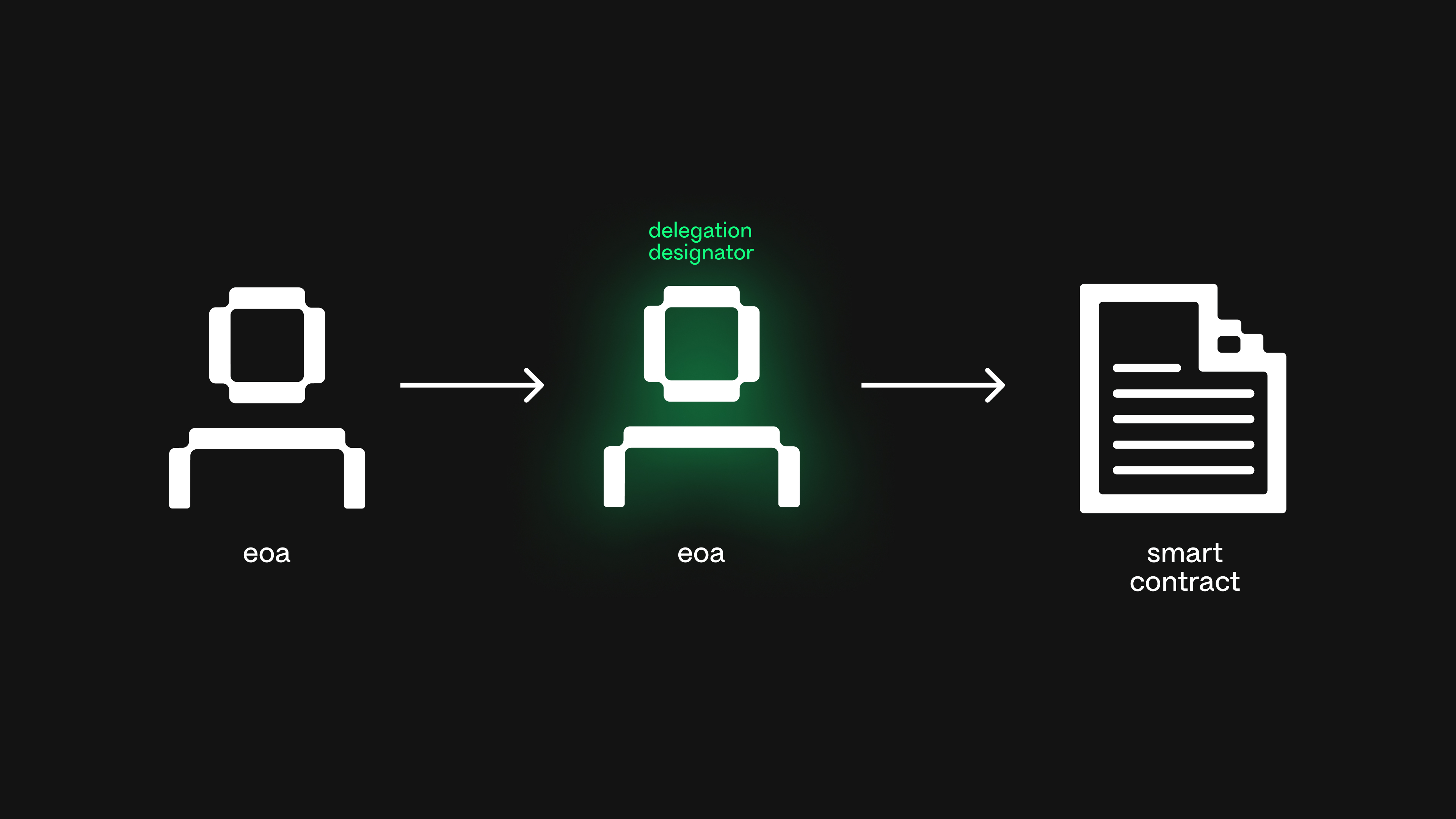
EIP-7702 went live on Ethereum mainnet on May 7, 2025, as part of the Pectra hardfork. This upgrade represents the most significant shift in Ethereum’s account model since the introduction of smart contracts. It allows Externally Owned Accounts (EOAs)—the standard wallet addresses controlled by private keys—to temporarily set code in their account, effectively granting them smart contract capabilities without changing their underlying address structure.
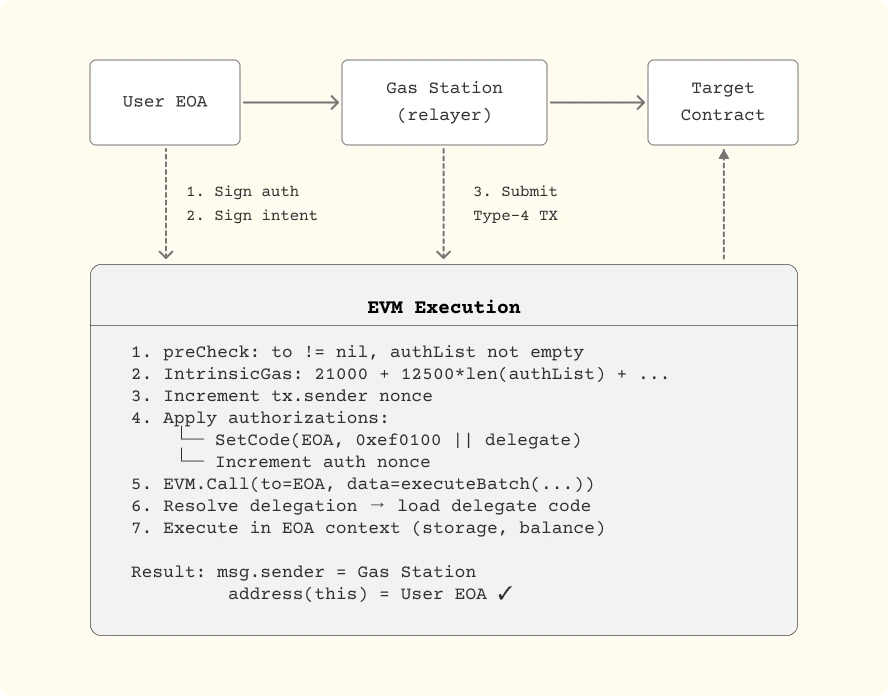
The mechanism relies on a new transaction type defined in the EIP. Users sign a special authorization message from their EOA, which is recorded on the network. This authorization delegates execution to a smart contract, enabling features like batched transactions, social recovery, and programmable spending limits. For the broader market, this bridges the gap between simple key-controlled accounts and the more complex, feature-rich smart accounts defined by ERC-4337, which require no protocol upgrade but rely on off-chain bundlers.
The immediate impact on the Ethereum ecosystem is measurable. By allowing EOAs to adopt smart wallet logic, EIP-7702 reduces the friction for user onboarding and enhances security through programmable safeguards. Major wallet providers and infrastructure providers like Safe have already integrated support for these authorizations, signaling strong institutional adoption. The change is irreversible and fundamentally alters how users interact with decentralized applications.
To contextualize the market activity surrounding this activation, the following chart tracks ETH price action during the Pectra hardfork period.
Smart EOAs versus full smart wallets
EIP-7702 and ERC-4337 represent two distinct paths for account abstraction on Ethereum. EIP-7702, activated in the Pectra hardfork, allows existing externally owned accounts (EOAs) to temporarily delegate execution to smart contracts. ERC-4337 relies on separate smart contract accounts that operate outside the base protocol. Understanding the trade-offs between these models is critical for security and operational efficiency.
The primary distinction lies in how each handles identity and state. EIP-7702 modifies the EOA's code field temporarily, enabling features like gas sponsorship without changing the user's address. ERC-4337 requires a new contract address, introducing complexity in address management and recovery. This difference impacts everything from user experience to security auditing.
Security implications vary significantly between the two approaches. EIP-7702's temporary nature limits exposure, but the protocol upgrade introduces new attack surfaces in the EOA code field. ERC-4337's permanent smart contracts allow for robust recovery mechanisms but require careful implementation to prevent contract vulnerabilities. Users must weigh the convenience of address stability against the flexibility of dedicated smart accounts.
| Feature | EIP-7702 Smart EOA | ERC-4337 Smart Account |
|---|---|---|
| Account Type | Modified EOA | New Smart Contract |
| Address Change | No | Yes |
| Recovery Options | Limited | Flexible (Multi-sig, social) |
| Gas Sponsorship | Native via EOA | Via Paymasters |
| Protocol Upgrade | Required (Pectra) | Not Required |
| Bundler Integration | Direct | Standard Interface |
The choice between these models depends on specific use cases. EIP-7702 offers a lower barrier to entry for existing users, while ERC-4337 provides greater long-term flexibility for complex applications. Both paths are valid, but they serve different needs in the evolving Ethereum ecosystem.
Delegated code security implications
The transition from externally owned accounts (EOAs) to smart contract accounts (SCAs) via EIP-7702 introduces a fundamental shift in Ethereum's security model. By allowing EOAs to temporarily "borrow" logic from smart contracts, the protocol enables advanced features like multi-signature approvals and session keys. However, this delegation of execution logic creates new attack surfaces that did not exist in the original account model.
The primary risk lies in the complexity of the delegated code. Unlike simple key-pair signatures, smart contract logic can contain intricate conditional statements. If the deployed contract contains a vulnerability or if the user inadvertently authorizes a malicious contract, the consequences are immediate and irreversible. The user's EOA effectively becomes a proxy for the contract's execution, meaning any flaw in the contract's logic directly compromises the user's assets.
Another critical concern is the potential for reentrancy attacks and unintended state changes. Since the delegated code runs within the context of the user's transaction, it can interact with other contracts in ways that might not be immediately obvious. This is particularly dangerous in complex DeFi environments where multiple contracts interact simultaneously. A poorly audited smart contract wallet could expose the user's funds to exploits that target these interactions.
To mitigate these risks, users must carefully vet the smart contracts they authorize. This requires a higher level of technical literacy than simply managing private keys. Wallet providers are responding by implementing stricter checks and warnings for users attempting to delegate execution to unknown contracts. The security of EIP-7702 ultimately depends on the robustness of the delegated code and the user's ability to discern trustworthy contracts from malicious ones.
Wallet and dapp readiness in 2026
EIP-7702 activated on Ethereum mainnet on May 7, 2025, as part of the Pectra hardfork. This upgrade allows externally owned accounts (EOAs) to temporarily delegate execution to smart contract code. The change is irreversible and fundamentally alters the Ethereum account model, making ecosystem support a critical factor for migration viability.
Major wallet providers have moved quickly to integrate this functionality. Safe, a leading smart account infrastructure provider, offers comprehensive documentation and support for EIP-7702, enabling users to leverage both code and storage capabilities within their existing EOAs. Other major providers like MetaMask and Rabby have also begun implementing support, though the rollout has been phased to prioritize security and user education.
Developer tooling has followed suit. Libraries such as viem and ethers.js now include support for the new transaction type, allowing developers to construct and sign EIP-7702 authorizations. This ensures that dapps can interact with smart EOAs seamlessly, provided they update their frontend logic to handle the new authorization flow.
However, readiness is not uniform. Some smaller wallets and hardware devices may lag in support, creating fragmentation. Users should verify their specific wallet's compatibility before migrating significant assets. The risk of locking funds or encountering unexpected errors remains if the underlying infrastructure does not fully support the new transaction type.
| Feature | Safe | MetaMask | Rabby |
|---|---|---|---|
| EIP-7702 Support | Yes | Yes | Yes |
| Authorization Signing | Yes | Yes | Yes |
| Hardware Wallet Support | Yes | Yes | Yes |
| Developer Tooling | Full | Partial | Full |
The migration path is clear for those using supported wallets. The key is to start with small transactions to test the new functionality before committing larger amounts. Security remains paramount; always double-check the authorization details before signing.
| Feature | Safe | MetaMask | Rabby |
|---|---|---|---|
| EIP-7702 Support | Yes | Yes | Yes |
| Authorization Signing | Yes | Yes | Yes |
| Hardware Wallet Support | Yes | Yes | Yes |
| Developer Tooling | Full | Partial | Full |
Choosing the right abstraction path
EIP-7702 activation on the Pectra hardfork gave existing EOAs the ability to temporarily delegate execution to smart contracts. This upgrade allows users to access gas sponsorship and session keys without migrating to a new address. However, it does not provide the persistent policy control or social recovery found in full smart wallets.
Selecting between these paths depends on your risk tolerance and technical requirements. Use the following framework to evaluate your needs.
EIP-7702 authorizations are transient. If you require persistent access control, multi-sig governance, or social recovery, a full smart wallet is necessary. Smart EOAs revert to standard EOA behavior once the authorization expires.
If your primary goal is gas abstraction for specific dApp interactions, EIP-7702 offers a lightweight solution. It allows gas sponsorship without the complexity of setting up a paymaster infrastructure required by ERC-4337.
Ensure your provider supports EIP-7702. Most major wallets now offer the feature, but full smart wallet functionality varies by implementation. Check official documentation from providers like Safe before committing.
| Feature | EIP-7702 Smart EOA | Full Smart Wallet |
|---|---|---|
| Address Migration | None | Required |
| Recovery Options | None | Social/Multi-sig |
| Persistence | Temporary | Permanent |
| Gas Abstraction | Yes | Yes |
The choice is not mutually exclusive. You can begin with standard EOAs, utilize EIP-7702 benefits like gas sponsorship, then migrate to full smart wallets if desired as your needs evolve. Start with the simpler abstraction and upgrade only when security or control demands it.
Frequently Asked Questions About EIP-7702
Is EIP-7702 implemented?
EIP-7702 activated on Ethereum mainnet on May 7, 2025, as part of the Pectra hardfork. This upgrade allows existing Externally Owned Accounts (EOAs) to temporarily set code, gaining smart contract capabilities without changing addresses [Openfort]. The change is permanent and affects every EOA on the network.
What is the difference between EIP-4337 and EIP-7702?
ERC-4337 is a user operation standard that enables smart accounts to interact with bundlers and paymasters without requiring protocol upgrades. In contrast, EIP-7702 is a protocol-level upgrade that allows EOAs to become smart accounts directly. 4337 relies on off-chain infrastructure, while 7702 modifies the core Ethereum account model [Pimlico].
What are EIP-7702 authorizations?
EIP-7702 introduces a new transaction type with an "authorizations" field. Users sign a special authorization message from their EOA, which is recorded on-chain to delegate execution to a smart contract. This mechanism allows EOAs to utilize smart account features like session keys or gas sponsorship [Biconomy].
Which wallets support EIP-7702?
Support varies across providers. Wallets like Safe and major custodial providers have integrated 7702 capabilities to allow users to manage smart EOA authorizations. Users should verify their specific wallet provider's documentation before interacting with 7702-enabled dApps to ensure proper key management and security.
No comments yet. Be the first to share your thoughts!