
Eip-7702 migration limits to account for
EIP-7702 is fully active since the Pectra upgrade in May 2025, allowing externally owned accounts (EOAs) to delegate execution to smart contract code. This migration enables account abstraction features like transaction bundling and gas sponsorship without changing your wallet address. However, moving from a standard EOA to a 7702-delegated account introduces specific technical constraints that can impact your upgrade strategy.
The primary constraint lies in the authorization mechanism. When you sign a 7702 authorization, you are essentially pointing your EOA to a smart contract implementation. This creates a dependency: if the contract is upgraded or paused, your EOA’s behavior changes accordingly. Unlike traditional smart contract wallets where the code is immutable unless explicitly designed otherwise, 7702 relies on the contract’s state. This means you must trust the contract’s governance and upgradeability mechanisms.
Another critical constraint is the interaction with ERC-4337 bundlers. While 7702 allows EOAs to plug directly into bundlers and paymasters, not all infrastructure providers have fully optimized for this hybrid model. Some paymasters may still require specific signature formats or gas payment flows that differ from standard ERC-4337 smart accounts. This can lead to higher transaction failures or increased gas costs during the transition period.
Finally, the EIP-7702 prefix and storage layout add complexity. The EOA now holds both code and storage, which means your wallet’s state is no longer just private keys but also contract logic. This requires careful consideration of backup and recovery. If you lose your private key, you lose access to the delegated contract’s functions, even if the contract itself is still accessible on-chain. This dual-dependency structure is a significant shift from traditional EOA security models.
| Feature | Standard EOA | EIP-7702 Delegated |
|---|---|---|
| Code Execution | None | Yes |
| Recovery Options | Private Key Only | Private Key + Contract Logic |
| Bundler Compatibility | Limited | Full (ERC-4337) |
| Upgradeability | N/A | Contract-Dependent |
Eip-7702 migration choices that change the plan
Upgrading an EOA via EIP-7702 requires weighing the immediate benefits of account abstraction against the permanent commitment of on-chain code delegation. Since the Pectra hard fork in May 2025, this feature has been fully active, allowing EOAs to designate smart contracts as their execution implementation without changing their addresses.
The core tradeoff is flexibility versus complexity. You gain the ability to use ERC-4337 bundlers, pay for gas in tokens other than ETH, and implement custom permission logic. However, you must accept that the EOA’s execution path is now bound to the logic of the delegated contract until the delegation is revoked. This is not a transient state; it is a structural change to how the account interacts with the Ethereum Virtual Machine.
| Factor | Standard EOA | EIP-7702 Upgraded EOA |
|---|---|---|
| Execution Logic | Fixed (ECDSA signatures only) | Dynamic (Delegated smart contract) |
| Gas Payment | ETH only | Flexible (via paymasters) |
| Transaction Batching | Single transactions | Bundled sessions |
| Address Change | None | None (seamless integration) |
| Revocation | N/A | Requires explicit revoke transaction |
The decision to migrate often hinges on your specific use case. If you are building a dApp that requires session keys or gas sponsorship, the upgrade is essential. For simple value storage or transfers, the added complexity of managing delegation cycles may not justify the overhead.
| Feature | Benefit | Risk |
|---|---|---|
| Account Abstraction | ERC-4337 compatibility | Contract dependency |
| Gas Sponsorship | Better UX for new users | Relies on third-party paymasters |
| Session Keys | Reduced signing friction | Key management complexity |
Decision Guide
Use EIP-7702 if your application requires seamless integration with modern account abstraction infrastructure without forcing users to migrate to new addresses. Avoid it if you prioritize absolute simplicity in key management or if your users are unlikely to benefit from transaction batching and gas sponsorship.
Choose the next step
EIP-7702 is live on Ethereum following the May 2025 Pectra upgrade. This hard fork introduced the ability for Externally Owned Accounts (EOAs) to delegate execution to smart contract code. You can now use standard key pairs to access account abstraction features without migrating to a new wallet address.
This capability fundamentally shifts how you manage upgrades. Instead of migrating funds to a new contract, you attach a smart contract implementation to your existing EOA. This approach preserves your address history and compatibility with legacy systems while unlocking modern functionality.
Identify which EOAs require abstraction. Check if your users rely on features like transaction batching, gas sponsorship, or custom permission logic. If your current setup handles these natively or does not need them, EIP-7702 may not be necessary yet.
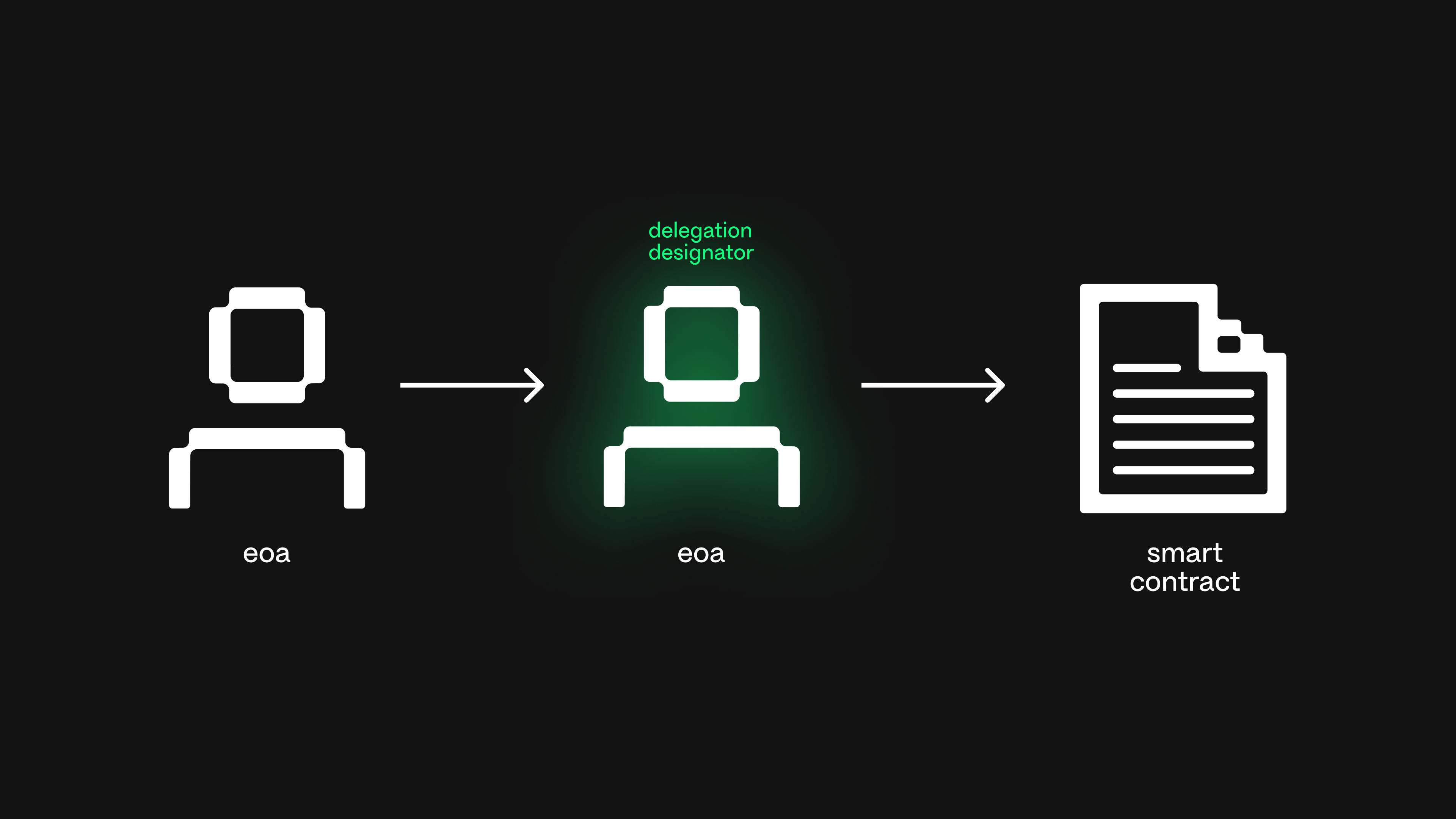
Choose a smart contract that acts as the execution layer for your EOAs. This contract must adhere to the EIP-7702 specification to ensure compatibility with Ethereum nodes. Consider whether you need a simple signature verification or a complex multi-sig logic.
Deploy your chosen smart contract to the mainnet. Then, issue an EIP-7702 authorization transaction from your EOA. This transaction links your EOA to the new contract, allowing the contract to execute transactions on your behalf while keeping the private key with you.
Verify that your upgraded EOA works seamlessly with ERC-4337 bundlers and paymasters. This integration is critical for enabling features like gas sponsorship and transaction batching. Ensure your paymaster can correctly identify and process transactions from your newly authorized account.
| Feature | Standard EOA | EIP-7702 EOA |
|---|---|---|
| Address Migration | Not possible | Not required |
| Gas Sponsorship | No | Yes |
| Transaction Batching | No | Yes |
| Custom Logic | No | Yes |
Watchouts for EIP-7702 Migration
EIP-7702 is live on Ethereum mainnet following the Pectra upgrade, but migrating smart contract logic from EOAs introduces specific failure modes. Avoid these common pitfalls to protect your upgrade path.
Relying solely on standard wallets for authorization. Many users assume their wallet handles EIP-7702 signatures automatically. It does not. You must explicitly sign a 7702 authorization transaction to set the contract code hash. If you skip this step, the EOA remains a standard account, and your upgrade fails silently.
Ignoring the nonce reset. When an EOA delegates to a contract, it does not reset its transaction nonce. If your contract logic expects a fresh state or relies on sequential nonce ordering for security, you will encounter replay vulnerabilities. Always audit how your contract handles existing nonces before activating the delegation.
Assuming full ERC-4337 compatibility. While EIP-7702 allows EOAs to interact with ERC-4337 bundlers, it is not identical to native ERC-4337 accounts. Your paymaster integrations may break if they expect standard UserOperation structures without the 7702-specific signature validation. Test your bundler compatibility thoroughly before moving funds.
Overlooking the prefix limitation. The EIP-7702 prefix allows code execution, but it does not grant arbitrary storage access from external contracts. If your upgrade strategy relies on deep storage inheritance from the original EOA, you will face reverts. Design your contract state to be self-contained.
Decision Framework
| Feature | EIP-7702 Delegation | Native ERC-4337 Account | Standard EOA |
|---|---|---|---|
| Setup Cost | Low (one tx) | High (deployment) | None |
| Gas Sponsorship | Supported via Paymaster | Native Support | No |
| Nonce Handling | Inherits EOA nonce | Independent | Sequential |
| Complexity | Medium | High | Low |
Choose EIP-7702 for quick upgrades with existing EOAs. Use native ERC-4337 for new accounts requiring advanced session keys or social recovery. Avoid 7702 if you need full nonce isolation.
Eip-7702 migration: what to check next
Addressing the practical objections around EIP-7702 implementation helps clarify whether this upgrade aligns with your current infrastructure. The following questions cover the most common concerns for developers and users preparing for the transition.
No comments yet. Be the first to share your thoughts!