
What the EIP-7702 migration actually is
EIP-7702 is a protocol upgrade that allows Externally Owned Accounts (EOAs) to delegate execution to smart contracts without requiring an address migration. The term "migration" refers strictly to the network upgrade process itself, not to any action required by users to move their funds or change their wallet addresses. Your existing EOA remains an EOA; it simply gains the ability to temporarily adopt the behavior of a smart contract account.
This upgrade, activated on the Ethereum mainnet via the Pectra hard fork in May 2025, introduces a new transaction type with an "authorizations" field. When you sign an authorization message from your EOA, the Ethereum network records this delegation. This allows your address to execute complex logic, such as transaction batching or custom validation rules, by pointing to a smart contract's code. This is a foundational step toward full account abstraction, bridging the gap between simple key-based accounts and the more feature-rich smart accounts defined by standards like ERC-4337.
Unlike ERC-4337, which requires a new account structure and relies on off-chain bundlers, EIP-7702 is a native protocol change. It allows EOAs to inherit the capabilities of smart contracts directly on-chain. This distinction matters for gas efficiency and user experience, as it reduces the need for complex relayer infrastructure while expanding the functional scope of the most common account type on Ethereum.
EIP-7702 vs ERC-4337: Which path fits your app
The choice between EIP-7702 and ERC-4337 is not about which technology is superior, but which infrastructure constraint your app can tolerate. Both paths enable account abstraction, yet they approach the problem from opposite ends of the Ethereum stack. ERC-4337 is a user-operation standard that operates entirely outside the consensus layer, while EIP-7702 is a protocol-level upgrade that modifies how Externally Owned Accounts (EOAs) interact with the state.
For developers prioritizing immediate deployment without waiting for network-wide consensus changes, ERC-4337 remains the pragmatic standard. It relies on a decentralized network of bundlers and paymasters to handle transaction batching and gas sponsorship. This model is mature, widely supported by infrastructure providers, and does not require users to migrate their addresses. However, it introduces complexity in the mempool and requires users to interact with a new transaction type that standard wallets may not yet support natively.
EIP-7702, activated on the Pectra upgrade, takes a different approach by allowing existing EOAs to temporarily delegate execution to a smart contract. This effectively turns a standard wallet into a "smart EOA" without changing the user's address or requiring a new contract deployment. The benefit is seamless backward compatibility; users can continue using their existing keys while gaining access to smart account features like session keys and gas sponsorship. The tradeoff is that it requires a hard fork, meaning adoption depends on the entire network upgrading simultaneously.
Comparison of Implementation Paths
The table below outlines the structural differences that should drive your technical decision. ERC-4337 offers flexibility and immediate availability, while EIP-7702 offers deeper protocol integration and simpler user onboarding for existing EOA holders.
| Feature | EIP-7702 | ERC-4337 |
|---|---|---|
| Deployment | Requires Protocol Upgrade (Pectra) | Deployment-Ready (User-Op Standard) |
| User Address | Existing EOA Address | |
| Infrastructure | Native Execution | Bundlers & Paymasters |
| Wallet Support | Native (Post-Upgrade) | Requires Integration |
| Gas Sponsorship | Via Delegation | Via Paymaster |
When to choose which
Choose ERC-4337 if your application needs to launch today and you are willing to manage the complexity of a separate bundler infrastructure. It is the safer bet for apps targeting users who are already familiar with smart accounts or who are willing to adopt a new wallet interface that supports user operations. The ecosystem around ERC-4337, including providers like Pimlico and Biconomy, is robust and well-documented.
Choose EIP-7702 if your primary goal is to onboard existing EOA users with zero friction. Since users keep their same address, you avoid the cognitive load of address migration. This path is ideal for applications that want to introduce smart account features gradually, using the EOA as a bridge to more complex smart contract wallets in the future. It is a forward-compatible foundation that leverages the existing security model of EOAs while unlocking smart contract capabilities.
How EIP-7702 lowers gas fees for users
EIP-7702 reduces Ethereum gas fees by allowing Externally Owned Accounts (EOAs) to temporarily behave like smart contracts through authorization signatures. This mechanism shifts the burden of transaction validation from the user's wallet to the network, enabling sophisticated gas optimization strategies that were previously impossible for standard wallets.
At its core, the upgrade introduces a new transaction type with an "authorizations" field. Users sign a special message delegating execution to a smart contract, which the network records on-chain. This delegation allows third parties to sponsor transactions on the user's behalf, effectively removing the need for the user to hold native ETH for gas. As noted in official documentation, this enables features like transaction batching, where multiple operations—such as swaps, approvals, and bridging—are bundled into a single transaction, significantly reducing the total gas cost per action.
This flexibility is particularly valuable for onboarding new users. Instead of navigating complex seed phrase recovery or wallet migrations, users can interact with decentralized applications using their existing keys while benefiting from smart contract-level efficiencies. The ability to batch operations means that what once required three separate transactions now happens in one, cutting down on both time and cumulative gas fees.
| Feature | Traditional EOA | EIP-7702 EOA |
|---|---|---|
| Gas Sponsorship | Not natively supported | Supported via delegation |
| Transaction Batching | Requires multiple TXs | Single bundled TX |
| Smart Contract Logic | None | Temporary delegation |
By integrating these capabilities directly into the base layer, EIP-7702 eliminates the need for separate account abstraction layers or relayer infrastructure. This reduces overhead and makes gas optimization more accessible, ensuring that Ethereum remains efficient as adoption grows.
Wallet and dApp integration steps
Integrating EIP-7702 requires treating Externally Owned Accounts (EOAs) as temporary smart contract delegates. Wallets and dApps must handle new transaction types and authorization signatures to unlock gasless onboarding and session keys. The following workflow guides developers through the necessary implementation changes.
0x05
transaction type. If the wallet does not support this new type, fall back to standard ERC-4337 or native ETH payments to ensure compatibility.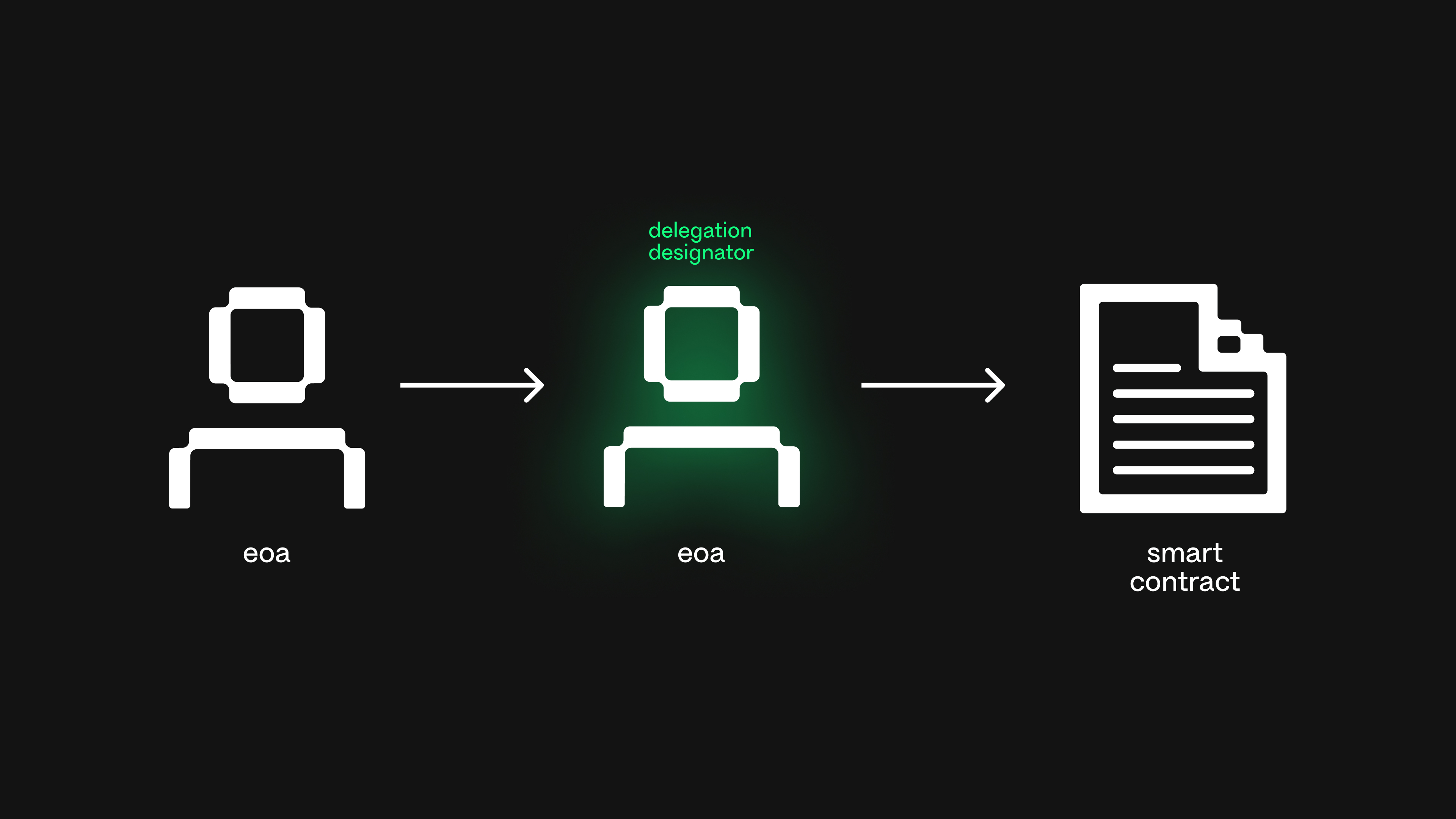
0x05
type. When an EOA has an active delegation, the transaction must include the authorization signature in its
authorizationList
field. This allows the network to verify the EOA’s delegated code before execution, enabling features like gasless meta-transactions.
No comments yet. Be the first to share your thoughts!