
The EIP-7702 migration 2026 reality
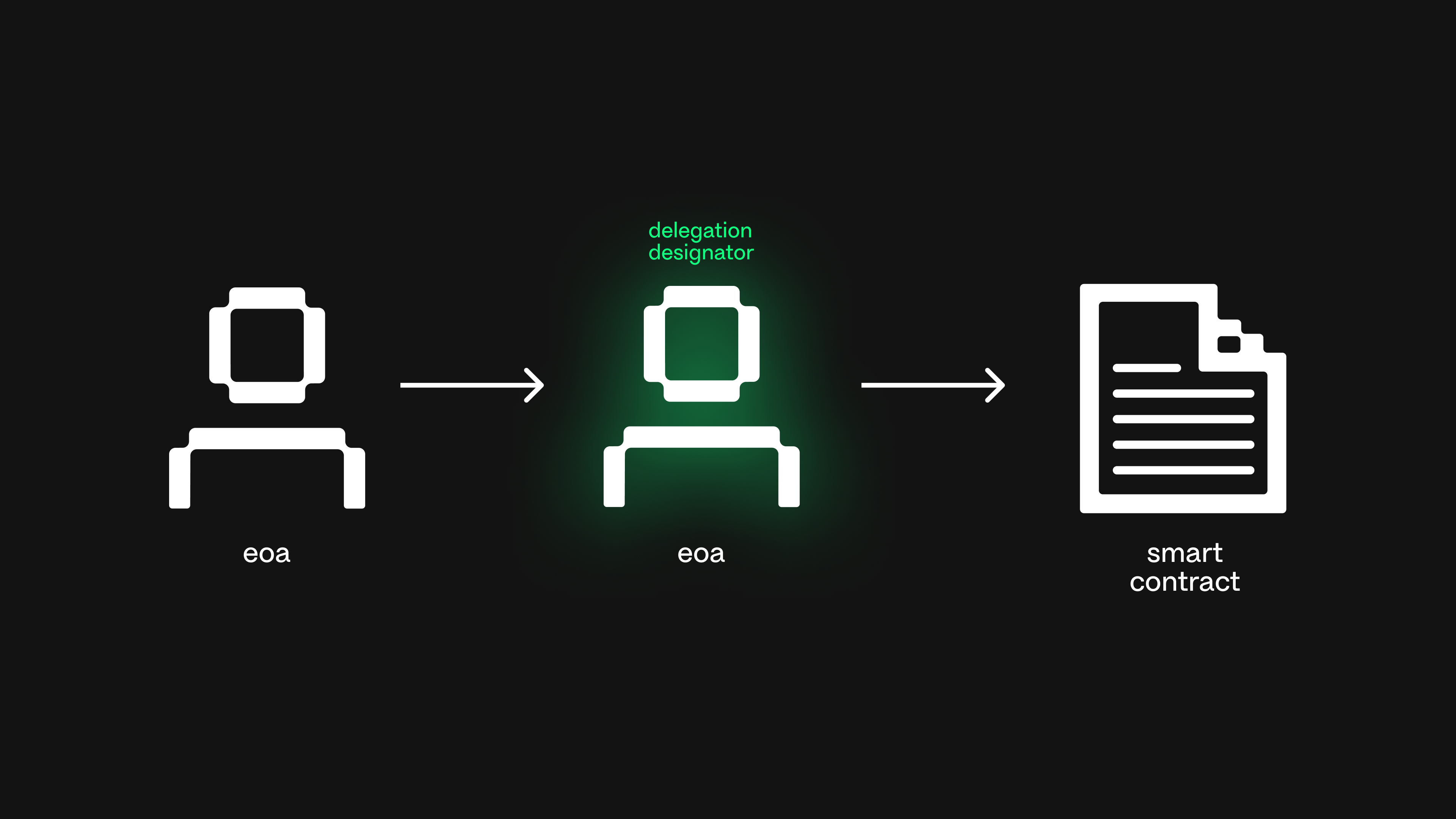
While the Pectra upgrade successfully activated EIP-7702, the anticipated wave of developer migration has not materialized. The primary reason is a fundamental misunderstanding of what "migration" entails under this specification. EIP-7702 does not require users to move their funds to new smart contract wallets or change their Ethereum addresses. Instead, it allows Externally Owned Accounts (EOAs)—the standard wallet addresses used by millions—to temporarily delegate execution to smart contract code.
This distinction is critical for developers assessing the upgrade's impact. Because the EOA address remains the same, the barrier to entry for users is technically lower, but the security implications are higher. The EIP introduces a new transaction type that includes an "authorizations" field. When a user signs this authorization, they are essentially telling the network: "For this transaction, treat my EOA as if it were this specific smart contract."
This temporary delegation mechanism is distinct from the full account abstraction model proposed by ERC-4337. ERC-4337 requires users to hold funds in actual smart contract wallets managed by bundlers and paymasters. EIP-7702, by contrast, keeps the EOA at the core but injects smart contract capabilities on a transaction-by-transaction basis. For most dApps, this means the "migration" is not a user onboarding event, but a backend integration task.
The low adoption rate among developers stems from the complexity of implementing these authorizations securely. Unlike standard ERC-20 transfers, handling EIP-7702 requires parsing new transaction formats and managing the lifecycle of delegated code. Many projects are waiting for clearer standards and more robust tooling before committing resources to a feature that offers marginal UX improvements for the average user, while introducing significant security risks if delegated to malicious contracts.
The market context of the Pectra era shows that while price action may reflect broader network activity, the specific metric of EIP-7702 adoption remains negligible. Developers are prioritizing stability over experimental feature integration. Until the security models for EOA delegation are proven and the developer experience is simplified, the "migration" will remain a theoretical capability rather than a widespread industry shift.
EOA delegation vs full smart accounts
The confusion around EIP-7702 often stems from conflating it with ERC-4337. They solve similar UX problems but operate on fundamentally different architectural layers. Understanding this distinction is critical for developers assessing risk and adoption timelines.
EIP-7702 enables temporary delegation. An Externally Owned Account (EOA) signs a special authorization that allows a smart contract to execute transactions on its behalf. This is often described as "code injection." The EOA remains the owner; it simply grants temporary execution rights to a contract. Once the delegation is revoked or the session expires, the EOA reverts to its standard state. This approach avoids the need for users to migrate to a new wallet address.
ERC-4337, by contrast, relies on full smart accounts. These are actual smart contracts deployed to the blockchain that replace the EOA entirely. Users do not sign transactions directly with their private key in the traditional sense. Instead, they use a "sponsor" or "bundler" to relay transactions through an off-chain mempool. This provides greater flexibility for gas sponsorship and account recovery but requires a complete migration of assets and identity to a new contract address.
The choice between these models dictates the complexity of your DApp’s onboarding flow. EIP-7702 offers a lighter lift for existing users, while ERC-4337 offers deeper customization at the cost of migration friction.
| Feature | EIP-7702 (EOA Delegation) | ERC-4337 (Smart Accounts) |
|---|---|---|
| Account Type | EOA (temporary code) | Smart Contract Wallet |
| Migration Required | No (keeps same address) | Yes (new contract address) |
| Execution Model | On-chain delegation | Off-chain bundler relay |
| Gas Sponsorship | Limited (via contract) | Native (Paymaster) |
| Security Model | User retains private key | Contract-based recovery |
Why dApps avoid the 7702 upgrade path
Despite the theoretical benefits of EIP-7702, most decentralized applications have stalled on adoption. The primary friction is not technical feasibility, but risk management. While the upgrade allows Externally Owned Accounts (EOAs) to temporarily delegate execution to smart contracts, it introduces a delegation vector that fundamentally changes the security landscape. For dApp builders, the cost of potential exploits currently outweighs the marginal gas savings.
The most significant barrier is the phishing surface area created by delegation. When a user signs a 7702 authorization, they are not just approving a transaction; they are granting a smart contract the ability to act on their behalf. If a user inadvertently delegates to a malicious contract, that contract can drain the account entirely. This is distinct from standard transaction signing, where the user approves a specific action. With delegation, the attacker gains ongoing control. As noted in official Ethereum documentation, "If a user unknowingly delegates their account to a malicious contract, an attacker could easily gain control and steal funds" [src-serp-6].
Beyond security, the user experience of authorizing signatures is cumbersome. Users must sign a special hash containing the chain ID, the target contract address, and their account nonce. This process is less intuitive than standard transaction approvals. Many users are unfamiliar with the concept of "authorizations" and may reject legitimate dApp interactions due to confusion or fear of losing control. This friction reduces conversion rates, making the upgrade unattractive for consumer-facing applications.
Finally, the economic incentive is weak for simple transactions. EIP-7702 offers gas savings primarily for complex interactions involving multiple steps or repeated authorizations. For a standard token swap or NFT mint, the gas cost difference is negligible. dApps that rely on high-volume, low-value transactions do not see a meaningful reduction in fees. Without immediate, tangible savings for the majority of users, there is little motivation to implement the necessary backend changes and security audits.
The path forward requires a shift in mindset. Developers must prioritize user education and robust security audits over immediate gas optimization. Until the delegation model is widely understood and trusted, most dApps will likely stick to ERC-4337 or standard EOAs, where the security boundaries are clearer and the user experience is more predictable.
When EIP-7702 actually makes sense
EIP-7702 is not a universal replacement for smart contract wallets. It is a targeted tool that allows Externally Owned Accounts (EOAs) to temporarily delegate execution to smart contract code without migrating their address. This capability is most valuable when the benefits of account abstraction are needed for specific features, rather than for the entire user lifecycle.
The protocol shines in three distinct scenarios where full migration is either too costly or unnecessary.
Session keys for gaming and high-frequency trading In gaming, players often need to sign dozens of transactions per minute for in-game actions. Requiring a personal signature for every move creates friction and exposes the private key to constant interaction. EIP-7702 allows a user to delegate authority to a game contract for a set period or nonce. Once delegated, the game can batch these actions without further user intervention, significantly improving UX while keeping the user's primary EOA intact.
Gasless transactions sponsored by the dApp New users often abandon dApps because they cannot afford ETH for gas. EIP-7702 enables a dApp to sponsor these fees. The user signs an authorization that delegates to the dApp's smart contract, which then pays the gas fees in exchange for the user's intended action. This removes the need for the user to hold a native token for gas, lowering the barrier to entry without requiring the user to switch to a fully sponsored smart account.
Batched operations without full migration For users who need to execute complex, multi-step transactions—such as interacting with multiple DeFi protocols in one go—EIP-7702 allows delegation to a batcher contract. This contract can execute multiple calls atomically. The user retains control of their EOA and can revoke this delegation at any time by signing a new authorization or simply by not signing the next one, offering a flexible middle ground between simple EOAs and immutable smart contract wallets.
No comments yet. Be the first to share your thoughts!