
What are the constraints of EIP-7702?
EIP-7702 introduces a new transaction type that allows Externally Owned Accounts (EOAs)—standard crypto wallets controlled by private keys—to temporarily adopt the behavior of smart contracts. This mechanism, known as "setting code," lets an EOA authorize a smart contract to act on its behalf for a single transaction or a limited window. For enterprise wallets, this bridges the gap between the simplicity of key-based control and the flexibility of programmable logic without permanently converting the wallet into a smart contract account.
The primary utility lies in simplifying complex operations like batched payments, gasless transactions, or multi-sig approvals. Instead of requiring users to deploy and manage separate contract wallets, EIP-7702 allows them to delegate specific capabilities to authorized contracts on demand. This reduces friction for enterprise users who need advanced functionality but lack the technical expertise to manage smart contract infrastructure.
However, the implementation introduces distinct security and operational constraints. The "set code" action is revocable, but if an EOA sets code to a malicious or vulnerable contract, it retains that code until explicitly reset. This creates a potential attack surface if authorization is compromised. Additionally, the feature requires careful management of transaction ordering and gas estimation, as the behavior of the EOA changes dynamically during the authorized period. Enterprises must audit the authorized contracts rigorously to ensure they do not introduce unexpected risks or compliance violations.
Eip-7702 choices that change the plan
Use this section to make the EIP-7702 Adoption Report decision easier to compare in real life, not just on paper. Start with the reader's actual constraint, then separate must-have requirements from details that are merely nice to have. A practical choice should survive normal use, maintenance, timing, and budget. If a recommendation only works in an ideal situation, call that out plainly and give the reader a fallback path.
| Factor | What to check | Why it matters |
|---|---|---|
| Fit | Match the option to the primary use case. | A good deal still fails if it does not fit the job. |
| Condition | Verify age, wear, and service history. | Hidden condition issues erase upfront savings. |
| Cost | Compare purchase price with likely upkeep. | The cheapest option is not always the lowest-cost option. |
How to choose the right enterprise wallet path
Enterprise wallet security is no longer a binary choice between legacy EOAs and full account abstraction. EIP-7702 introduces a hybrid model: it allows Externally Owned Accounts (EOAs) to temporarily delegate their signing authority to smart contracts via authorization codes. This bridges the gap between the simplicity of key management and the flexibility of smart contract wallets (SCWs). Your decision depends on your operational risk profile and the complexity of your transaction workflows.
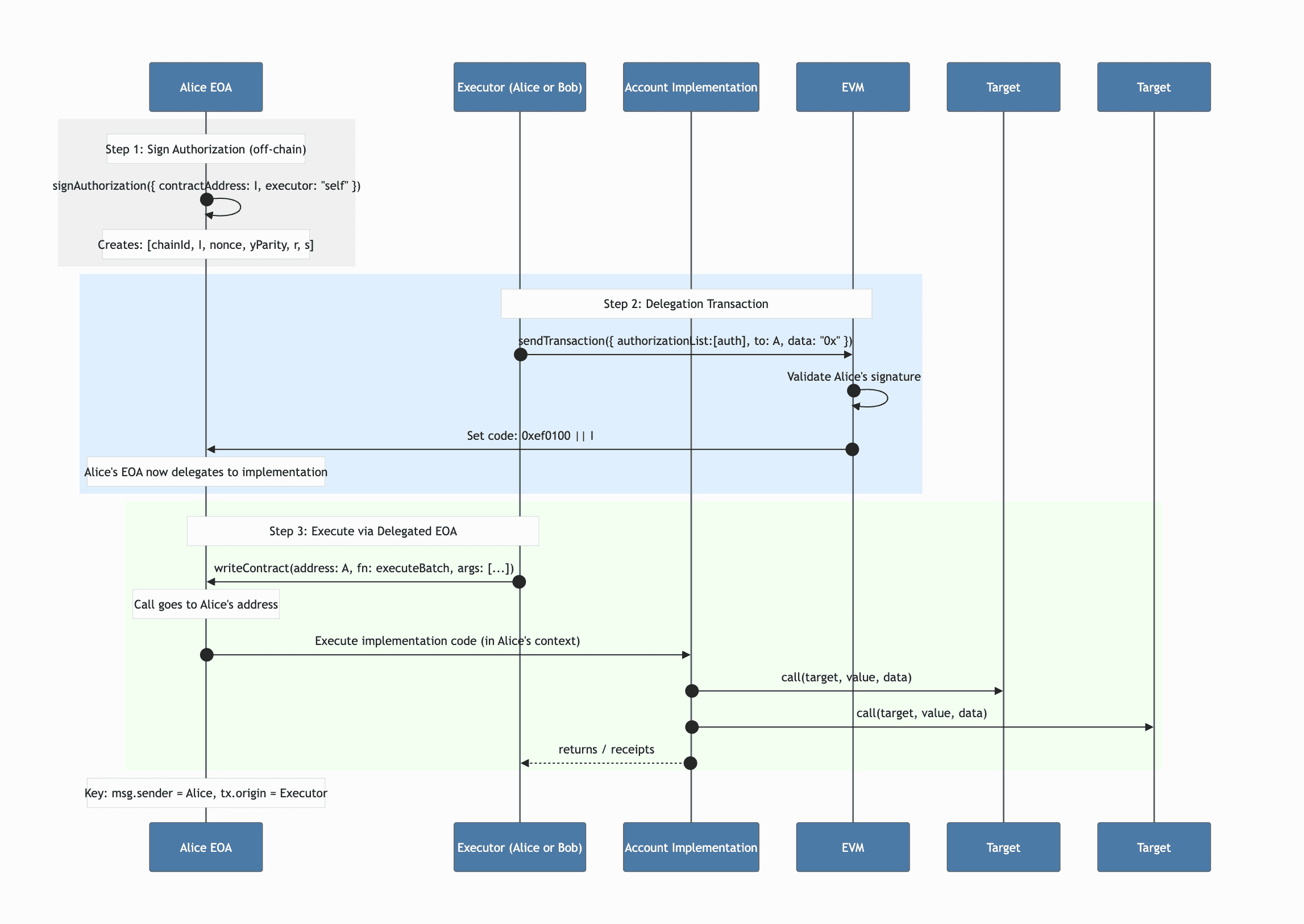
Before selecting a wallet architecture, map your transaction patterns. If your enterprise executes high-volume, repetitive transactions (such as payroll, staking rewards, or treasury rebalancing), EIP-7702 is highly advantageous. It allows you to use a hardware wallet (like a Ledger or Trezor) to sign an authorization, which then delegates signing to a smart contract. This enables complex multi-sig logic without exposing your private key to a smart contract address directly. If your use case is simple, one-off transfers, the overhead of setting up an EIP-7702 delegation may not justify the implementation cost.
Understanding the difference between EIP-4337 (Account Abstraction) and EIP-7702 is critical. EIP-4337 operates via a mempool and a dedicated bundler, allowing users to pay gas in tokens and use social recovery without changing the blockchain protocol. EIP-7702, however, is a protocol-level upgrade that modifies how EOAs interact with the state. It does not require a bundler; it works directly on-chain. For enterprises already using standard EOAs, EIP-7702 offers a lower-friction upgrade path because it integrates with existing wallet infrastructure. EIP-4337 requires a more significant shift in how you manage user sessions and gas payments.
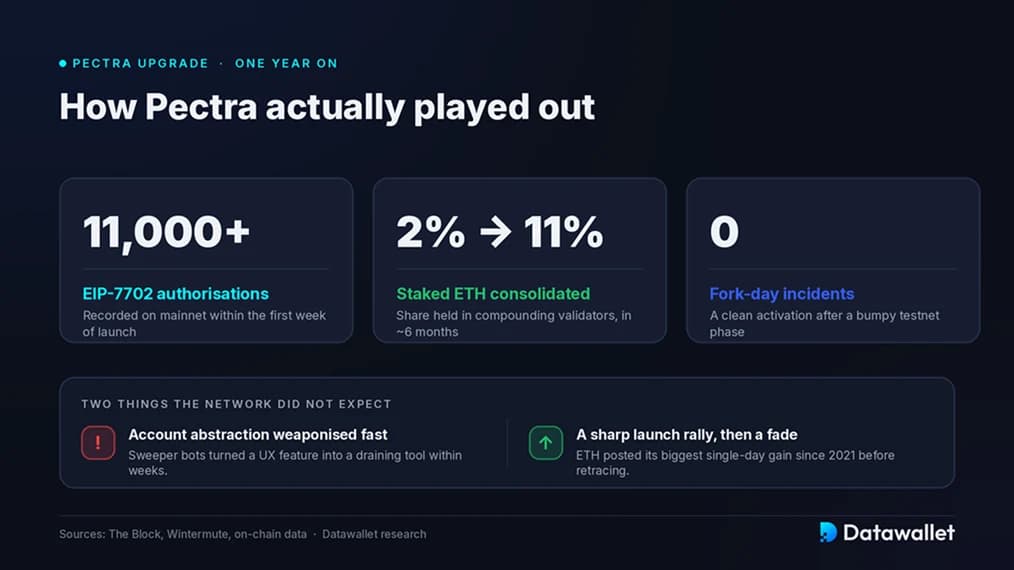
EIP-7702 introduces new attack vectors that do not exist in standard EOAs. Because an EOA can set code, a compromised authorization signature could allow an attacker to execute arbitrary code on behalf of the account until the authorization expires or is revoked. You must implement strict expiration times on these authorizations. Additionally, ensure your smart contract wallet logic is audited for reentrancy and signature replay attacks. The security benefit of multi-sig logic is only realized if the delegation mechanism itself is robust. Compare this risk against the convenience of automated transaction batching and policy enforcement.
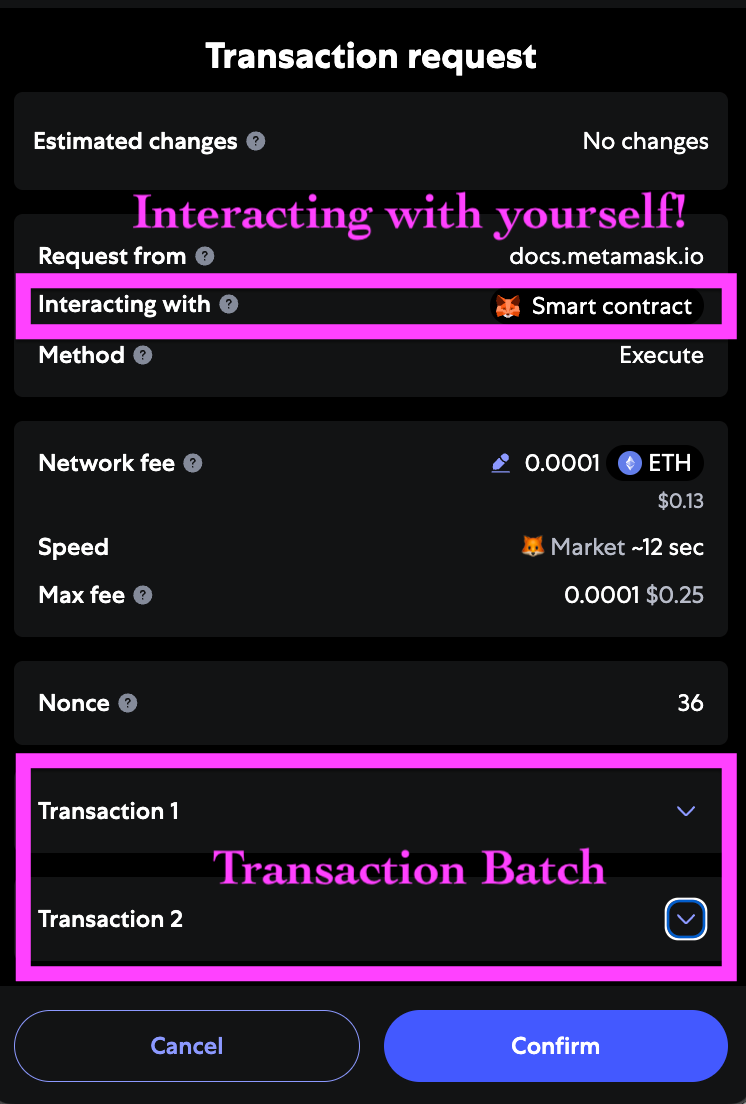
Do not migrate your entire treasury to EIP-7702 immediately. Start with a non-critical operational wallet. Test the authorization flow: sign the EIP-7702 authorization with your hardware wallet, then execute a transaction through the smart contract wallet. Verify that the gas costs, transaction latency, and failure modes match your expectations. Once the workflow is proven, gradually migrate higher-value accounts. Keep a legacy EOA backup for emergency access, ensuring you can bypass the smart contract logic if the authorization system fails.
| Feature | Standard EOA | EIP-7702 Hybrid | EIP-4337 AA |
|---|---|---|---|
| Gas Payment | Native ETH only | Native ETH only | Native ETH or ERC-20 |
| Smart Contract Logic | None | Delegated via Auth | Native via Paymaster |
| Infrastructure Change | None | Low (Protocol Upgrade) | High (Bundler Required) |
| Recovery Options | Seed Phrase Only | Multi-sig Policy | Social Recovery |
The right choice depends on your balance of security and operational efficiency. If you need to retain the simplicity of key-based signing while gaining the power of smart contract policies, EIP-7702 is the pragmatic step forward. If you require complex gas sponsorship and social recovery from day one, EIP-4337 remains the stronger candidate. For most enterprises, the low-friction integration of EIP-7702 makes it the immediate priority for wallet modernization.
Spotting Weak EIP-7702 Claims
Enterprise adoption of EIP-7702 has outpaced careful security reviews, leading to several misleading narratives. The core promise—that EOAs can temporarily delegate code execution to smart contracts—introduces unique attack vectors that many vendors overlook.
The most common mistake is assuming EIP-7702 authorizations are reversible in all contexts. While revocation is possible, it requires specific transaction types and gas costs that can be exploited during high-latency periods. Vendors claiming "instant, risk-free delegation" are ignoring the complexity of the authorization lifecycle.
Another weak option is treating EIP-7702 as a direct replacement for EIP-4337. They serve different purposes: EIP-4337 focuses on account abstraction via paymasters and bundlers, while EIP-7702 modifies EOA behavior directly. Confusing the two leads to flawed security architectures where critical keys remain exposed.
Finally, beware of implementations that hide the underlying SET_CODE transaction details. Transparency is non-negotiable. If a wallet solution doesn't clearly show when an EOA is setting code to a smart contract, it likely lacks the necessary audit trails for enterprise compliance. Always verify the transaction payload before signing.
No comments yet. Be the first to share your thoughts!