
EIP-7702 migration 2026 explained
The Pectra upgrade, activated in May 2026, introduced EIP-7702 to fundamentally alter how Ethereum accounts interact with the protocol. This change allows externally owned accounts (EOAs)—the standard wallet addresses controlled by private keys—to temporarily delegate their execution power to smart contracts. This mechanism, known as account abstraction, bridges the gap between simple key-based wallets and complex smart contract wallets without requiring users to migrate their funds or change their primary address.
Before EIP-7702, EOAs were limited to basic value transfers and signing messages. They could not execute complex logic, batch transactions, or sponsor gas for others. EIP-7702 changes this by allowing an EOA to set a code pointer to a smart contract. When a transaction is sent from that EOA, the Ethereum Virtual Machine (EVM) executes the code at the pointed contract address instead of the default EOA logic. This delegation is temporary; it lasts only for the duration of the transaction or until the user revokes the delegation by setting the pointer back to zero.
This approach avoids the friction of full address migration. Users do not need to move their entire balance to a new smart contract wallet address, which often involves complex setup and security risks. Instead, they retain their familiar EOA address while gaining access to advanced features like session keys for dApp interactions, gas sponsorship, and transaction batching. The Ethereum Foundation describes this as giving regular wallets access to smart-account behavior, effectively modernizing the EOA without breaking existing infrastructure.
The migration is seamless for end-users because the delegation happens at the protocol level. A user signs a transaction with their private key as usual, but the network interprets that signature as authorization for the smart contract's logic. This allows developers to build more sophisticated wallet experiences while maintaining the simplicity and security of key-based ownership. The upgrade represents the most substantive set of protocol changes since the Merge, significantly expanding the utility of Ethereum's base layer.
Smart Contract Wallets vs Delegated EOAs
The 2026 migration landscape splits into two distinct paths for account abstraction: native smart contract wallets (SCWs) and EIP-7702 delegated EOAs. Both approaches aim to replace the limitations of traditional externally owned accounts, but they achieve this through fundamentally different architectural mechanisms.
Native smart contract wallets are deployed as new on-chain entities. They operate with full code execution capabilities from inception, offering robust security features like multi-signature requirements and social recovery. However, this flexibility comes with higher initial deployment costs and a steeper learning curve for users accustomed to simple private key management.
EIP-7702, by contrast, allows existing EOAs to temporarily delegate authority to a smart contract. This "smart EOA" model retains the familiar address structure while gaining access to batching, gas sponsorship, and session keys. It represents a lower-friction entry point for mass adoption, as users do not need to migrate funds or learn new address formats.
The choice between these paths depends on the user's technical proficiency and security requirements. SCWs offer superior long-term control and recovery options, making them ideal for high-value holdings. EIP-7702 provides immediate utility with minimal disruption, suitable for everyday transactions and dApp interactions.
| Feature | Smart Contract Wallet | EIP-7702 EOA |
|---|---|---|
| Deployment | New address, gas cost | No new address, delegation tx |
| Security | Multi-sig, recovery | Delegation revocation |
| Gas Sponsorship | Native support | Native support |
| User Migration | Fund transfer required | No migration needed |
| Complexity | Higher setup | Low friction |
Layer 2 adoption of EIP-7702
The migration from externally owned accounts (EOAs) to smart contract wallets is accelerating across major Layer 2 networks. EIP-7702, introduced in the Pectra upgrade, allows standard wallets to temporarily adopt smart account behavior without deploying new contracts. This shift fundamentally alters the user experience by enabling features like gas sponsorship, session keys, and transaction batching directly from the user's existing wallet.
Layer 2s are leveraging this capability to solve persistent friction points. By allowing EOAs to sponsor gas for users, networks can abstract away the need for users to hold native tokens for fees. This is particularly impactful for USDC transactions, where EIP-7702 enables gasless transfers, making the experience indistinguishable from traditional web2 applications. The result is a significant reduction in onboarding complexity for new users who previously struggled with managing gas tokens across multiple chains.
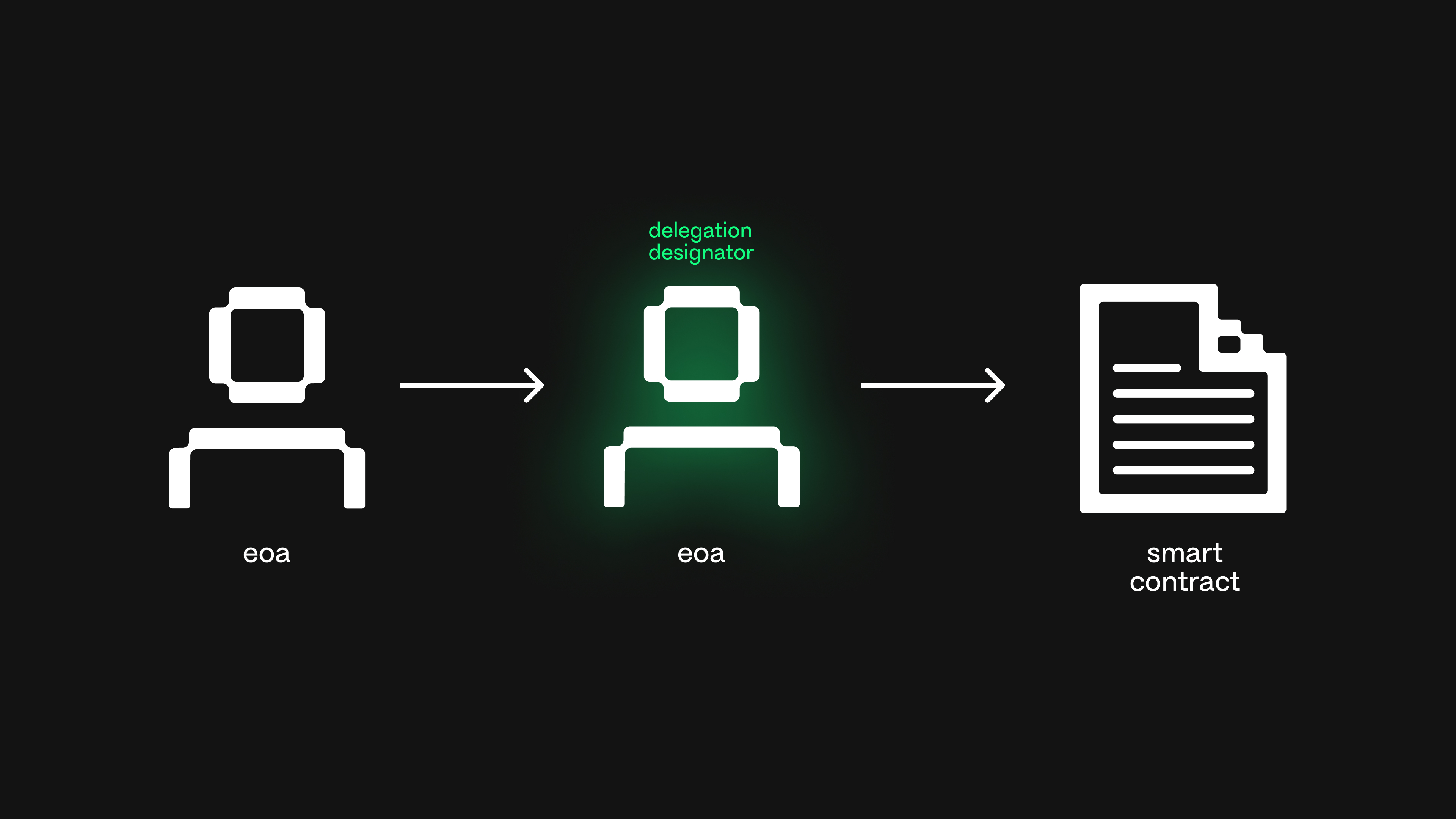
For developers, the tooling landscape is shifting toward modular account abstraction stacks. Instead of building custom smart contract wallets from scratch, teams can now integrate EIP-7702-compatible libraries to offer smart account features to existing EOA users. This lowers the barrier to entry for implementing advanced security features like multi-signature requirements or social recovery, which were previously difficult to deploy at scale. The technical migration is not just about user convenience; it is a structural upgrade that enhances the composability and security of the Ethereum ecosystem.
Migration steps for wallets and dapps
EIP-7702 introduces a new transaction type that allows Externally Owned Accounts (EOAs) to temporarily delegate their signing authority to smart contract code. For wallet providers and decentralized applications, this is not merely an update but a structural shift in how user identity and permissions are managed. The migration requires careful handling of the new type 4 transactions to ensure existing user flows remain intact while unlocking account abstraction features.
Wallet interfaces must recognize and display the new transaction type without breaking compatibility with legacy EOA transfers. When a user initiates a transaction that includes an authorization_list, the wallet needs to parse the new fields correctly. This involves updating the underlying libraries to understand the new encoding scheme, ensuring that the signing request accurately reflects the delegated contract address and the chain ID. Failure to parse these fields correctly can lead to silent failures or misinterpreted permissions.
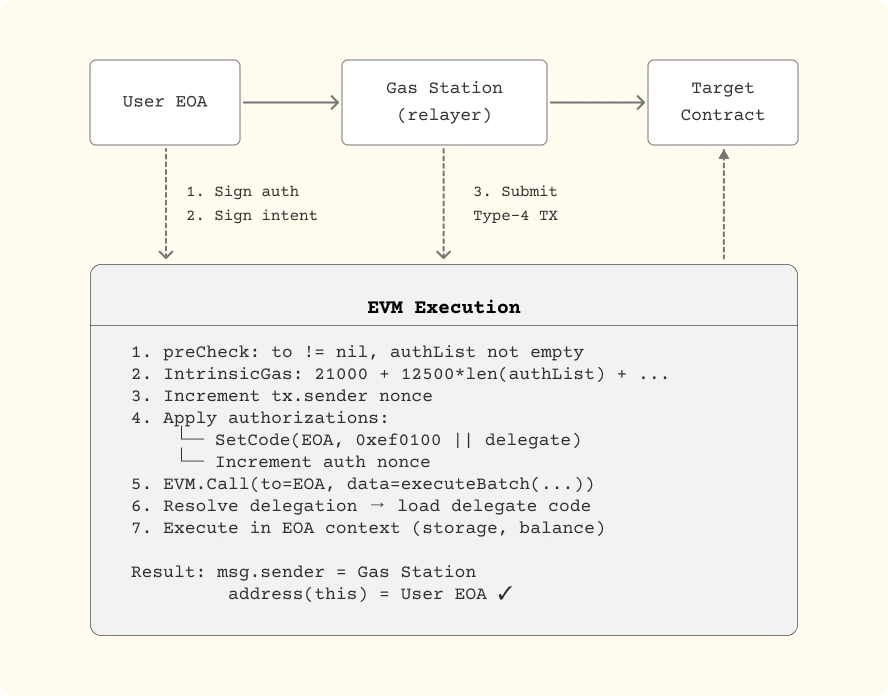
The core mechanic of EIP-7702 relies on the user signing a specific authorization message that grants permission to a contract. Wallet providers must implement validation hooks that verify these signatures against the Ethereum standard before broadcasting. This step ensures that the delegated code is valid and that the user has explicitly consented to the delegation. The wallet should clearly present the contract address being authorized, as this is the primary security boundary for the user.
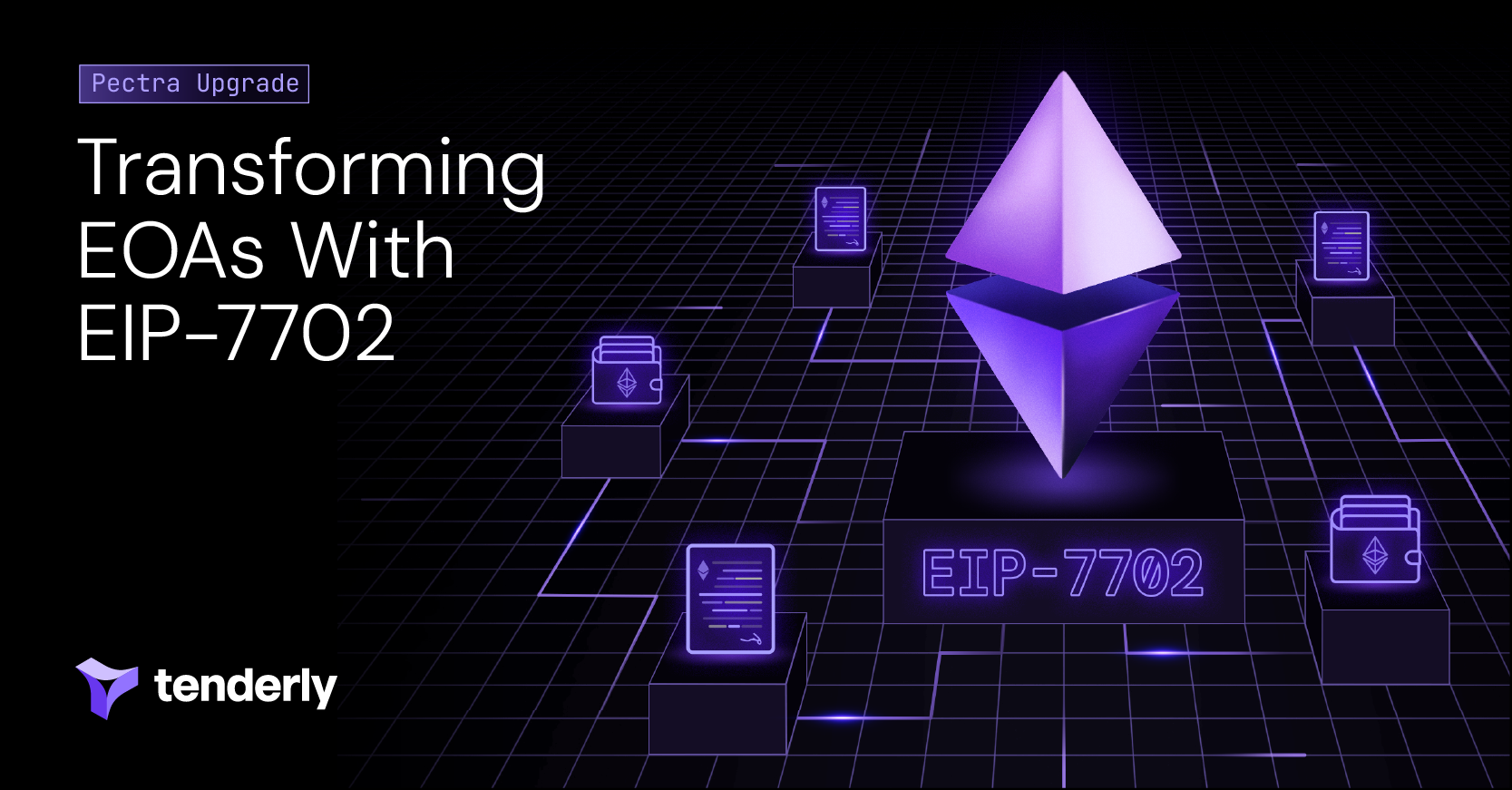
Once the authorization transaction is included in a block, the Ethereum state is updated to associate the EOA with the delegated contract's code. Wallets and dapps must be aware of this state change to avoid redundant operations. For instance, if a wallet previously treated an account as a simple EOA, it must now recognize that the account has active code storage. This awareness is critical for gas estimation and transaction simulation, as the execution path now involves the delegated contract rather than just the EOA.
Before deploying to mainnet, developers should rigorously test their implementations against the official Ethereum Improvement Proposal documentation. The EIP-7702 specification provides the definitive technical requirements for transaction types and state transitions. Using testnets that support EIP-7702 allows developers to verify that their wallets and dapps interact correctly with the new standard without risking mainnet funds. This testing phase is essential for identifying edge cases in signature validation and state management.
The transition to EIP-7702 is a technical imperative for wallets aiming to support account abstraction without requiring users to migrate to new key management systems. By following these steps, developers can ensure a smooth migration that preserves user security while enabling the next generation of Ethereum applications.
Key Questions on EIP-7702 Security
EIP-7702 introduces a delegation mechanism that allows Externally Owned Accounts (EOAs) to temporarily adopt smart contract logic. This shift from immutable EOA behavior to programmable delegation raises specific security questions regarding revocation and contract risk.
The security model relies on the user retaining the ability to unilaterally revoke access. This contrasts with traditional smart contract wallets where recovery can be complex. The immediate revocation capability ensures that even if a delegated contract is compromised, the damage is contained to the active session.
No comments yet. Be the first to share your thoughts!