
Get Your EIP-7702 Migration Status Right
EIP-7702 activated on Ethereum mainnet on May 7, 2025, as part of the Pectra hardfork. There is no permanent migration or forced upgrade for existing accounts. The protocol allows Externally Owned Accounts (EOAs) to temporarily delegate execution to a smart contract without changing your address. However, before you begin using Smart Contract Authority, you must verify your wallet’s readiness and understand the new risks.
Verify Wallet Compatibility
Not all interfaces support the new transaction type yet. Check if your wallet can sign and broadcast 7702 authorization transactions. If your interface throws an error when interacting with a smart contract-enabled account, it likely lacks 7702 support. Stick to wallets that explicitly list Pectra/EIP-7702 compatibility in their release notes.
Understand the Authorization Lifecycle
EIP-7702 uses a temporary delegation model. You sign an authorization message that records a smart contract’s code hash on-chain. This delegation remains valid until you revoke it or the session expires. Unlike account abstraction where code is permanent, your EOA retains its original identity. You can switch delegation or revert to pure EOA status at any time by signing a new authorization or a revocation transaction.
Assess New Risk Vectors
The primary risks are smart contract risk and phishing risk. If you delegate to a malicious or buggy contract, that contract gains control over your EOA’s assets. Unlike traditional smart contract interactions, this power is granted via signature, not direct contract deployment. Always audit the target contract’s code before signing an authorization. Be wary of phishing attempts that ask you to sign "authorization" messages disguised as routine transactions.
Check Gas Implications
While EIP-7702 enables gas sponsorship and batching, the initial authorization transaction requires a small gas fee. Ensure your EOA has sufficient ETH to cover this cost. If you plan to use gas sponsorship, verify that the sponsoring contract is compatible with 7702 transactions, as not all paymasters support the new type.
Walk through the steps
EIP-7702 does not require a permanent migration. Instead, it introduces a new transaction type that lets an externally owned account (EOA) delegate execution to a smart contract. This process is temporary and revocable, meaning your address remains an EOA while gaining smart wallet capabilities like gas sponsorship and batching.
Follow this sequence to authorize a smart contract and verify the delegation is active.
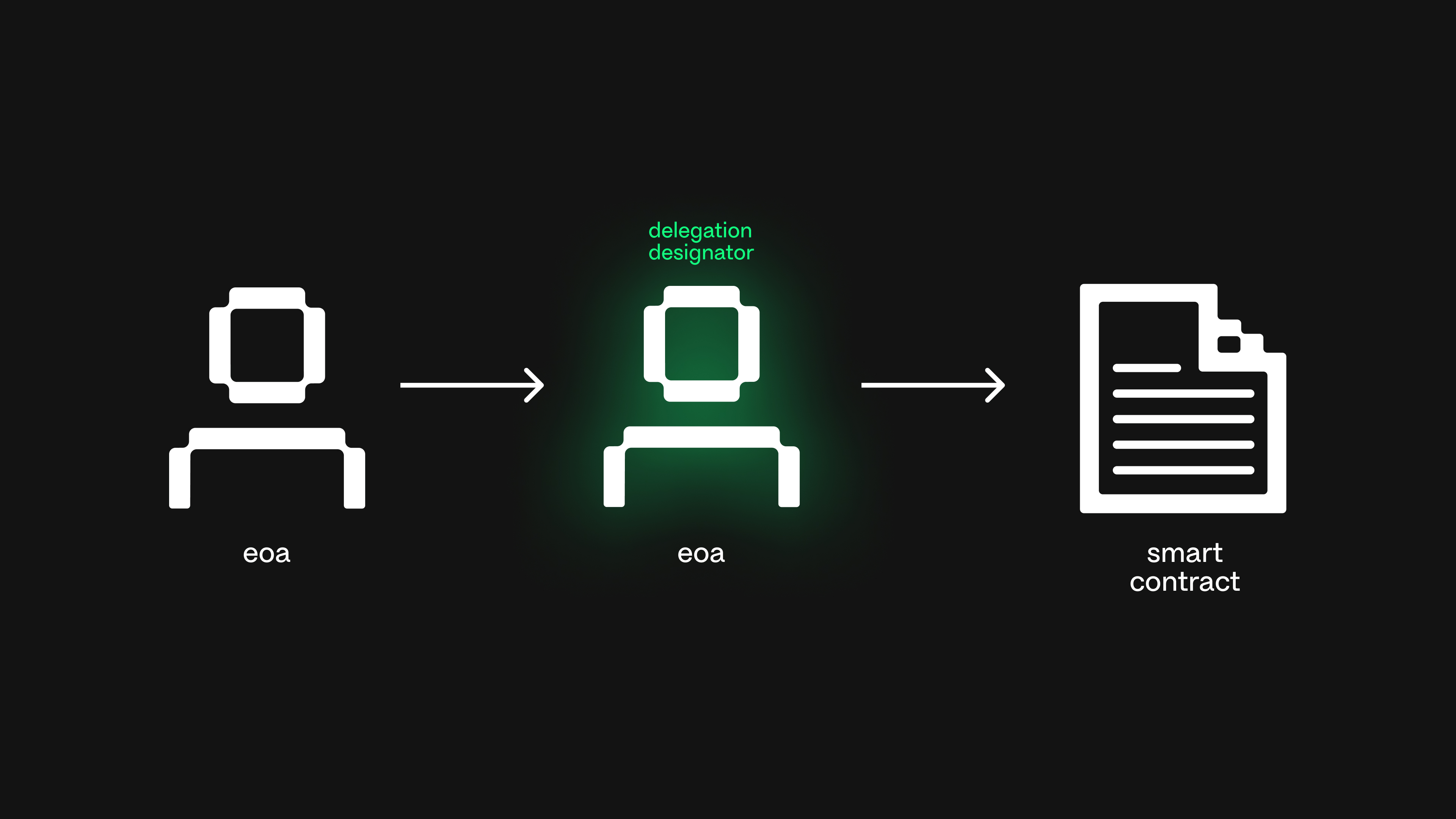
You must initiate the process by signing a special authorization message. This message contains the address of the smart contract you want to delegate to. Use a wallet that supports EIP-7702, such as MetaMask or Rabby, to generate this signature. The signature proves you own the private key associated with your EOA without exposing it.
Submit the signed authorization to the Ethereum network. This transaction includes the new "authorizations" field. Once mined, the network records your delegation intent. This step activates the smart contract authority for your EOA, allowing the contract to execute transactions on your behalf in subsequent interactions.
Confirm the delegation is live by checking the contract’s state or using a block explorer. The EOA’s code field will reflect the delegated contract. You can also test the setup by sending a transaction that requires gas sponsorship from the smart contract. This confirms the delegation is active and functional.
Configure the smart contract to enforce security boundaries. Set expiration times, gas limits, or specific function permissions. This prevents the contract from executing unlimited actions. Proper configuration ensures that even if the contract is compromised, your funds remain protected within the defined parameters.
If you no longer trust the smart contract or want to revert to a standard EOA, you can revoke the delegation. Send a new transaction with an empty authorization or a revoke flag. The network will immediately remove the smart contract authority, returning your account to its default state.
Fix common mistakes
EIP-7702 removes the need for a permanent migration, but it introduces new ways to misconfigure your wallet. The protocol lets an Externally Owned Account (EOA) delegate execution to a smart contract without changing your address. This convenience creates specific pitfalls if you treat the delegation as a one-time deployment rather than a dynamic permission.
Forgetting to revoke expired authorizations
The authorization is not permanent. It remains valid until you explicitly revoke it or the contract logic expires it. Many users sign a delegation once and never check back. If you lose access to the delegated contract or if the contract is compromised, your EOA remains vulnerable until the authorization expires or is manually revoked. Always verify the revocation mechanism in the smart contract documentation before signing.
Signing authorizations for unverified contracts
When you sign an authorization message, you are granting a smart contract the power to act on your behalf. If you sign this message for a contract that has not been audited or verified on Etherscan, you are handing over control to unverified code. This is a primary phishing vector. Attackers often mimic legitimate wallet interfaces to trick users into signing these authorizations. Only delegate to contracts you have personally audited or trust implicitly.
Assuming gas sponsorship works everywhere
EIP-7702 enables gas sponsorship, allowing a third party to pay for your transaction fees. However, this depends entirely on the recipient contract supporting the paymaster logic. If you delegate to a contract that does not implement this feature, your transactions will still require native ETH for gas. Do not assume all EIP-7702-enabled wallets automatically offer gas-free transactions; check the specific implementation details of the smart contract you are delegating to.
Eip-7702 migration status 2026: what to check next
This section answers the most common practical questions about EIP-7702 implementation, activation, and risks for 2026.
No comments yet. Be the first to share your thoughts!