
Get EIP-7702 migration right
Before you touch the deployment scripts, verify that your infrastructure meets the baseline requirements for EIP-7702. This upgrade allows Externally Owned Accounts (EOAs) to delegate to smart contracts without moving funds or changing addresses, but it introduces new risks if the setup is incomplete.
First, ensure your node providers support the Cancun hard fork state changes. If your RPC endpoints are outdated, they will reject the new transaction types. Second, audit your smart contract code. EIP-7702 relies on a specific delegation mechanism; any contract attempting to mimic this behavior without the actual EIP implementation will fail validation.
Finally, test the delegation flow in a sandbox environment. You need to confirm that your accounts can successfully set and revoke delegation codes. Skipping this step often leads to locked assets or failed transactions when users attempt to interact with your Layer 2 solution.
The migration is not just a code update; it is a structural change to how accounts operate. Treat it with the same rigor as a security audit. If your prerequisites are solid, the transition will be smooth. If not, users will face friction that damages trust in your platform.
How to migrate your EOA to EIP-7702
The migration process for EIP-7702 is designed to be non-disruptive. Unlike traditional account migrations, you do not need to transfer assets or generate a new address. Your externally owned account retains its identity while gaining the ability to delegate authority to a smart contract.
This process involves signing specific transaction types that update your account's code slot. Below is the sequential workflow to complete the migration on supported Layer 2 networks.
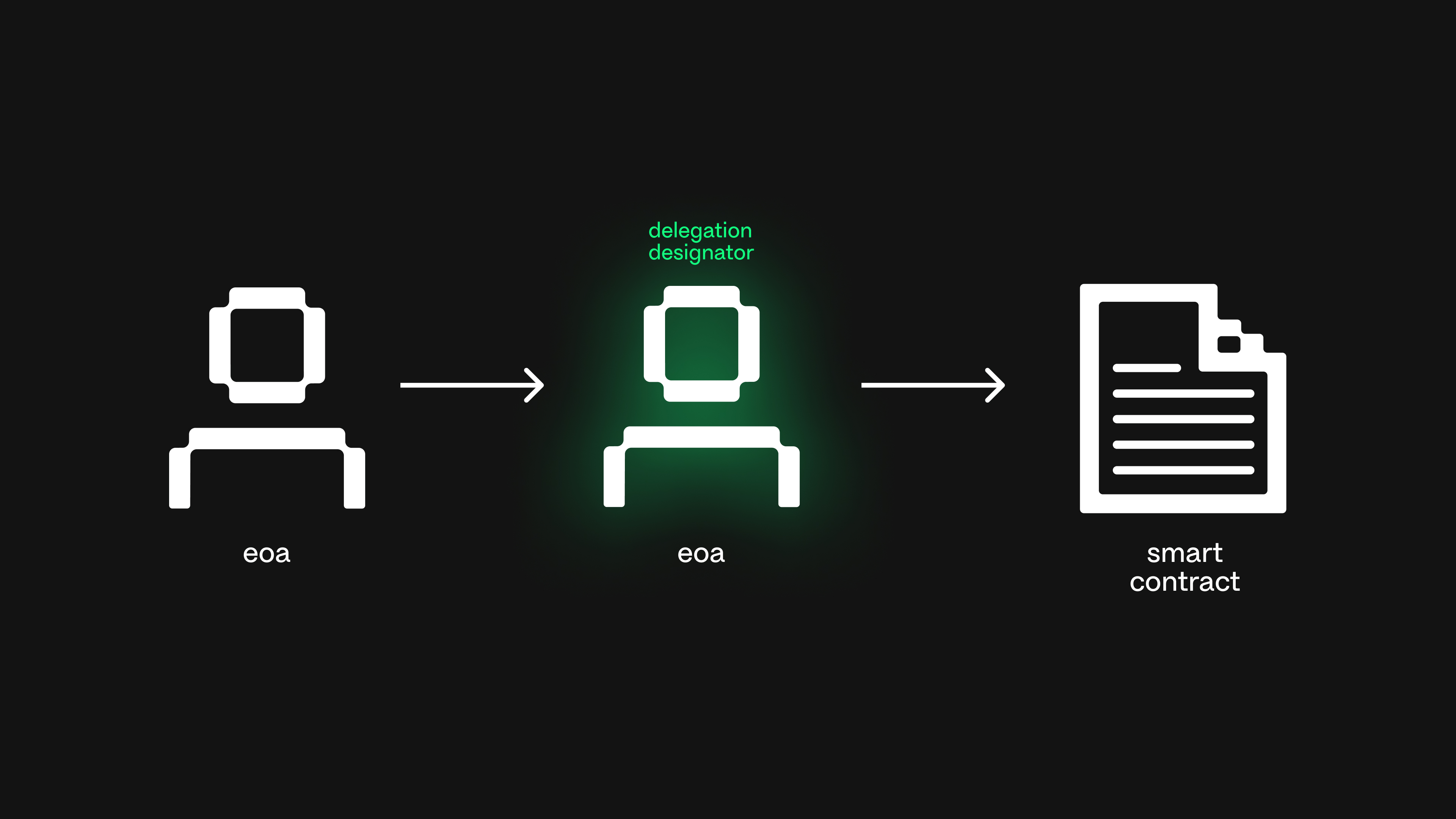
Before initiating any actions, confirm that the Layer 2 network you are using supports EIP-7702. While many major L2s have completed the migration, some legacy chains or niche forks may still rely on pre-EIP-7702 logic. Check the network’s official documentation or block explorer to ensure the activation block has passed. Attempting to use 7702 features on an incompatible chain will result in transaction failures.
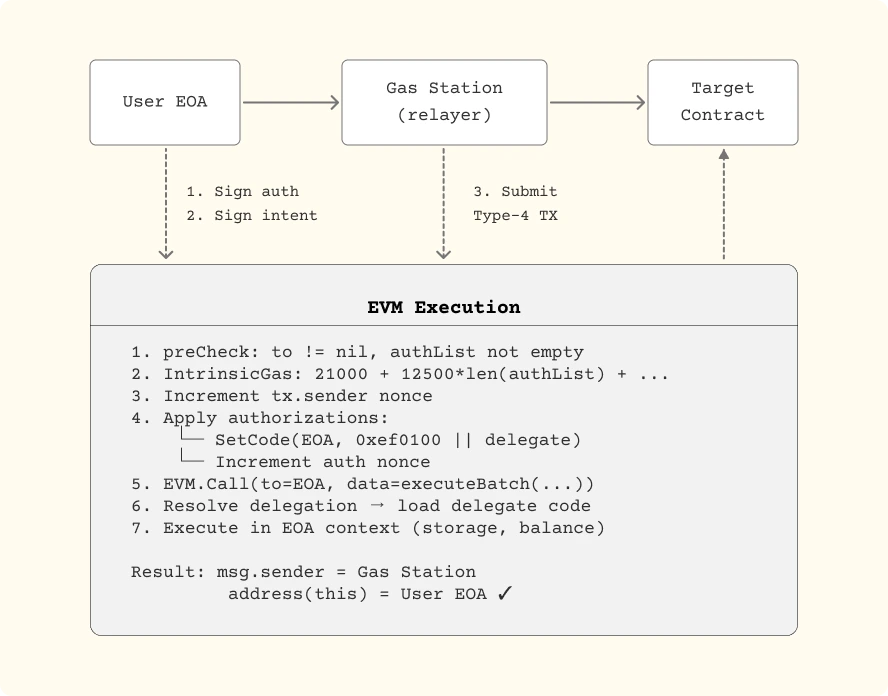
Ensure your wallet software is updated to a version that supports EIP-7702 transaction types (EIP-7702 set code transactions). Most modern wallets like MetaMask, Rabby, or Safe now include this support. If you are using a hardware wallet, verify that the firmware supports the new signature formats. You will need to sign a transaction that points your EOA to a smart contract wallet address.
Initiate the migration by sending a transaction that sets your code to the delegated contract. This is typically done through a "Set Code" transaction. You do not need to move funds. The transaction updates your account state on-chain, linking your EOA to the smart contract’s logic. Once mined, your EOA is now a "Smart EOA" capable of executing complex logic.
After the delegation transaction is confirmed, perform a low-value test transaction. Send a small amount of ETH or a stablecoin to a dApp that requires smart contract logic. This confirms that your signature verification is working correctly through the delegated contract. If the transaction succeeds, your migration is complete.
EIP-7702 includes replay protection mechanisms to prevent signatures from being reused on other chains. However, always verify that your wallet is correctly applying the chain ID to your 7702 signatures. This ensures that your delegated authority cannot be exploited on other networks where you may have similar setups.
| Feature | Value |
|---|---|
| Asset Transfer | Not required |
| Address Change | Not required |
| Gas Cost | Standard transaction fee |
| Irreversibility | Partial (can revert delegation) |
-
Update wallet to latest version
-
Confirm network supports EIP-7702
-
Execute Set Code transaction
-
Verify delegation on block explorer
-
Test with a small dApp interaction
Common Mistakes When Implementing EIP-7702
EIP-7702 allows externally owned accounts to delegate transactions to smart contracts without migrating assets or changing addresses. While this simplifies account abstraction for most Layer 2 users, the transition is not frictionless. Many projects and users stumble on subtle implementation details that break functionality or expose security risks.
Misunderstanding the Scope of Delegation
A frequent error is assuming EIP-7702 provides full account abstraction. It does not. The EOA retains its fundamental properties: it still requires private key signatures for authorization. The "smart" behavior is limited to the delegated contract executing the logic. Projects that build complex on-chain identity or session key systems assuming full ERC-4337 compatibility will find EIP-7702 insufficient. It is a delegation tool, not a complete account replacement.
Overlooking Contract Upgradeability Risks
When an EOA delegates to a contract, it binds its future transactions to that contract’s code. If the delegated contract is upgradable and the implementation changes unexpectedly, the EOA’s behavior changes with it. This creates a trust assumption that many users overlook. Ensure the delegated contract is either immutable or has a transparent, multi-sig upgrade mechanism. Users should verify the current code hash before signing the authorization.
Ignoring Gas and Transaction Size Impacts
EIP-7702 transactions include additional data: the delegation signature and the contract code hash. This increases the base gas cost compared to standard EOAs. On Layer 2s with strict gas limits or low fees, this overhead can sometimes cause transactions to fail if not accounted for in the user’s gas estimation. Always test delegation transactions with realistic gas limits, especially when interacting with contracts that have complex fallback logic.
EIP-7702 migration 2026: what to check next
The shift to EIP-7702 is the most significant change to Ethereum account structure in years. Here are the practical answers to the most common concerns about the migration process.
No comments yet. Be the first to share your thoughts!