
What EIP-7702 Actually Does
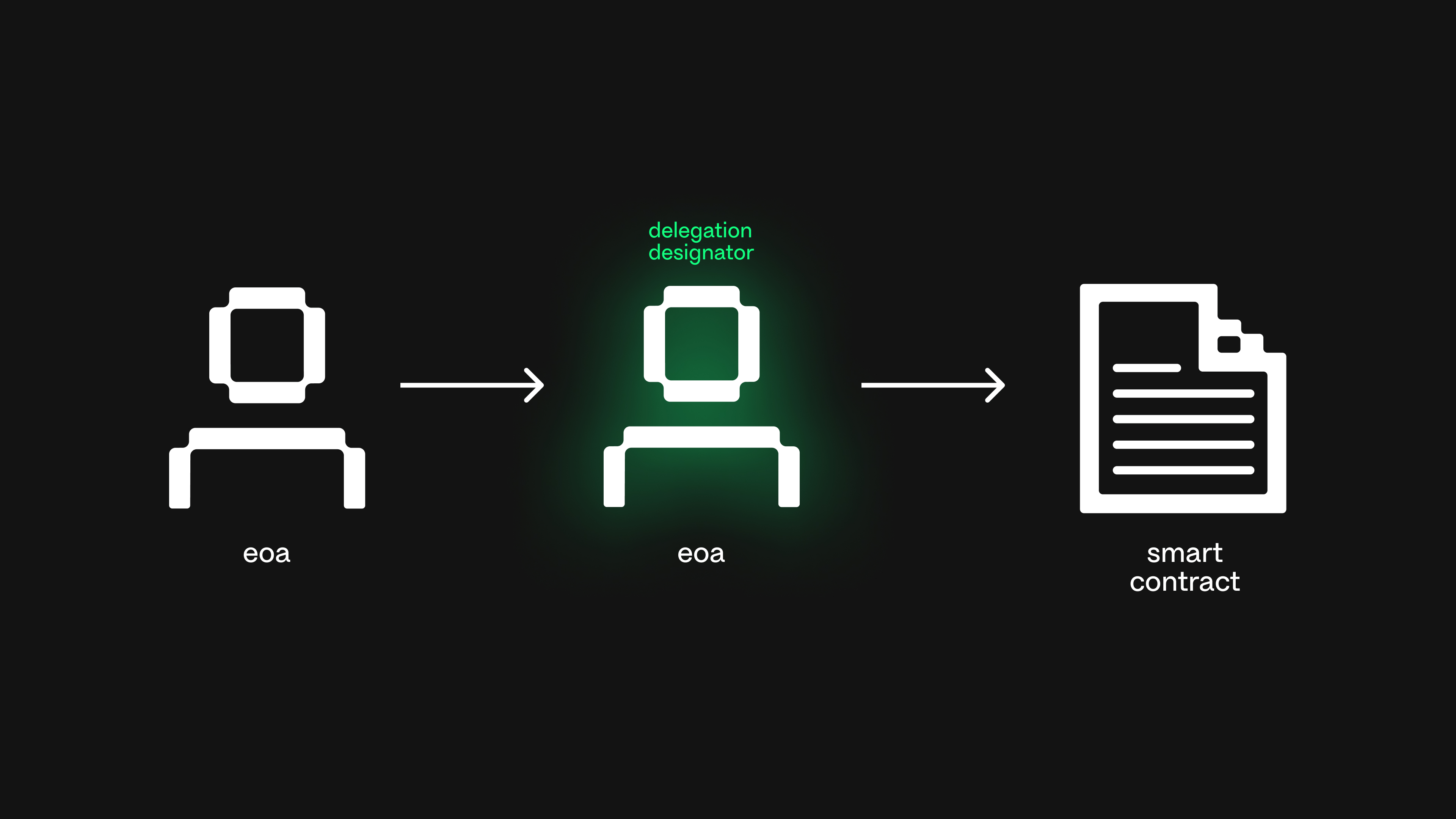
The most common misconception surrounding EIP-7702 is that it requires a migration. It does not. EIP-7702 introduces a delegation mechanism that allows Externally Owned Accounts (EOAs) to temporarily act like smart contracts without changing their address or transferring funds.
Under the hood, EIP-7702 adds a new transaction type that lets an EOA set code in its account. This code is not permanent; it is a pointer to a smart contract. When a transaction is executed, the EOA’s logic is temporarily replaced by the delegated contract’s logic for that specific interaction. Once the transaction completes, the EOA reverts to its standard state. This means users keep their familiar, simple keys while gaining access to advanced account abstraction features like paymasters and session keys.
As the Ethereum Improvement Proposal abstract states, this mechanism is designed to avoid requiring migration. There is no permanent migration. You do not need to move your funds to a new wallet or change your address to use EIP-7702. The delegation is reversible and transaction-specific, ensuring that the user experience remains largely unchanged while unlocking new functionality.
For enterprise decision-makers, this distinction is critical. EIP-7702 is an upgrade to the EOA, not a replacement for ERC-4337 smart accounts. It offers a middle ground: the simplicity of EOAs with the flexibility of smart accounts, but without the friction of migrating user bases or funds.
EIP-7702 vs. ERC-4337 Architecture
For enterprises building on Ethereum, the choice between EIP-7702 and ERC-4337 is a choice between leveraging existing user assets or building a new infrastructure layer. EIP-7702 allows Externally Owned Accounts (EOAs) to temporarily delegate authority to a smart contract, effectively turning standard wallets into smart accounts without moving funds. ERC-4337, by contrast, introduced a completely separate entry point and account abstraction stack, requiring users to hold funds in new smart contract wallets.
The primary tradeoff lies in deployment complexity versus user experience. EIP-7702 offers a lower barrier to entry because it does not require asset migration or address changes. Users can interact with smart contract logic using their existing keys. ERC-4337 provides more robust features like social recovery and session keys from day one but demands that users migrate assets to new addresses, creating friction for mass adoption.
Comparison of Core Attributes
The table below outlines the structural differences that impact enterprise integration and user onboarding.
| Feature | EIP-7702 | ERC-4337 |
|---|---|---|
| Account Type | EOA (delegated) | Smart Contract Wallet |
| Asset Migration | Not required | Required |
| Gas Payment | Native ETH only | Native + ERC-20 |
| Security Model | Temporary delegation | Persistent smart contract |
| Bundler Dependency | No | Yes |
EIP-7702 simplifies the technical stack by removing the need for a bundler, which reduces operational overhead for enterprises. However, its security model relies on temporary delegation, meaning the smart contract logic is not permanently attached to the account. ERC-4337 offers a more permanent and flexible security model, supporting complex features like multi-sig and social recovery, but it requires maintaining a bundler network or relying on third-party services.
Choosing the Right Path
If your primary goal is rapid user acquisition with minimal friction, EIP-7702 is the stronger candidate. It allows users to retain their existing addresses and keys while gaining smart account benefits. This approach is ideal for applications where asset migration is a significant drop-off point.
For applications requiring advanced security features, such as social recovery or session keys, ERC-4337 remains the industry standard. The persistent smart contract wallet provides a more robust foundation for long-term user engagement, despite the initial onboarding friction.
Enterprise Use Cases for Smart Accounts
Smart accounts transform Ethereum from a simple ledger into an operational platform for business. By leveraging EIP-7702, enterprises can treat externally owned accounts (EOAs) like smart contracts without deploying new code. This shift enables two critical capabilities: gas sponsorship and social recovery.
Gas sponsorship removes friction for user adoption. With EIP-7702, businesses can sponsor gas fees for specific actions, such as USDC transfers, directly from the protocol level. Circle has already demonstrated this with gasless USDC transactions on the Pectra upgrade, allowing users to transact without holding ETH. For enterprises, this means onboarding non-crypto-native employees or customers without requiring them to manage gas tokens.
Social recovery addresses the single point of failure in traditional wallets. If a user loses their private key, their assets are locked forever. Smart accounts allow multiple recovery methods, such as trusted contacts or time-locks, to restore access. This is essential for corporate treasuries and employee wallets where continuity and security are paramount.
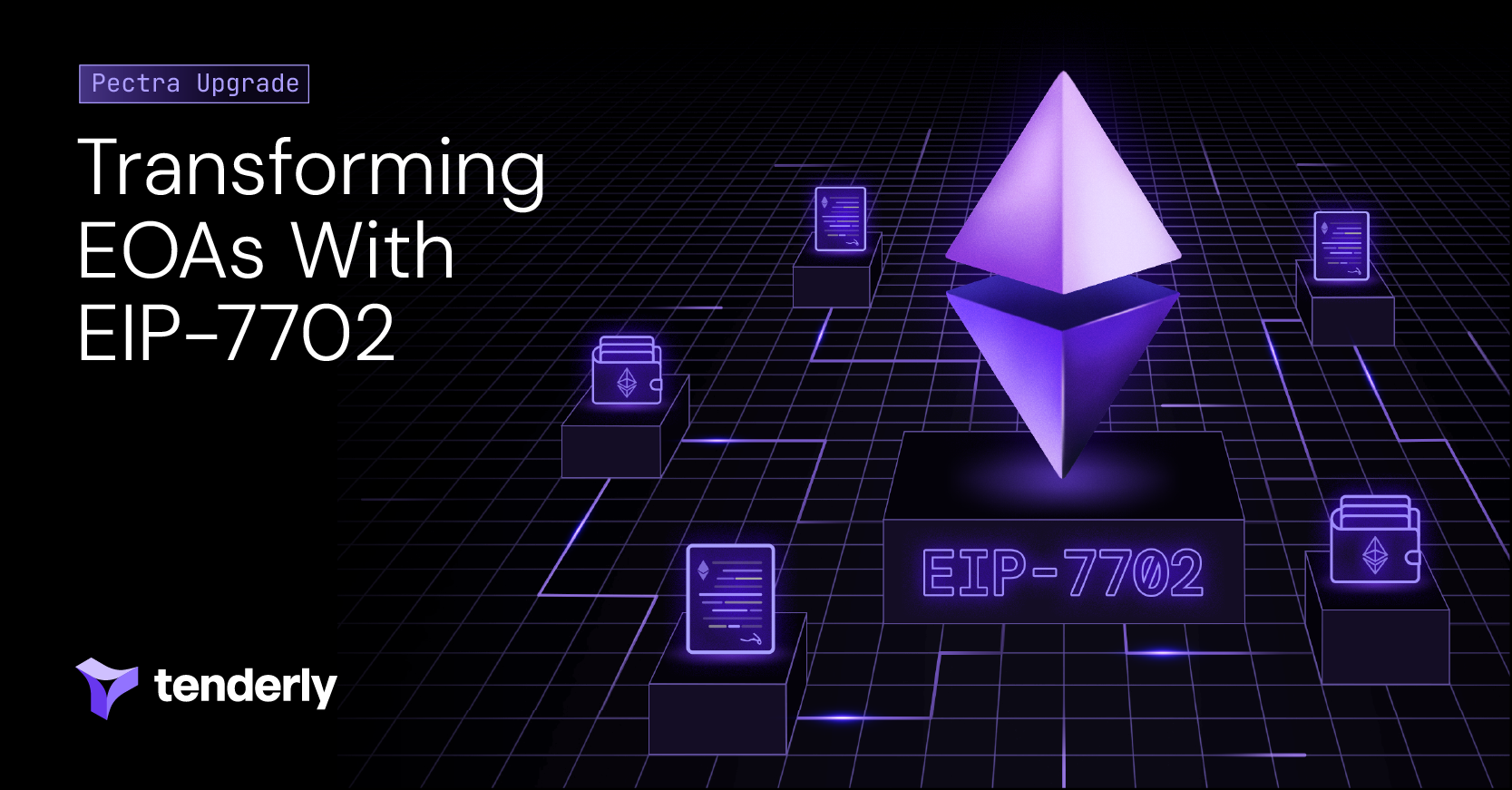
The image below illustrates the architectural shift enabled by EIP-7702, showing how smart account features integrate directly into standard Ethereum accounts.
Security Risks and Mitigation
EIP-7702 introduces a delegation mechanism that allows Externally Owned Accounts (EOAs) to temporarily act like smart contracts. While this reduces friction for users, it also creates a new attack surface. The core risk lies in the delegation transaction itself: if an attacker tricks a user into signing a malicious delegation payload, they can seize control of the account's execution capabilities until the session expires or the user revokes access.
Unlike permanent smart contract wallets, EIP-7702 delegations are typically session-based. This limits the window of exposure, but it does not eliminate the threat of social engineering. Users must carefully review transaction signatures, as malicious contracts can mimic legitimate interface behaviors. Mitigation requires rigorous audit standards for any contract requesting delegation and user education on signature verification.
The market volatility surrounding the Pectra upgrade highlights the importance of stable, secure infrastructure. As shown in the ETH/USD chart, rapid price movements can coincide with increased network activity, potentially amplifying the impact of successful exploits. Secure delegation practices are not just a technical requirement; they are essential for maintaining user trust during high-stakes protocol transitions.
Migration Checklist for 2026
Transitioning to EIP-7702 requires a structured approach for both wallet providers and dApp developers. This checklist outlines the essential steps to ensure compatibility with smart EOAs without disrupting existing user flows.
Review your existing ERC-4337 implementation. EIP-7702 allows EOAs to delegate to smart contracts, meaning you may not need a full account migration. Identify which user interactions can be handled by smart EOAs versus those requiring a full smart account infrastructure.
EIP-7702 introduces a new EIP-2718 transaction type that allows EOAs to set code in their account. Ensure your wallet SDK can sign and broadcast these specific transaction formats. Test signature validation against the latest Ethereum client specifications to prevent rejection by validators.
Smart EOAs can delegate authority to a contract, but this delegation must be revocable. Build UI flows that allow users to easily revoke smart contract access. This is critical for security and user trust, ensuring users retain control over their EOA status.
Gas dynamics differ for EIP-7702 transactions. Verify that your gas estimation logic accounts for the additional code execution during delegation. If your dApp relies on bundlers for ERC-4337, ensure they are updated to handle the new transaction type efficiently.
Keep track of Ethereum client upgrades and EIP-7702 activation timelines. Use official Ethereum Improvement Proposal documentation as your primary source for technical details and activation schedules to ensure your migration aligns with network consensus.
The shift to smart EOAs simplifies onboarding by removing the need for initial smart contract deployment for every user. However, it requires careful handling of delegation and revocation to maintain security standards.
No comments yet. Be the first to share your thoughts!