
What EIP-7702 changes for wallets
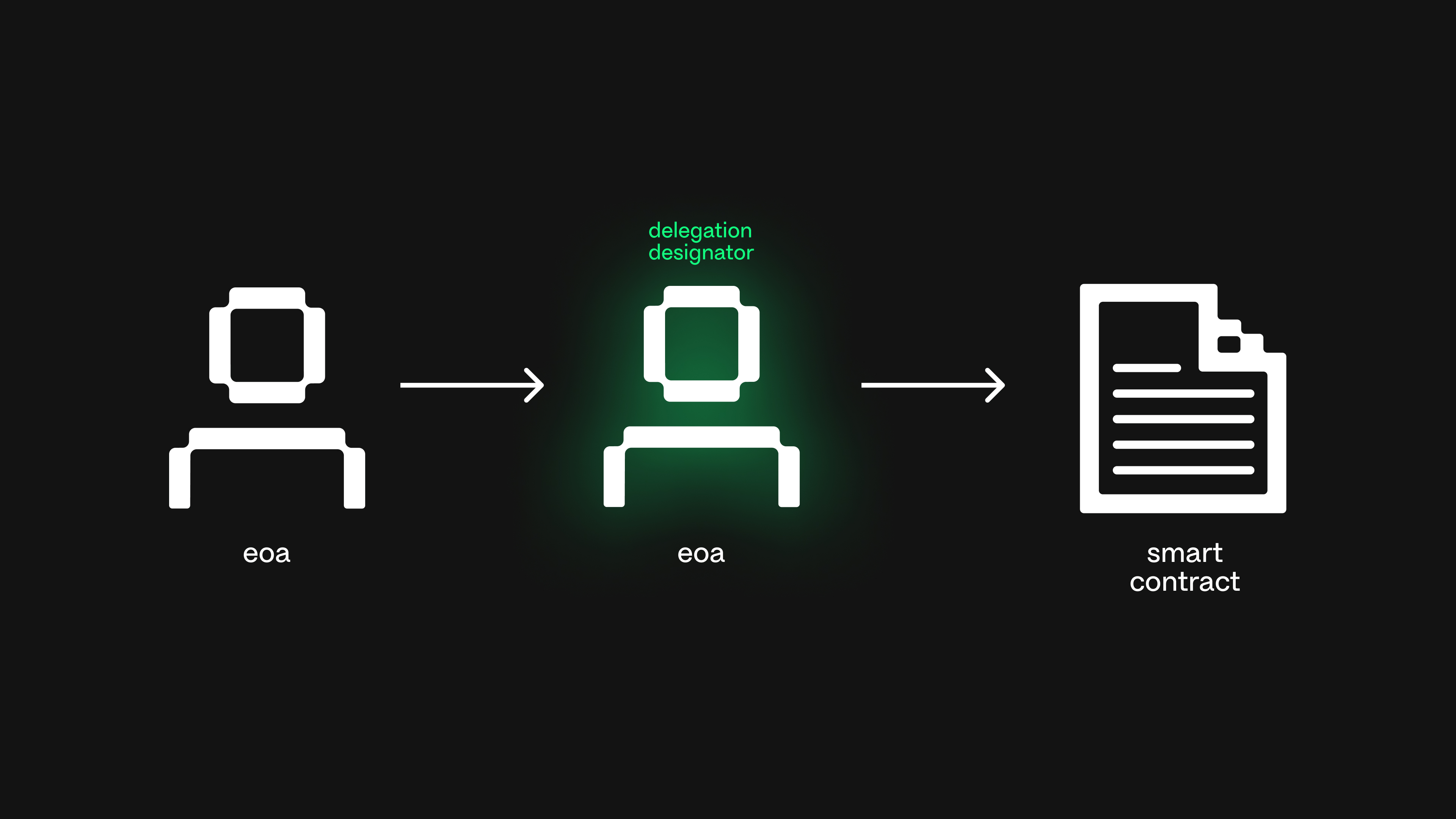
EIP-7702 allows externally owned accounts (EOAs) to temporarily adopt smart contract functionality without changing their address. This upgrade, part of the Pectra hard fork, lets you delegate authority to a smart contract. The result is that your standard wallet can perform advanced tasks like gas sponsorship and session keys while retaining its original identity.
Before this change, your private key controlled your wallet directly. If you wanted to use features like paying gas for others or limiting transaction permissions, you had to migrate to a Smart Contract Account (SCA). That process often involved sending funds to a new address, which broke continuity with your existing wallet history and integrations.
With EIP-7702, you keep your same address. You simply sign a special transaction that tells the Ethereum network to treat your EOA as a smart contract for a specific period or set of actions. Once the delegation expires or is revoked, your account reverts to standard EOA behavior. This temporary state enables gasless transactions and fine-grained access control without the friction of account migration.
The primary benefit is flexibility. You can use a smart contract for a specific high-value trade, then return to a simple key-based wallet. This approach keeps your wallet compatible with existing infrastructure while unlocking the advanced features previously reserved for SCAs.
Eip-7702 vs erc-4337 choices that change the plan
Choosing between EIP-7702 and ERC-4337 depends on your user base and infrastructure constraints. EIP-7702 brings smart contract functionality directly to existing Externally Owned Accounts (EOAs) without requiring users to migrate their funds or change how they sign transactions. It is an on-chain upgrade that makes EOAs temporarily adopt smart contract logic. ERC-4337, by contrast, relies on a separate user operation pool and requires users to deploy and manage new smart contract accounts from the start.
EIP-7702 adoption 2026 is driven by its low friction. Users keep their current addresses. They only need to sign a delegation transaction once to link their EOA to a smart contract implementation. This approach avoids the complexity of account deployment and gas sponsorship that ERC-4337 often requires for seamless onboarding. However, ERC-4337 offers more flexibility for complex paymaster integrations and batched transactions that EIP-7702 does not natively support in the same way.
The table below breaks down the core differences in architecture, user experience, and implementation.
| Feature | EIP-7702 | ERC-4337 |
|---|---|---|
| Account Type | EOA with delegated logic | New Smart Contract Account |
| Migration Required | No (sign delegation tx) | Yes (deploy new account) |
| Transaction Pool | Standard mempool | User Operation pool |
| Gas Sponsorship | Limited (native tx only) | Full (via Paymaster) |
| Batching | Not native | Native support |
| Implementation | On-chain protocol upgrade | Bundler/Relayer infra |
EIP-7702 simplifies the developer stack by removing the need for a bundler network. Your backend interacts with the standard Ethereum JSON-RPC interface. ERC-4337 requires maintaining or connecting to a bundler and paymaster infrastructure, which adds operational overhead. If your goal is to upgrade existing users with minimal disruption, EIP-7702 is the direct path. If you need advanced batching or complex paymaster logic for new users, ERC-4337 remains the standard.
Migrate your EOA to a smart account
Treat this step as a welfare screen for EIP-7702 adoption. Compare the source, the animal's visible condition, the seller's care knowledge, the paperwork, and the transport plan before you commit. A good purchase path should make the dragon's health easier to verify, not harder. Pause before paying if any part of the chain is unclear. Confirm the exact animal, pickup or shipping timing, heat-pack plan when relevant, return policy, and the supplies you need at home for the first week.
-
Verify the sourceUse this as a welfare screen: confirm the breeder, rescue, store, or private seller can explain care history and answer basic husbandry questions.
-
Check health signsLook for clear eyes, alert behavior, healthy weight, clean vent area, and no obvious swelling, wounds, or stuck shed.
-
Prepare the enclosureHave heat, UVB, substrate, hides, food, and temperature checks ready before pickup or shipping day.
-
Plan transportConfirm pickup timing, shipping weather, packaging, and the first-week settling plan before paying.
Optimize gas with delegation batching
EIP-7702 allows you to delegate your EOA to a smart contract, enabling batched transactions and paymaster sponsorship. This reduces the cost per action for end-users significantly. The delegation adds minimal overhead (~100-200 gas) compared to the savings from batched transactions and gas sponsorship.
How delegation works
When you delegate your EOA to a smart contract, you can batch multiple transactions into one. This reduces the gas cost per action. Paymasters can also sponsor these transactions, making them gasless for the user.
Why this matters
Batching and sponsorship make smart wallet features accessible without changing your address. This is a major step toward mainstream adoption of account abstraction in 2026.
Check your wallet compatibility
Before migrating to EIP-7702 in 2026, verify that your wallet infrastructure supports the new authorization flow. Adoption is growing, with over 11,000 authorizations recorded shortly after the Pectra upgrade, but support varies across providers.
Use the checklist below to ensure your setup is ready. If you are a developer, confirm that your node infrastructure handles the new transaction types correctly.
Frequently asked questions about EIP-7702
EIP-7702 adoption in 2026 brings smart contract capabilities to Externally Owned Accounts (EOAs) without changing your address. This guide addresses common technical and practical questions about the migration, security, and usage of this upgrade.
Put EIP-7702 into practice
No comments yet. Be the first to share your thoughts!