
EIP-7702 migration 2026: No migration required
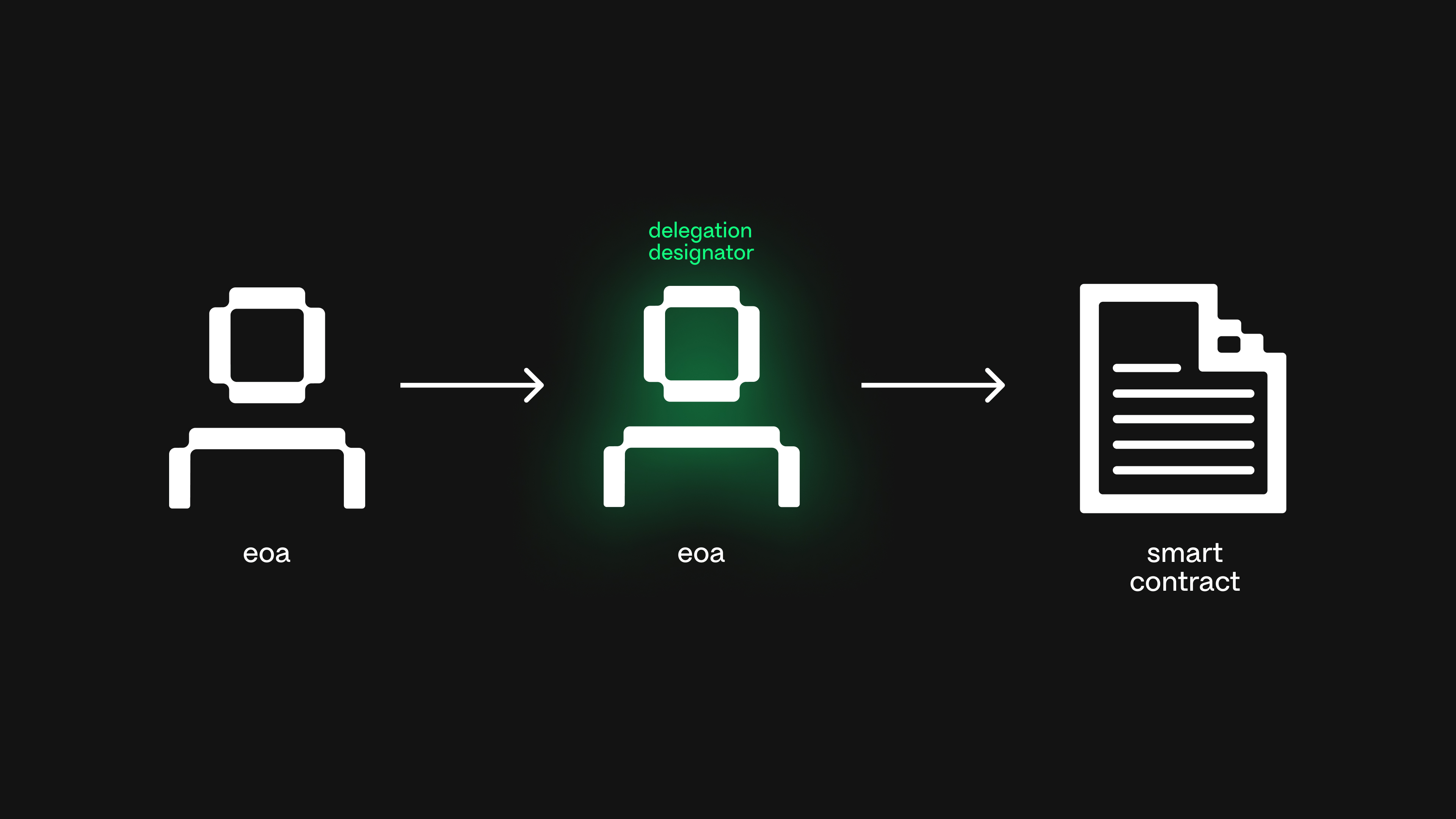
The term "migration" in EIP-7702 is misleading. There is no permanent account migration, no asset transfer, and no address change. You do not need to move your funds to a new wallet to use these features. The upgrade allows an externally owned account (eOA) to delegate execution to a smart contract while keeping the original address.
EIP-7702 went live on Ethereum mainnet on May 7, 2025, as part of the Pectra hardfork. It introduces a new transaction type with an "authorizations" field. Users sign a special authorization message from their EOA, which is recorded on the network. This enables smart wallet capabilities like gas sponsorship and batching without changing your underlying account structure.
Support has expanded rapidly across major ecosystems. Ethereum, Base, OP, BNB Smart Chain, Gnosis, Ink, Unichain, and Zora all support EIP-7702. Because the transition is software-based rather than a chain split, users can access these features immediately if their wallet provider enables them.
Eip-7702 migration choices that change the plan
EIP-7702 does not require asset transfers or address changes. Instead, it allows externally owned accounts (EOAs) to delegate execution to smart contracts. This creates a split in the market: users can choose between the simplicity of standard EOAs and the enhanced capabilities of smart-enabled accounts. Understanding the tradeoffs helps you decide which path fits your workflow.
Key Considerations
Security and Control Standard EOAs offer maximum simplicity. You control your private key directly, with no contract logic to exploit. EIP-7702 introduces smart contract logic, which expands functionality but also adds potential attack surfaces if the delegated contract is compromised. However, you retain the ability to revoke this delegation at any time.
Gas and Efficiency EOAs have lower upfront gas costs for simple transfers. EIP-7702 accounts may incur higher initial setup costs to deploy or link the authorization contract. However, they enable gas sponsorship and batched transactions, which can reduce long-term costs for frequent traders or dApp users.
Compatibility Most major chains now support EIP-7702, including Ethereum, Base, and Optimism. Yet, some legacy protocols and older dApps may not yet recognize the new transaction types. If you interact with niche or outdated platforms, standard EOAs remain the safer choice for immediate compatibility.
| Feature | Standard EOA | EIP-7702 Account |
|---|---|---|
| Setup | None | Requires delegation |
| Gas Sponsorship | No | Yes |
| Transaction Batching | No | Yes |
| Security Model | Key-based | Contract-based |
| Reversibility | Irreversible | Delegation revocable |
Choosing Your Path
If you prioritize simplicity and broad compatibility, stick with standard EOAs. They work everywhere and require no extra steps. If you want features like gasless transactions or social recovery, EIP-7702 is the better option. The migration is optional, so you can use both types of accounts depending on the task.
Choose the next step
EIP-7702 is live on Ethereum mainnet as of the Pectra hardfork. This activation allows EOAs to delegate execution to smart contracts without migrating assets or changing addresses. You can now use account abstraction features like gas sponsorship and transaction batching from your existing wallet.
The decision to adopt EIP-7702 depends on your current wallet provider and your need for smart contract functionality. Below is a comparison of the primary approaches for integrating these capabilities.
| Feature | EIP-7702 Delegation | Full Smart Wallet Migration |
|---|---|---|
| Address Change | No | Yes |
| Asset Migration | No | Yes |
| Gas Sponsorship | Yes | Yes |
| Recovery Options | Limited by contract | Advanced (social, time-lock) |
| Complex Logic | Moderate | High |
Evaluate your use case
If you need advanced recovery mechanisms or complex conditional logic, a full smart wallet migration may be more appropriate. However, EIP-7702 offers a lower-friction path for most users. It enables smart contract execution while keeping your EOA address intact. This is ideal for users who want gas abstraction or batched transactions without the hassle of moving funds.
Check chain support
Ensure your target chains support EIP-7702. Major networks like Ethereum, Base, OP, and BNB Smart Chain have enabled support. Verify your wallet provider’s compatibility before initiating any delegation. Most modern wallets now handle the authorization process automatically.
Execute the delegation
To activate EIP-7702, sign an authorization message from your EOA. This message delegates execution rights to a smart contract. The process is non-custodial and reversible. You retain full control over your private keys and can revoke delegation at any time. Consult your wallet’s documentation for specific steps to enable account abstraction features.
The migration trap: what EIP-7702 actually does
EIP-7702 is live on Ethereum mainnet as of the Pectra upgrade, but it is not a migration. It does not move funds, change your address, or require you to send transactions to a new contract. The primary keyword cluster here is "EIP-7702 migration," and the biggest misleading claim is that you must "migrate" your wallet.
Instead, EIP-7702 introduces a new transaction type with an "authorizations" field. This allows an Externally Owned Account (eOA) to delegate execution to a smart contract temporarily. You sign a special authorization message, and the network records it. Your assets stay exactly where they are.
Common mistakes and weak options
Many guides suggest you need to "move" your ETH to a smart wallet. This is incorrect and dangerous. Do not send funds to a new address unless you are certain of the target. The power of EIP-7702 is that you keep your existing eOA address while gaining smart contract capabilities like gas sponsorship and batching.
Another weak option is assuming all chains support this immediately. While Ethereum, Base, Optimism, BNB Chain, Gnosis, Ink, Unichain, and Zora have enabled it, support varies by RPC provider and wallet interface. Always verify your specific wallet’s implementation before relying on EIP-7702 features for critical transactions.
No comments yet. Be the first to share your thoughts!