
EIP-7702 migration 2026 limits to account for
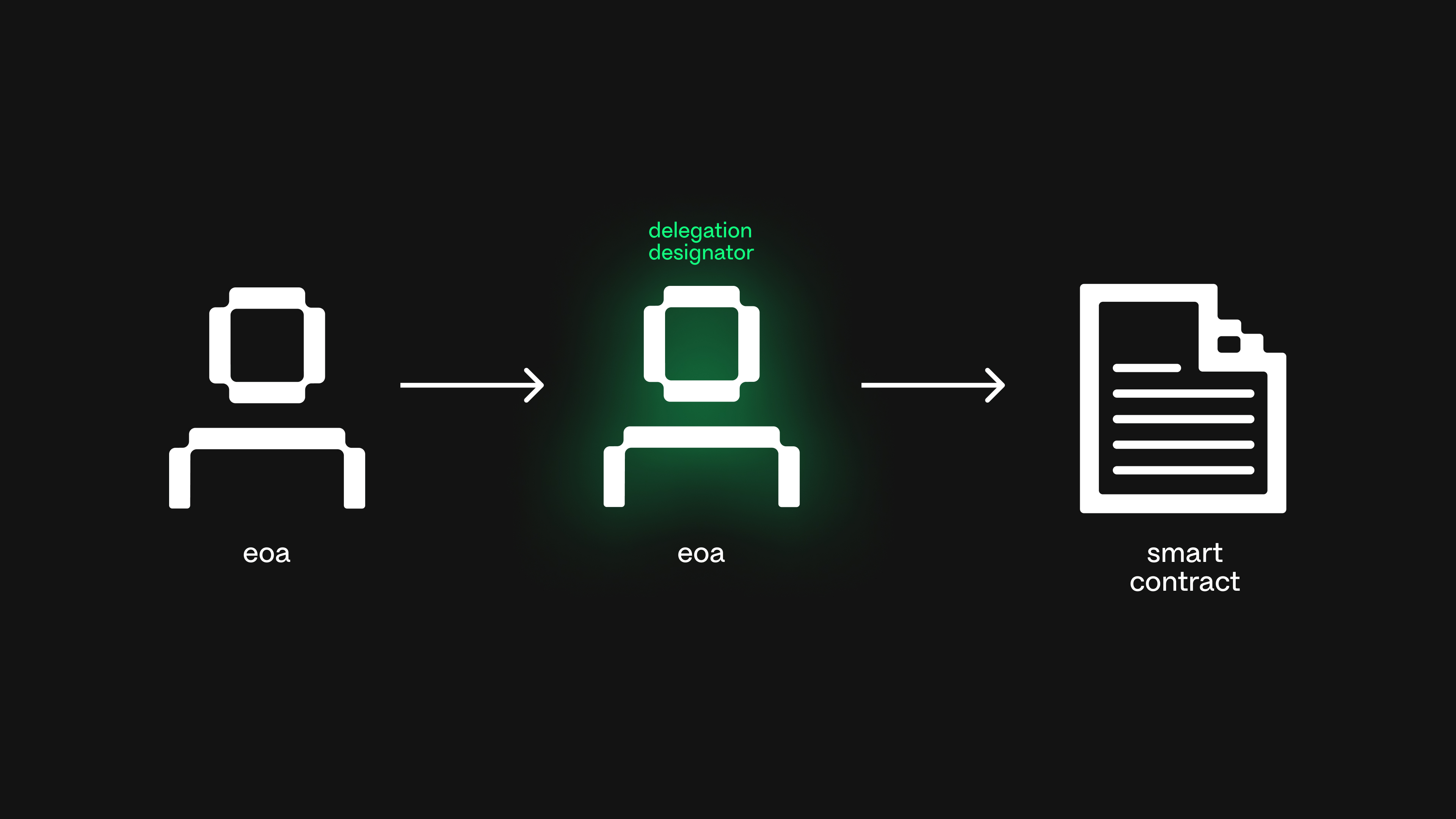
EIP-7702 is active on Ethereum mainnet as part of the Pectra upgrade, launched in May 2025. It introduces a new transaction type allowing externally owned accounts (EOAs) to delegate execution to smart contracts. This enables account abstraction features like batched transactions and sponsored gas without requiring asset migration or address changes.
The 2026 timeline is critical because enterprise wallets are adapting security models to handle delegated signatures. Unlike full account migration, no asset transfer is needed, but the delegation mechanism introduces new attack vectors requiring specific audit strategies. As Layer 2s like Base, Arbitrum, and Polygon adopt the standard, the constraint shifts from technical compatibility to security readiness.
For enterprise teams, the focus is no longer on whether to implement EIP-7702, but on securing the delegation layer. A compromised private key can now trigger smart contract logic, altering the risk profile of hot wallets. This section outlines the essential audits and gas optimizations needed to manage this shift safely.
EIP-7702 migration 2026 choices that change the plan
EIP-7702 allows EOAs to delegate execution to smart contracts without migrating assets or changing addresses. This bridges the gap between standard wallets and account abstraction, enabling features like batch transactions and sponsored gas. However, adopting this standard introduces specific operational tradeoffs that enterprise wallets must evaluate.
The decision depends on your risk tolerance, existing infrastructure, and user experience goals. Below is a comparison of the primary factors involved.
When to adopt EIP-7702
Enterprises should consider EIP-7702 if they prioritize advanced user experience features like social recovery or multi-party computation without forcing users to migrate to new contract-based wallets. It is particularly useful for platforms offering sponsored gas transactions or batch operations to reduce user friction. The delegation mechanism allows for flexible access control while maintaining the simplicity of an EOA address.
When to wait
If your primary concern is minimizing attack surface or you have a user base unfamiliar with smart contract interactions, you may want to wait. Delegation contracts add complexity to your security model. If your infrastructure is already optimized for standard EOA transactions and you lack immediate plans for advanced account abstraction, the migration cost may outweigh the benefits. Monitor ecosystem maturity and auditing tool availability before committing.
How to choose the right EIP-7702 strategy
EIP-7702 removes the friction of migrating assets by letting an Externally Owned Account (EOA) delegate execution to a smart contract. This capability is active on Ethereum mainnet and several major Layer 2s, including Base, Arbitrum, and Polygon. For enterprise wallets, the decision is not whether to implement the standard, but how to configure delegation for security and cost.
The core advantage is that users sign a one-time authorization to link their EOA to a contract. This enables batch transactions and sponsored gas without requiring the user to hold the native token or change their address. However, this flexibility introduces new attack vectors that must be audited before deployment.
Step 1: Evaluate chain compatibility
Before writing code, confirm which networks your enterprise users inhabit. EIP-7702 support is fragmented. While Ethereum mainnet and Sepolia are fully active, other chains vary in implementation maturity. Use a compatibility checker to verify support for major networks like BNB Smart Chain, OP, and Scroll. If users are concentrated on a single chain, tailor the contract logic specifically for that environment to reduce complexity.
Step 2: Design the delegation contract
Your smart contract dictates the rules of engagement. Decide whether delegation is permanent or revocable. For enterprise security, revocable delegation is standard. The contract should include a setAuthorization function that verifies the signature against the EOA. Crucially, implement a "kill switch" allowing the user to revoke authorization instantly if a private key is compromised. This reversibility is the primary security benefit over traditional account abstraction.
Step 3: Audit signature validation
The security of EIP-7702 relies entirely on the integrity of signature verification. Misconfigured checks can allow attackers to hijack the delegation. Audit the contract’s handling of the eip712 domain separator and signature recovery logic. Ensure the contract rejects replay attacks by validating the nonce and timestamp. This step is non-negotiable; a single flaw in signature validation can lead to total asset loss.
Step 4: Optimize gas costs
Delegation transactions consume more gas than standard transfers due to additional verification steps. To keep costs predictable, implement gas sponsorship within your smart contract. This allows the enterprise to pay transaction fees on behalf of the user, masking the complexity of the underlying EIP-7702 mechanics. Test gas consumption on target chains to ensure the sponsorship model remains viable during peak network congestion.
Step 5: Implement user safeguards
Provide clear interfaces for users to manage their delegations. Users should be able to view which contracts their EOA is authorized to interact with. Offer a simple "revoke all" button in the wallet UI. This transparency builds trust and ensures users retain control over their assets. Without these safeguards, the complexity of EIP-7702 may deter adoption among non-technical users.
Common EIP-7702 Migration Mistakes
Many enterprise teams treat EIP-7702 as a full wallet migration. It is not. The upgrade lets an externally owned account (EOA) delegate execution to a smart contract without moving assets or changing addresses. This distinction matters for security audits. If your team plans to migrate funds, you are likely confusing EIP-7702 with EIP-3074 or full account abstraction implementations that require actual address changes.
A second common error is assuming all chains support the same delegation logic. While Ethereum mainnet activated EIP-7702 with the Pectra hardfork, other networks like Base, Arbitrum, and BNB Chain have their own implementation nuances. Auditors must verify the specific authorization handling on each target chain. Assuming cross-chain parity can lead to failed transactions or security gaps.
Finally, do not overlook gas optimization. Delegating to a smart contract introduces new transaction types. If your audit ignores the gas cost of the SET_CODE_TX authorization, your enterprise wallet may become economically unviable for high-frequency operations. Compare the gas overhead of delegated calls against standard EOAs to determine if the abstraction layer justifies the complexity for your specific use case.
EIP-7702 migration 2026: what to check next
Enterprise teams often pause migration due to uncertainty about implementation status or technical overhead. These answers address the most common operational objections.
Is EIP-7702 implemented?
Yes. EIP-7702 was activated on Ethereum mainnet as part of the Pectra upgrade, which launched in May 2025. It is also supported on several Layer 2 networks, including Base, Arbitrum, and Polygon, though implementation details may vary slightly by chain.
What new capability does EIP-7702 give to an eOA?
EIP-7702 allows an externally owned account (EOA) to delegate execution to a smart contract. This enables the EOA to utilize account abstraction features such as batched transactions, sponsored gas, and social recovery, while retaining its original address and private key structure. The delegation is managed via a one-time authorization signature.
Which chains support EIP-7702?
EIP-7702 is active on Ethereum mainnet and Sepolia. It is also supported on major Layer 2s including Base, Arbitrum, and Polygon. Support on other networks like BNB Smart Chain, OP Stack chains, and Scroll varies in maturity; always verify current status using a chain compatibility checker before deployment.
When did EIP-7702 go live?
EIP-7702 went live on Ethereum mainnet in May 2025 as part of the Pectra upgrade. Prior to this, it was available on testnets like Sepolia for development and auditing purposes.
No comments yet. Be the first to share your thoughts!