
Eip-7702 migration 2026 limits to account for
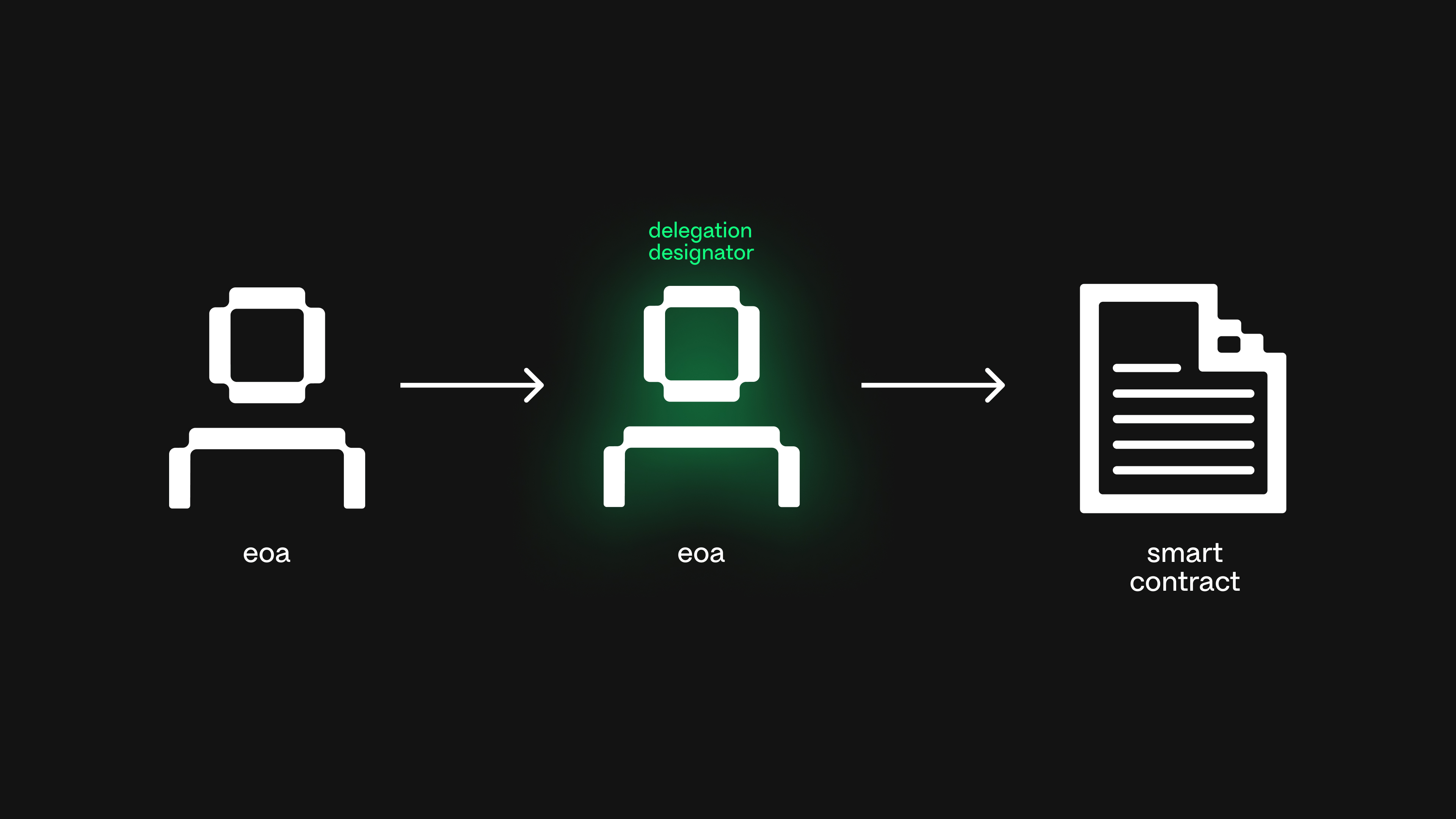
The primary constraint of the EIP-7702 migration is that it is not a migration at all. Unlike previous Ethereum upgrades that required users to move assets or switch to new wallet standards, EIP-7702 allows existing Externally Owned Accounts (EOAs)—your standard wallet addresses—to delegate authority to smart contracts without changing the address itself [src-serp-2]. This means your wallet remains a simple key pair, but it can temporarily execute complex logic defined by a smart contract.
This distinction resolves the biggest friction point for account abstraction: user inertia. There is no permanent migration, no asset transfer, and no mandatory wallet upgrade. You do not need to "migrate" your wallet to use EIP-7702. Instead, you sign an authorization that tells the network, "For this transaction (or set of transactions), treat my EOA as if it were this smart contract." Once the transaction is processed, the EOA reverts to its default behavior.
Is EIP-7702 implemented?
Yes. EIP-7702 was activated on the Ethereum mainnet as part of the Pectra upgrade. It is fully live and operational for all nodes and wallets that have updated their client software. If you are using a modern wallet that supports EIP-7702, you can already interact with smart contract accounts using your standard EOA address.
What are EIP-7702 authorizations?
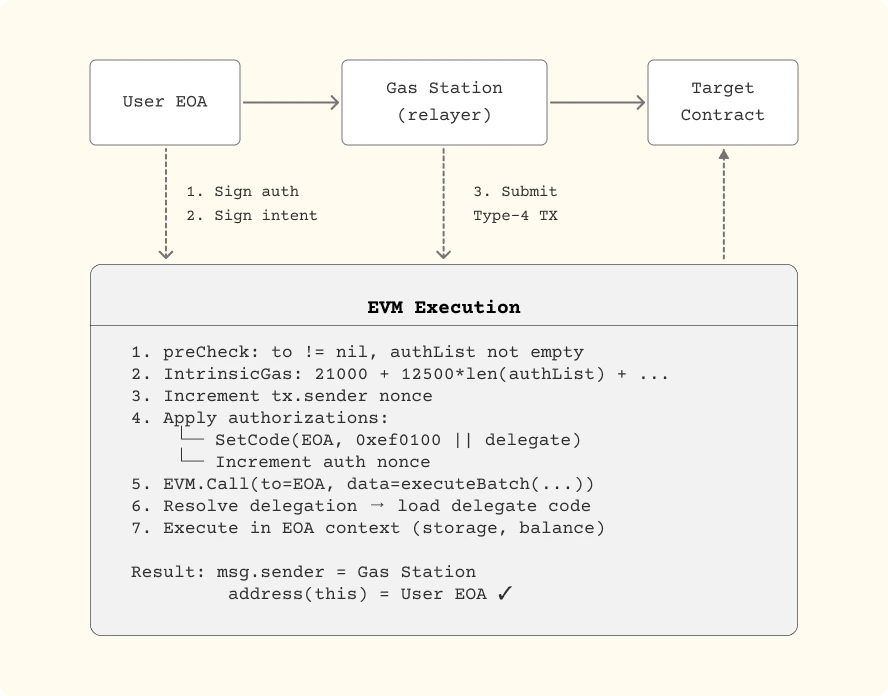
An EIP-7702 authorization is a signed message that links your EOA to a smart contract address. It is not a permanent change to your account type. Instead, it is a temporary delegation. When you send a transaction with this authorization attached, the Ethereum Virtual Machine (EVM) temporarily treats your EOA as the specified smart contract for the duration of that transaction. This allows you to use features like session keys, gas sponsorship, or multi-sig logic without permanently altering your wallet's structure.
What are the key differences between EIP-7702 and ERC-4337?
The core difference lies in how account abstraction is implemented. ERC-4337 operates entirely at the mempool level, using a separate entry point contract to bundle transactions. It does not change the EVM's core logic and requires users to use a "smart wallet" contract from the start. EIP-7702, however, is a core protocol change. It modifies the EVM to natively understand smart EOAs, allowing any standard EOA to become a smart contract temporarily. This makes EIP-7702 more seamless for existing users, as it doesn't require a new wallet infrastructure, whereas ERC-4337 is a layer-2 solution that works alongside the base layer.
Tradeoffs by Use Case
| Feature | EIP-7702 | ERC-4337 |
|---|---|---|
| Implementation | Core protocol change | Mempool-level bundler |
| User Experience | Works with existing EOAs | Requires new smart wallet |
| Gas Sponsorship | Native support | Supported via bundler |
| Complexity | Higher client integration | Higher wallet integration |
Decision: Which Should You Use?
For most users, EIP-7702 offers a more frictionless path to account abstraction because it works with the wallets you already have. However, ERC-4337 remains a robust option for developers who want to build custom smart wallet experiences without relying on EVM changes. The choice depends on whether you prioritize immediate compatibility (EIP-7702) or flexible, layer-2 customization (ERC-4337).
Eip-7702 migration choices that change the plan
EIP-7702 introduces a non-destructive path to account abstraction by allowing Externally Owned Accounts (EOAs) to temporarily delegate authority to smart contracts via authorization signatures. This "set code" mechanism enables features like paymasters and session keys without forcing users to migrate funds or adopt new addresses. However, this hybrid model introduces specific tradeoffs between user experience, security complexity, and network compatibility that you must evaluate before integration.
The primary benefit is immediate UX improvement. Users retain their familiar private key management while gaining smart contract capabilities like batched transactions and social recovery. This avoids the friction of ERC-4337, which often requires account deployment and gas sponsorship abstraction that can confuse non-technical users. The tradeoff is that the EOA's code status is transient and session-based, requiring careful signature management to avoid accidental delegation or revocation issues.
Security and compatibility present the other side of the equation. While EIP-7702 enhances functionality, it increases the attack surface for phishing and signature replay if not implemented with strict expiry and scope limits. Additionally, not all infrastructure providers have fully updated their nodes or explorers to handle the new EIP-7702 transaction types, which can lead to failed transactions or delayed indexing in early adoption phases. You must verify that your target wallet providers and backend services support the latest consensus layer updates.
| Feature | EIP-7702 (Hybrid) | ERC-4337 (Full AA) | Legacy EOA |
|---|---|---|---|
| Account Type | EOA with delegated code | Smart Contract Wallet | Standard Key-Pair |
| Migration Required | No (Temporary delegation) | Yes (New address) | N/A |
| Gas Sponsorship | Native (via signer) | Relayer/Bundler | Native |
| Recovery Options | Limited (Signature-based) | Robust (Multi-sig, social) | None (Key loss = fund loss) |
| Security Model | Signature + Code delegation | Smart Contract Logic | Private Key |
The decision to adopt EIP-7702 hinges on your priority for seamless onboarding versus robust account recovery. If your users value familiarity and low friction, EIP-7702 offers a compelling middle ground. For applications requiring complex recovery mechanisms or deep programmability, full account abstraction via ERC-4337 remains the more robust, albeit more complex, solution. Evaluate your user base's technical literacy and your application's security requirements to determine the right path.
Choose the next step
EIP-7702 Migration works best as a clear sequence: define the constraint, compare the realistic options, test the tradeoff, and choose the path with the fewest hidden costs. That order keeps the advice usable instead of decorative. After each step, pause long enough to check whether the recommendation still fits the reader's actual situation. If it depends on perfect timing, unusual access, or a best-case budget, include a simpler fallback.
Watchouts: Misleading Claims and Weak Options
EIP-7702 simplifies account abstraction by letting EOAs delegate to smart contracts without permanent migration. Despite this, several misleading claims persist in 2026 discussions, often confusing temporary delegation with full account migration. Understanding these pitfalls is critical for developers and users navigating mainnet scalability.
The "No Migration" Misconception
A common mistake is assuming EIP-7702 requires migrating assets or changing addresses. It does not. The EIP explicitly allows EOAs to sign authorizations that delegate execution to a smart contract while retaining the original EOA address. This temporary delegation avoids the friction of full account migration, but users often confuse it with ERC-4337’s account structure, which relies on entirely new contract accounts.
Weak Authorization Options
Not all authorization implementations are equal. Weak options include:
- Single-use authorizations: These expire quickly, limiting flexibility for recurring transactions.
- Overly broad permissions: Some implementations grant unlimited access to funds, increasing security risks.
- No revocation mechanisms: Users may be unable to revoke authorization if a contract is compromised.
Developers should prioritize implementations that support granular permissions, expiration dates, and easy revocation.
EIP-7702 vs. ERC-4337: Key Differences
While both enable account abstraction, they differ fundamentally:
| Feature | EIP-7702 | ERC-4337 |
|---|---|---|
| Account Type | EOA delegates to contract | New contract account |
| Migration | Not required | Requires new account |
| Sponsorship | Native support | Bundler-dependent |
| Security | Retains EOA address | Contract-specific risks |
Decision Checklist
Before integrating EIP-7702, ask:
- Does the implementation support revocation?
- Are permissions granular enough for your use case?
- Is the authorization expiration aligned with your transaction frequency?
Ignoring these checks can lead to security vulnerabilities or user friction. EIP-7702 is powerful, but only when implemented with precision.
No comments yet. Be the first to share your thoughts!