
What EIP-7702 migration 2026 actually means
The term "migration" in the context of the 2026 EIP-7702 upgrade is a metaphor for functional delegation, not a literal transfer of ownership or address. When developers and users hear "migration," they often imagine a complex process of moving funds from one wallet to another or rewriting smart contract logic from scratch. This is not what EIP-7702 entails. Instead, it allows an Externally Owned Account (EOA)—the standard wallet type controlled by a private key—to temporarily delegate its authority to a smart contract.
According to the official EIP-7702 specification, the upgrade introduces a new transaction type that enables EOAs to "set code" in their account. This means your existing wallet address can execute logic defined in a smart contract without changing its underlying EOA status. The EOA remains the owner, but it can choose to behave like a smart account for specific transactions. This distinction is critical: you do not need to migrate your wallet to a new address or adopt a completely new account structure to benefit from account abstraction features.
This approach preserves the simplicity of EOAs while unlocking the flexibility of smart contracts. Users retain full control over their private keys and can revert their accounts to standard EOA behavior at any time. The "migration" is essentially a toggle that switches the account's execution mode, not a permanent alteration of its identity. This design minimizes friction and reduces the risk associated with migrating assets, making it a safer path toward widespread account abstraction adoption.
Signed authorization wallets vs ERC-4337
Choosing between EIP-7702 and ERC-4337 is not a question of which technology is superior, but which architectural model fits your product. EIP-7702 introduces Smart EOAs by allowing externally owned accounts to delegate execution to smart contracts via signed authorizations. This approach preserves the simplicity of EOAs while adding programmability. ERC-4337, by contrast, operates entirely outside the consensus layer using a separate bundler network and entry point contract.
The core distinction lies in where the logic lives. EIP-7702 modifies the account abstraction model at the protocol level, allowing EOAs to temporarily adopt smart contract behavior. ERC-4337 treats accounts as smart contracts from the start, relying on a mempool and bundler infrastructure to batch transactions. This difference drives the tradeoffs in gas costs, user experience, and deployment complexity.
Comparison: EIP-7702 vs ERC-4337
The table below highlights the primary technical differences between the two models.
| Feature | EIP-7702 (Smart EOA) | ERC-4337 (Bundler) |
|---|---|---|
| Protocol Level | Consensus layer (Pectra upgrade) | Mempool/Entry point contract |
| Transaction Flow | Standard user operation | Bundled via external relayer |
| Gas Fees | Standard ETH gas | Paid to bundler + gas |
| Account Type | EOA delegates to contract | Smart contract account |
| Implementation | No contract deployment needed | Requires ERC-4337 account |
| Recovery | Standard key management | Social recovery built-in |
When to Choose Which
EIP-7702 is ideal for applications that want to upgrade existing wallets without forcing users to migrate assets or change addresses. It works seamlessly with current infrastructure and avoids the overhead of a bundler network. However, it does not natively support complex features like social recovery or session keys without additional smart contract logic.
ERC-4337 is better suited for products that require advanced account features from day one, such as social recovery, paymasters, or batched transactions. The tradeoff is higher complexity: you must manage the entry point contract and potentially integrate with bundler services. It also introduces a dependency on third-party relayers for standard user operations.
How delegation signatures work in practice
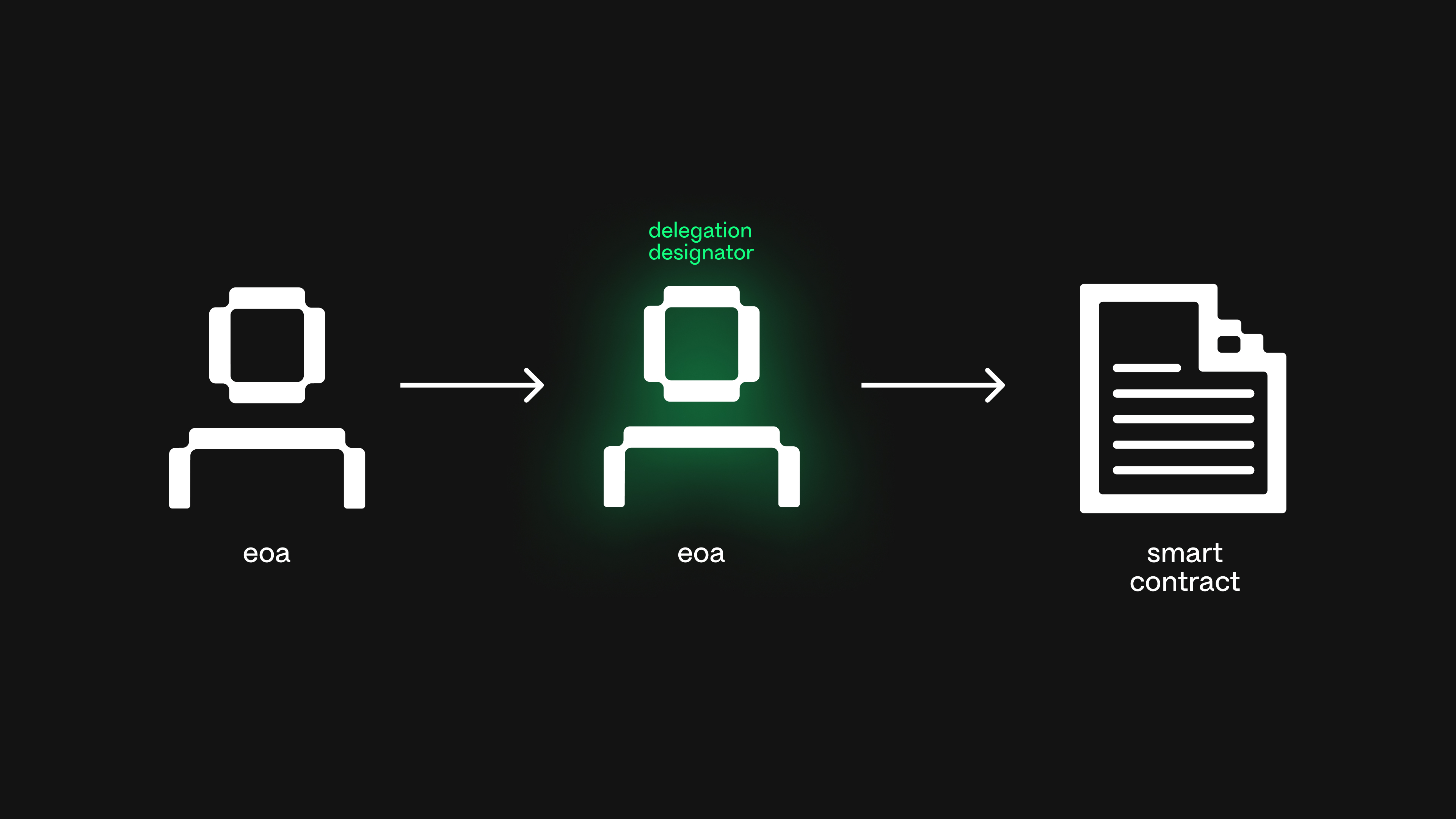
EIP-7702 does not move your funds to a new address. Instead, it allows an Externally Owned Account (EOA) to temporarily adopt the behavior of a smart contract by signing a delegation authorization. This mechanism bridges the gap between simple key-based control and the complex programmability of Account Abstraction without requiring a permanent migration of assets or identity.
The core of this process is the SET_CODE transaction. When an EOA owner wants to enable smart contract features, they sign a specific authorization message using their private key. This signature includes a "delegation designator," which is typically the address of a smart contract or a contract factory. Crucially, the EOA itself does not change; it remains the same 0x address. The blockchain simply notes that this address is now authorized to execute code from the designated contract.
When the EOA sends a transaction, the Ethereum Virtual Machine (EVM) checks if a valid delegation signature exists. If one does, the EVM temporarily loads the code from the delegation designator into the EOA's context for that specific execution. This allows the EOA to use features like multi-signature logic, session keys, or batched transactions. Once the transaction completes, the EOA reverts to its standard state, retaining its original balance and nonce.
This temporary adoption is key to understanding the tradeoff. Unlike a full account abstraction migration, which might involve deploying a new account contract and transferring funds, EIP-7702 is non-destructive. Your funds stay in your original EOA, and you can revoke the delegation at any time by sending a new transaction that clears the code association. This preserves the simplicity of EOAs while offering the flexibility of smart contracts on an as-needed basis.
Security risks of temporary code delegation
EIP-7702 introduces a critical attack surface by allowing externally owned accounts (EOAs) to temporarily execute arbitrary code. Unlike full Account Abstraction, where the contract logic is permanent, this delegation is transient. An EOA can sign a single transaction to set its code to point to a smart contract, execute that contract's logic, and then revert to its default state. While this offers a bridge to smart functionality, it creates a "temporary code delegation" vulnerability that does not exist in traditional EOAs.
The core risk lies in the signature verification process. When an EOA signs a delegation signature, it is essentially handing over temporary control to the designated contract. If the contract contains malicious logic or if the signature is replayed in an unintended context, the user's funds can be drained. Unlike a permanent smart account where security audits are static, the dynamic nature of EIP-7702 means the security posture changes with every delegation. Users must trust that the delegated code is benign for the duration of the transaction.
It is crucial to distinguish this from a permanent migration. EIP-7702 explicitly avoids requiring users to migrate their wallets to a new contract address. The EOA remains an EOA; it merely borrows functionality. However, this borrowed power comes with the risk of phishing. Attackers may trick users into signing delegation transactions that appear benign but authorize high-risk operations under the hood. The temporary nature of the code does not mitigate the risk of the initial authorization.
The distinction between "migration" and "delegation" is often blurred in marketing. EIP-7702 is not a migration path to full Account Abstraction; it is a forward-compatible feature that allows EOAs to act like smart accounts for a single transaction. This transient capability requires users to be more vigilant about the contracts they interact with, as the line between safe EOA usage and risky smart contract interaction becomes increasingly porous.
Wallet integration checklist for 2026
Implementing EIP-7702 requires distinguishing between a true account migration and the delegation model introduced by this upgrade. Wallets do not need to move user funds or change addresses; instead, they must handle signed authorizations that link an Externally Owned Account (EOA) to a smart contract. This distinction prevents data loss and simplifies the upgrade path for existing users.
Follow these steps to integrate support correctly:
EIP-7702
signed messages before broadcasting. Ensure the signature matches the sender's private key and that the
setCode
authorization is valid. Reject malformed payloads to prevent unauthorized contract code injection or session hijacking.
type 4
envelope format when delegating. This new transaction type carries the authorization list, which the network validates against the account's code hash. Ensure your RPC provider supports this type to avoid serialization errors.
Prioritize clarity in your user interface. Since EIP-7702 is a delegation and not a migration, users should understand that their funds remain in their original address. Avoid language that suggests account transfer or complex wallet swaps. Focus on the benefits of smart contract capabilities, such as session keys or social recovery, without confusing the underlying mechanism.
No comments yet. Be the first to share your thoughts!