
Get EIP-7702 Migration Status Right
EIP-7702 activated on Ethereum Mainnet on May 7, 2025, introducing smart contract capabilities to Externally Owned Accounts (EOAs) without requiring a permanent migration. This means your wallet address remains the same, but it can now delegate execution to smart contracts for features like session keys and gas sponsorship.
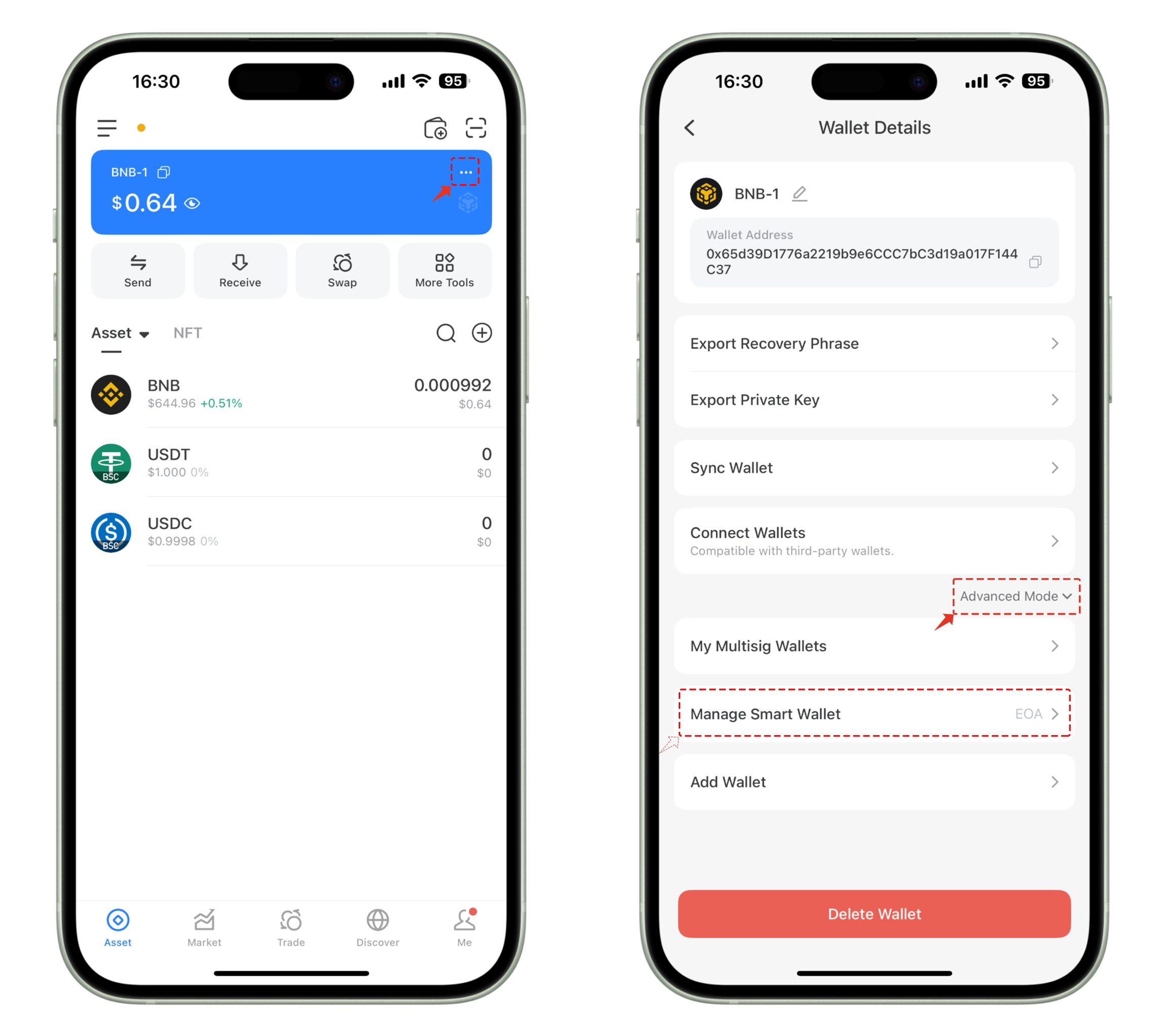
Before you proceed, verify your wallet’s support status. Most major wallets (MetaMask, Rabby, Phantom) have enabled EIP-7702 by default or via a toggle in settings. If your wallet is outdated, update it to the latest version to ensure compatibility with the new authorization mechanism.
Prerequisites Checklist:
- Update your wallet software to the latest version.
- Confirm EIP-7702 is enabled in your wallet settings.
- Ensure your browser or app supports the latest Ethereum JSON-RPC methods.
Mistake to Avoid: Do not assume all legacy wallets are automatically compatible. Some hardware wallets may require a firmware update to support the new transaction types. Always test with a small amount first.
Work through the steps
EIP-7702 works best as a clear sequence: define the constraint, compare the realistic options, test the tradeoff, and choose the path with the fewest hidden costs. That order keeps the advice usable instead of decorative. After each step, pause long enough to check whether the recommendation still fits the reader's actual situation. If it depends on perfect timing, unusual access, or a best-case budget, include a simpler fallback.
Common Mistakes and How to Fix Them
The biggest misconception about EIP-7702 is that you need to "migrate" your wallet. There is no permanent migration process. EIP-7702 activated on the Ethereum mainnet on May 7, 2025, and it explicitly avoids requiring users to move funds or change addresses [1]. Treating this upgrade like a bridge migration or a contract swap is the most common error, and it often leads to users sending assets to incorrect contract interfaces or falling for fake migration scams.
Another frequent mistake is misunderstanding the nature of authorizations. EIP-7702 allows Externally Owned Accounts (EOAs) to delegate to smart contracts for features like batching, gas sponsorship, and session keys without changing the address itself [2]. Users often confuse these temporary authorizations with permanent fund transfers. Always verify that you are signing a typed data message (EIP-712) for delegation, not a transaction that moves your ETH or tokens.
Finally, do not assume all wallets support the new EIP-7702 transaction type immediately. If your wallet interface does not explicitly mention EIP-7702 or smart EOAs, it may still process transactions as legacy EOAs. This means you won't get the benefits of account abstraction, but your funds remain safe. Check your wallet's update history or support documentation to confirm compatibility before attempting to use advanced delegation features.
Eip-7702 migration status 2026: what to check next
Addressing the most common concerns about EIP-7702 adoption helps clarify why legacy wallets remain dominant and how to verify your security posture.
Is EIP-7702 implemented?
EIP-7702 activated on Ethereum mainnet on May 7, 2025, as part of the Pectra upgrade. It is fully operational, allowing EOAs to delegate to smart contracts without changing their address. However, widespread adoption is still limited because most legacy wallet providers have not yet integrated the necessary delegation features.
What are the key differences between EIP-7702 and ERC-4337?
While both enable account abstraction, ERC-4337 relies on a separate entry point contract and an operator network to process transactions. EIP-7702 is a native protocol upgrade that allows existing EOAs to temporarily behave like smart wallets. This means EIP-7702 works with the standard Ethereum execution layer, whereas ERC-4337 requires additional infrastructure to function.
What are EIP-7702 authorizations?
Authorizations are cryptographic signatures that allow an EOA to delegate control to a smart contract for a specific period. These signatures are temporary and expire after a set duration or number of uses. They enable features like gas sponsorship and session keys without requiring users to migrate their funds to a new wallet address.
Can I use EIP-7702 with my current wallet?
Most legacy wallets do not yet support EIP-7702 delegation. You can check your wallet’s status by pasting your address into tools like CurveGrid. If your wallet does not support the feature, you will need to switch to a compatible provider to access smart account functionalities.
No comments yet. Be the first to share your thoughts!