
EIP-7702 Migration in 2026: Constraints and Reality
EIP-7702 is already live on Ethereum mainnet, having activated in the Pectra upgrade. Rather than a distant future migration, the 2026 timeline reflects the current state of account abstraction adoption. Layer 2s are not waiting for implementation; they are actively deprecating legacy ERC-4337 infrastructure in favor of native smart EOAs that can sign authorizations directly.
The core constraint for 2026 is not technical readiness, but ecosystem alignment. While EIP-7702 enables Externally Owned Accounts (EOAs) to execute code, it does not replace the full ERC-4337 standard. Instead, it allows upgraded EOAs to plug directly into ERC-4337 bundlers and paymasters without address migration. This hybrid approach reduces friction for L2s that previously relied on separate contract accounts for abstraction.
Key Differences: EIP-7702 vs. ERC-4337
| Feature | EIP-7702 (Smart EOAs) | ERC-4337 (Account Abstraction) |
|---|---|---|
| Account Type | Upgraded EOA | Smart Contract Account |
| Deployment | No new contract needed | Requires contract deployment |
| Gas Payment | Native ETH or sponsored | Paymasters required |
| L2 Integration | Native validation | Bundler dependency |
EIP-7702 Authorizations Explained
EIP-7702 authorizations are signed messages that allow an EOA to delegate its execution power to a smart contract temporarily. These signatures are validated on-chain but do not require a persistent contract deployment. This mechanism is critical for L2s, as it simplifies the migration path for existing EOA users without forcing a complete overhaul of wallet infrastructure.
Decision Framework for L2s
L2s should prioritize EIP-7702 if they want to reduce gas costs for users and simplify wallet integrations. However, if complex session keys or account recovery are required, ERC-4337 remains necessary. The 2026 constraint is largely about developer tooling maturity; most major L2s have already begun supporting 7702 authorizations in their testnets.
Eip-7702 migration 2026 choices that change the plan
Upgrading an Externally Owned Account (EOA) to a smart contract account via EIP-7702 is not a one-way migration. The protocol is designed to allow existing wallets to plug directly into ERC-4337 bundlers and paymasters without changing addresses or forcing a permanent transition. This flexibility introduces specific tradeoffs that Layer 2s and users must evaluate before signing the necessary authorizations.
The primary advantage is backward compatibility. Your wallet retains its original EOA identity, meaning it can still interact with legacy protocols and hardware wallets that do not yet support smart contract signatures. However, this comes with a security tradeoff: you are temporarily granting your account the ability to execute arbitrary code. If the smart contract code you authorize is compromised, your funds are at risk until you revoke the authorization.
Comparison of Migration Pathways
The table below breaks down the concrete differences between the new EIP-7702 pathway and traditional ERC-4337 Account Abstraction (AA) accounts. Understanding these distinctions helps determine which model fits your security and usability needs.
| Feature | EIP-7702 (Smart EOA) | ERC-4337 (AA Contract) | Standard EOA |
|---|---|---|---|
| Address Change | No | Yes | No |
| Gas Sponsorship | Yes | Yes | No |
| Hardware Wallet Support | Partial (via delegation) | Full | |
| Code Execution | Yes (on-demand) | Yes (always) | No |
| Complex Signatures | Yes | Yes | No |
Security and control choices that change the plan
EIP-7702 authorizations are explicit, time-bound, and revocable. Unlike ERC-4337, which requires deploying a new contract and migrating funds, EIP-7702 allows you to "upgrade" your existing private key's behavior. This means you can use a hardware wallet to sign a transaction that delegates execution to a smart contract, effectively turning your EOA into a smart account for that session.
The tradeoff here is complexity. While you avoid the friction of migrating funds, you must carefully manage which contracts you authorize. A malicious or buggy contract could exploit the delegated permissions. Always verify the code of any smart contract you authorize and use revocation tools if you no longer need the functionality.
How to Choose the Right Abstraction Path
The choice between legacy EOAs, full ERC-4337 smart accounts, and hybrid EIP-7702 accounts hinges on your specific operational needs. There is no single optimal path; instead, each model offers distinct tradeoffs in complexity, cost, and user experience. Use this framework to align your technical requirements with the right implementation.
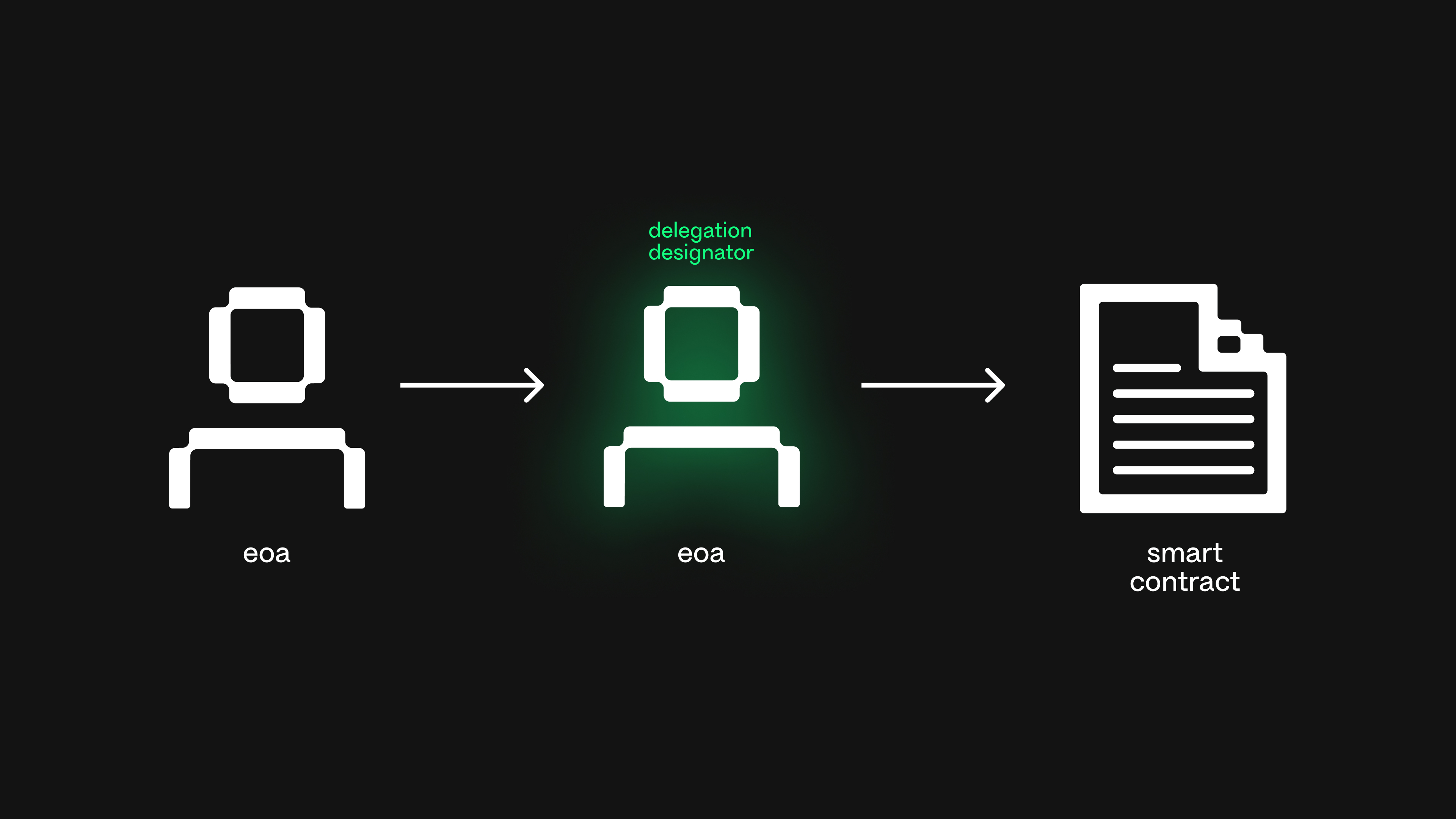
If your application requires only simple, single-step transactions, stick with standard EOAs. The overhead of account abstraction is unnecessary for basic transfers. EIP-7702 is designed for users who need advanced features without the complexity of full smart contract accounts.
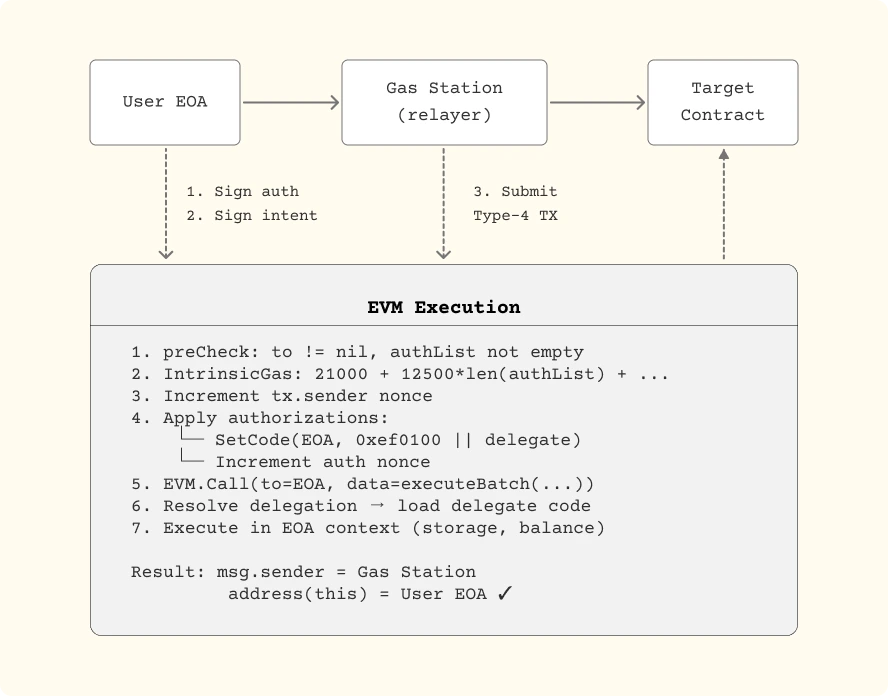
Full ERC-4337 accounts incur higher gas costs due to signature validation and bundler fees. EIP-7702 offers a middle ground: it allows EOAs to delegate execution to smart logic, reducing the need for complex smart contract deployment while maintaining lower overhead than full ERC-4337 implementations.
For applications prioritizing seamless user experience, EIP-7702 enables "smart EOAs" that can interact with ERC-4337 bundlers and paymasters. This allows users to pay gas in stablecoins or have it sponsored, without requiring them to manage private keys in a complex smart contract environment.
EIP-7702 authorizations provide a flexible upgrade path. Accounts can be authorized to execute specific smart contract logic, allowing for modular upgrades. This approach future-proofs your application by enabling new features without requiring users to migrate to a completely new account structure.
Avoid the weak options
Use this section to make the EIP-7702 Migration decision easier to compare in real life, not just on paper. Start with the reader's actual constraint, then separate must-have requirements from details that are merely nice to have. A practical choice should survive normal use, maintenance, timing, and budget. If a recommendation only works in an ideal situation, call that out plainly and give the reader a fallback path.
The simplest way to use this section is to write down the must-have criteria first, then compare each option against those criteria before weighing nice-to-have features.
Eip-7702 migration 2026: what to check next
EIP-7702 is now live on Ethereum mainnet following the Pectra upgrade. It allows Externally Owned Accounts (EOAs) to set code without migrating addresses, bridging the gap to full Account Abstraction. Layer 2s are leveraging this to offer smart account features to regular wallets instantly.
Is EIP-7702 implemented?
Yes, EIP-7702 was activated in the Pectra upgrade. Users can now sign authorization messages that delegate their EOA’s transaction execution to smart contract logic. This happens without changing the wallet address or requiring a migration. The change is backward compatible, meaning legacy transactions continue to work as before.
What are the key differences between EIP-7702 and ERC-4337?
ERC-4337 relies on a separate "user operation" mempool and requires a new account factory to deploy smart accounts. EIP-7702 operates at the protocol level, allowing existing EOAs to behave like smart accounts using standard transactions. This means EIP-7702 integrates directly with existing dApps and wallets, while ERC-4337 requires bundlers and paymasters to function.
What are EIP-7702 authorizations?
Authorizations are signed messages that tell the EVM to treat an EOA as a smart contract for a specific period. They use a new transaction type (EIP-2718) and can be revoked. This allows users to implement features like session keys, social recovery, or batched transactions without permanently locking their funds into a new smart contract structure.
No comments yet. Be the first to share your thoughts!