
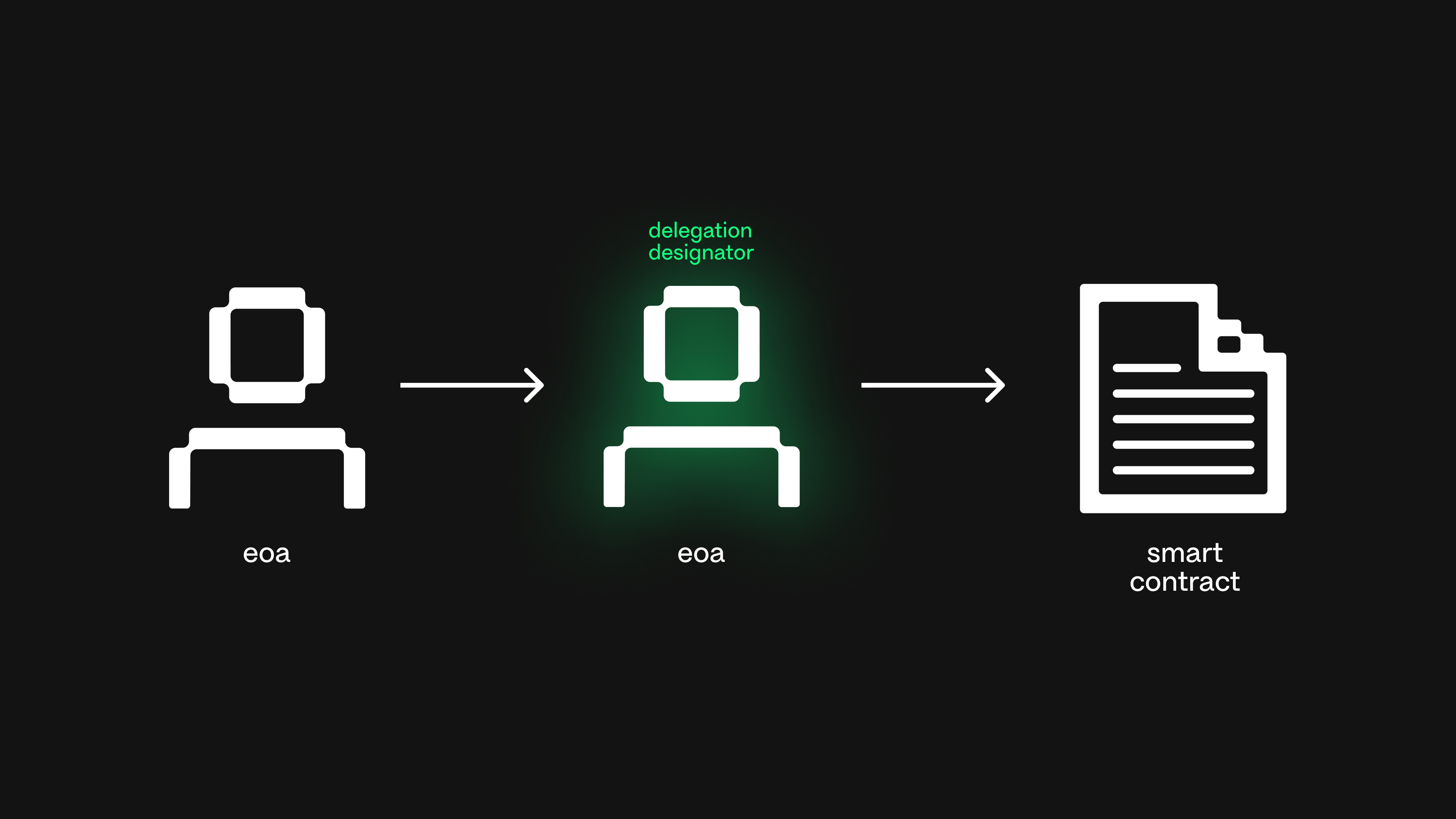
EIP-7702 wallet architecture changes
EIP-7702 redefines wallet architecture by allowing accounts controlled by private keys to delegate code execution to smart contracts. This mechanism, defined in the EIP-7702 specification, introduces a new transaction type that lets users set code in their account without changing their address. The result is a "smart account" that retains the simplicity of a standard key pair while gaining the programmability of a smart contract wallet.
For the 2026 migration, this capability bridges the gap between legacy accounts and account abstraction. Users can now implement features like batched transactions, gas sponsorship, and session keys directly from their primary address. As noted by Openfort, this allows for sophisticated wallet experiences without the friction of migrating to a new contract address [1]. The account remains the same, but its execution environment becomes dynamic.
This shift impacts how smart wallets are built and secured. Developers can now design modular authorization layers that sit above the key holder, enabling features like social recovery or multi-signature logic without requiring the user to deploy a new contract. The EIP-7702 migration 2026 landscape is therefore less about replacing key holders and more about enhancing them with smart contract capabilities on the fly.
ERC-4337 vs EIP-7702 architecture
The EIP-7702 migration 2026 landscape is defined by two competing approaches to account abstraction. ERC-4337 relies on an external bundler model, while EIP-7702 uses a native code-delegation model. Understanding this architectural split is essential for developers and users navigating the upgrade.
ERC-4337 operates as a layer above the Ethereum execution layer. It introduces a new transaction type that bypasses the standard validation logic. A user signs a payload, which is sent to a mempool of "bundlers." These bundlers aggregate the transactions and submit them to the blockchain. This model allows for session keys, paymasters, and gas sponsorship without changing the user's address. However, it introduces latency and complexity, as the user's transaction is not immediately included in a block by the network's default validators.
EIP-7702 takes a different path by modifying the core protocol. It allows an account to set its own code, effectively turning it into a smart contract account on-chain. This native code-delegation means transactions are processed like any other account transaction, requiring no external bundlers. The result is lower latency and simpler UX, as the blockchain itself handles the smart logic. Users can delegate to a smart wallet implementation and use features like batched transactions or social recovery without leaving their original address.
The choice between these models depends on the specific needs of the application. ERC-4337 offers flexibility for complex, off-chain logic and is well-established in the ecosystem. EIP-7702 provides a more streamlined, native experience that aligns with the EIP-7702 migration 2026 goals of simplifying account abstraction. As the ecosystem matures, we expect to see both models coexist, with EIP-7702 likely gaining traction for its simplicity and efficiency.
| Feature | ERC-4337 | EIP-7702 |
|---|---|---|
| Architecture | External Bundler | Native Code Delegation |
| Gas Efficiency | Lower (Bundler Fees) | Higher (Native Execution) |
| User Migration | New Address Required | No Migration Needed |
| Latency | Higher (Pending Pool) | Lower (Block Inclusion) |
| Complexity | High (Bundler Infra) | Medium (Smart Contract) |
Smart contract wallet security choices
The EIP-7702 migration introduces a unique security model that sits between traditional key-controlled accounts and full ERC-4337 smart contract wallets. By allowing accounts to delegate execution to smart contracts, it offers the convenience of account abstraction without requiring users to migrate their addresses. However, this hybrid approach changes the fundamental attack surface of your wallet.
With a standard key-controlled account, security relies entirely on the private key. There is no code to exploit, no proxy upgrade vectors, and no complex logic to audit. Your funds are protected by the cryptographic strength of the key alone. This simplicity is its greatest strength, but also its limitation when it comes to features like session keys or gas sponsorship.
EIP-7702 changes this by binding smart contract code to your account address. While this enables advanced features, it introduces the risk of permanent code binding. If the delegate contract you authorize contains a vulnerability or is compromised, your account is no longer just a key holder—it becomes an active participant in executing malicious logic. The security of your assets now depends on the integrity of that external contract code.
In contrast, ERC-4337 smart contract wallets operate entirely within the contract layer. This separation allows for more granular control over security, such as multi-signature requirements, time locks, and the ability to upgrade the wallet logic without changing the address. However, this complexity increases the attack surface. Smart contracts are prone to bugs, and if the wallet implementation is flawed, the entire account is at risk.
The choice between EIP-7702 and ERC-4337 depends on your risk tolerance. EIP-7702 is ideal for users who want to retain their familiar account address while gaining access to smart wallet features, but who trust the delegate contract provider. ERC-4337 is better suited for users who prioritize full control over their wallet logic and are comfortable managing the complexity of a dedicated smart contract wallet.
| Feature | EIP-7702 (Smart Account) | ERC-4337 (SCW) |
|---|---|---|
| Address Migration | No | Yes |
| Code Upgradeability | Delegate contract only | Full wallet logic |
| Attack Surface | Lower (simpler code) | Higher (complex logic) |
| Key Management | Standard keys | Multi-sig / Social recovery |
Migration paths for dapp developers
The EIP-7702 upgrade in the Pectra hard fork allows accounts to delegate code to smart contracts, effectively turning standard wallets into smart accounts without address changes. For developers, this creates a dual-layer ecosystem where legacy accounts and new smart accounts coexist. Integrating both requires a flexible architecture that detects account capabilities rather than enforcing a single wallet type.
Start by implementing capability detection. Your dapp should query the account to determine if it supports EIP-7702 signatures or relies on traditional ECDSA signatures. Openfort and Thirdweb recommend using a unified interface that abstracts these differences, allowing users to interact with your app regardless of their wallet type. This approach prevents fragmentation and ensures a seamless experience during the transition period.
Gas optimization is a primary driver for adoption. EIP-7702 enables batched transactions and gas sponsorship, which can significantly reduce costs for complex interactions. Developers should test their smart contracts against account-delegated accounts and ERC-4337 paymasters to identify the most cost-effective path for their specific use case. The Ethereum Improvement Proposal documentation provides the technical specifications for handling these new transaction types.
Consider session keys for improved UX. By allowing accounts to delegate limited-time permissions to smart contracts, you can enable features like recurring payments or game subscriptions without requiring users to sign every transaction. This balances security with convenience, addressing one of the main friction points in crypto adoption. As the ecosystem matures, supporting both legacy and smart accounts will be essential for maintaining user base growth.
EIP-7702 adoption FAQ
Is the EIP-7702 activation irreversible?
The activation of EIP-7702 during the Ethereum Pectra upgrade in May 2025 is permanent. While the protocol change cannot be undone, the delegation itself is reversible. An account can revoke its smart contract code by setting its code hash to the zero value (0x0), effectively returning the account to a standard state. This ensures that users retain full control over their account capabilities at any time.
Does EIP-7702 replace ERC-4337?
No, these standards are complementary. EIP-7702 allows existing accounts to execute smart contract logic, while ERC-4337 introduces a new transaction type for dedicated smart contract accounts. By 2026, developers use both to build diverse wallet experiences. EIP-7702 offers a seamless migration path for users who do not want to create new addresses, whereas ERC-4337 provides deeper customization for new smart account architectures.
Do I need to migrate my wallet to use EIP-7702 features?
You do not need to migrate to a new address or a different wallet provider to benefit from EIP-7702. The upgrade allows your current account to delegate execution to a smart contract. This means you can access features like gas sponsorship, session keys, and transaction batching without changing your primary Ethereum address. The underlying account remains the same; only its execution capabilities are expanded.
No comments yet. Be the first to share your thoughts!