
EIP-7702 migration 2026 explained
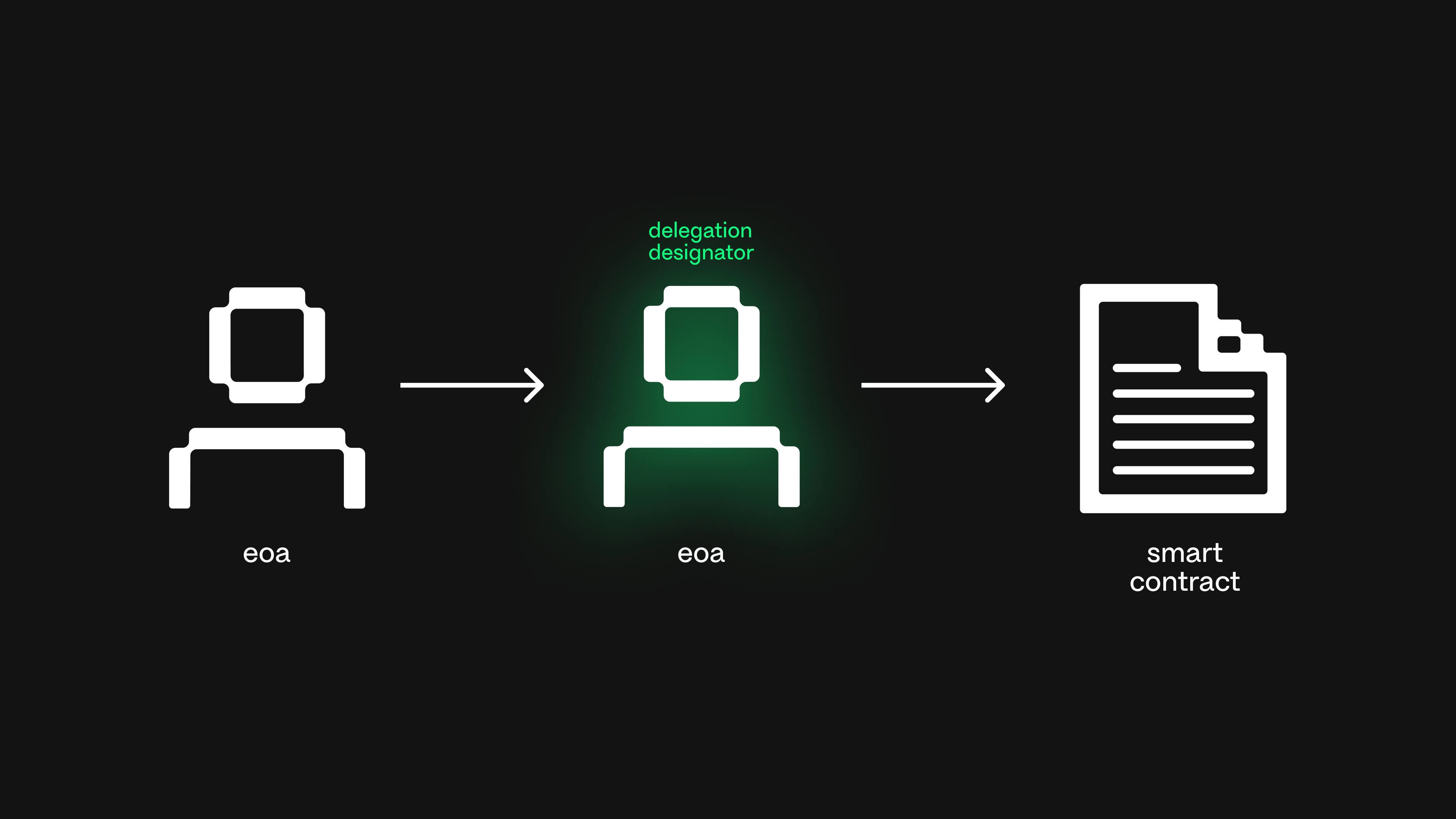
The term "migration" implies a departure, but EIP-7702 is not a migration. It is a delegation mechanism introduced in the Pectra upgrade that allows Externally Owned Accounts (EOAs) to borrow smart contract logic without changing their addresses or moving their funds. You do not need to migrate your existing wallet to a new contract address to access these features. Instead, your EOA gains the ability to execute code on-chain while retaining full control through your private key.
This change transforms the EOA from a simple signature holder into an account that can interact with smart contracts as if it were a smart contract itself. By setting code in their account, EOAs can now trigger complex transactions, such as batched approvals or conditional logic, directly from their standard wallet interface. This bridges the gap between simple key-based ownership and the programmability of Account Abstraction (ERC-4337) without the friction of deploying new contracts.
The core innovation is the ability for an EOA to "set code" temporarily. When you authorize a smart contract to act on your behalf, the EOA effectively borrows that contract's logic for the duration of the transaction. This means you can leverage the security and flexibility of smart contracts while keeping your assets in a familiar, simple EOA structure. The Ethereum Improvement Proposal (EIP-7702) defines this new transaction type, allowing EOAs to delegate execution to existing contract code.
This approach avoids the common pitfalls of account abstraction migrations, such as the need for seed phrase recovery for new contract wallets or the complexity of managing multiple addresses. Your EOA remains your primary address, but it now carries the computational power of a smart contract when needed. This flexibility is particularly useful for users who want advanced features like paymasters or session keys without abandoning the simplicity of standard EOAs.
The market context for this upgrade is anchored by Ethereum's ongoing evolution. Understanding the current state of the network helps contextualize the impact of EIP-7702 on user experience and developer tooling.
Smart EOAs versus contract wallets
The choice between a Smart EOA and a traditional Smart Contract Wallet (SCW) comes down to migration friction versus full architectural control. Smart EOAs, enabled by EIP-7702, allow existing externally owned accounts to delegate execution to a smart contract without moving assets or changing addresses. This offers a near-instant upgrade path for users who want account abstraction features without the complexity of migrating to a new wallet address.
Traditional Smart Contract Wallets, often built on ERC-4337 standards, live entirely on-chain. They offer superior security features like social recovery and session keys from day one but require users to manage a new address and fund a separate contract. The decision largely depends on whether you prioritize seamless legacy integration or maximum customizable security.
Comparison of Architecture and Security
The following table breaks down the technical differences between the two models to help you evaluate the trade-offs.
| Feature | Smart EOA (EIP-7702) | Smart Contract Wallet | Traditional EOA |
|---|---|---|---|
| Address Change | No | Yes | No |
| Asset Migration | No | Yes | N/A |
| Social Recovery | Via Delegation | Native | None |
| Gas Sponsorship | Supported | Supported | None |
| Code Complexity | Medium | High | Low |
When to Choose Which
Opt for a Smart EOA if you are a long-term holder of assets in a standard wallet and want to adopt modern features like paymasters or session keys without the risk and hassle of moving funds to a new contract address. This approach minimizes friction and preserves your existing transaction history and address reputation.
Choose a Smart Contract Wallet if you are building a new project, require advanced security features like multi-sig or social recovery from the outset, or need deep customization of the user experience. While it demands an initial migration, the contract wallet offers a more robust and flexible foundation for complex dApp interactions and institutional-grade security requirements.
Adoption drivers in 2026
The shift toward EIP-7702 in 2026 is driven by a simple reality: users want smart wallet features without the friction of migrating to new addresses. This upgrade allows existing externally owned accounts (EOAs) to temporarily adopt smart contract behavior, bridging the gap between traditional wallets and account abstraction. The primary appeal lies in gas optimization and a seamless user experience that eliminates the need for complex address transitions.
Gas Optimization
For developers, the ability to delegate transaction signing to smart contracts without deploying new wallet addresses significantly reduces overhead. EIP-7702 enables features like batched transactions and paymasters to be utilized by legacy EOAs, lowering the effective cost for end-users. This efficiency is critical as Ethereum transaction volumes grow, making gas savings a tangible benefit rather than a theoretical one.
Seamless UX
The user experience benefit is equally compelling. Users can access features like social recovery and session keys without abandoning their current wallet addresses. This continuity reduces confusion and support costs, as users do not need to learn new interfaces or manage multiple addresses. The transition is invisible to the user, making advanced security features accessible to a broader audience.
Risks and trade-offs
Use this section to make the EIP-7702 migration decision easier to compare in real life, not just on paper. Start with the reader's actual constraint, then separate must-have requirements from details that are merely nice to have. A practical choice should survive normal use, maintenance, timing, and budget. If a recommendation only works in an ideal situation, call that out plainly and give the reader a fallback path.
The simplest way to use this section is to write down the must-have criteria first, then compare each option against those criteria before weighing nice-to-have features.
Choosing the right path
Selecting the optimal account model for 2026 depends on your specific balance of security, gas efficiency, and user experience requirements. EIP-7702 introduces a middle ground between legacy EOAs and full contract wallets, allowing existing accounts to delegate to smart contracts without migrating assets or changing addresses [src-serp-1]. This flexibility means you can upgrade functionality incrementally rather than starting from scratch.
To determine the best fit, evaluate your needs against these three paths:
Legacy EOAs remain the default for users who prioritize simplicity and maximum compatibility. If you only interact with basic transfers and standard dApps, the overhead of smart contract logic offers no tangible benefit. Your transactions are predictable, and your setup requires no additional configuration or understanding of contract code.
Smart EOAs allow you to retain your existing address while gaining access to advanced features like session keys, social recovery, and batched transactions. This approach is ideal for active users who want improved UX and security without the friction of migrating funds to a new contract wallet. It effectively modernizes your current wallet infrastructure in place.
Full contract wallets are necessary for complex use cases requiring programmable logic, multi-signature requirements, or strict custody policies. While they offer the highest degree of customization and security, they require a one-time asset migration and a learning curve for users unfamiliar with smart contract interactions. This path is best for institutions or power users with specific operational needs.
For most individual users, the Smart EOA path provides the best balance of modern features and ease of use. It eliminates the risk of migration errors while unlocking the benefits of programmable accounts. As Ethereum’s ecosystem evolves, this hybrid approach is becoming the standard for those seeking to future-proof their digital assets without abandoning their current identity on-chain.
No comments yet. Be the first to share your thoughts!