
EIP-7702 Migration 2026: Why Legacy Smart Contracts Are Phasing Out
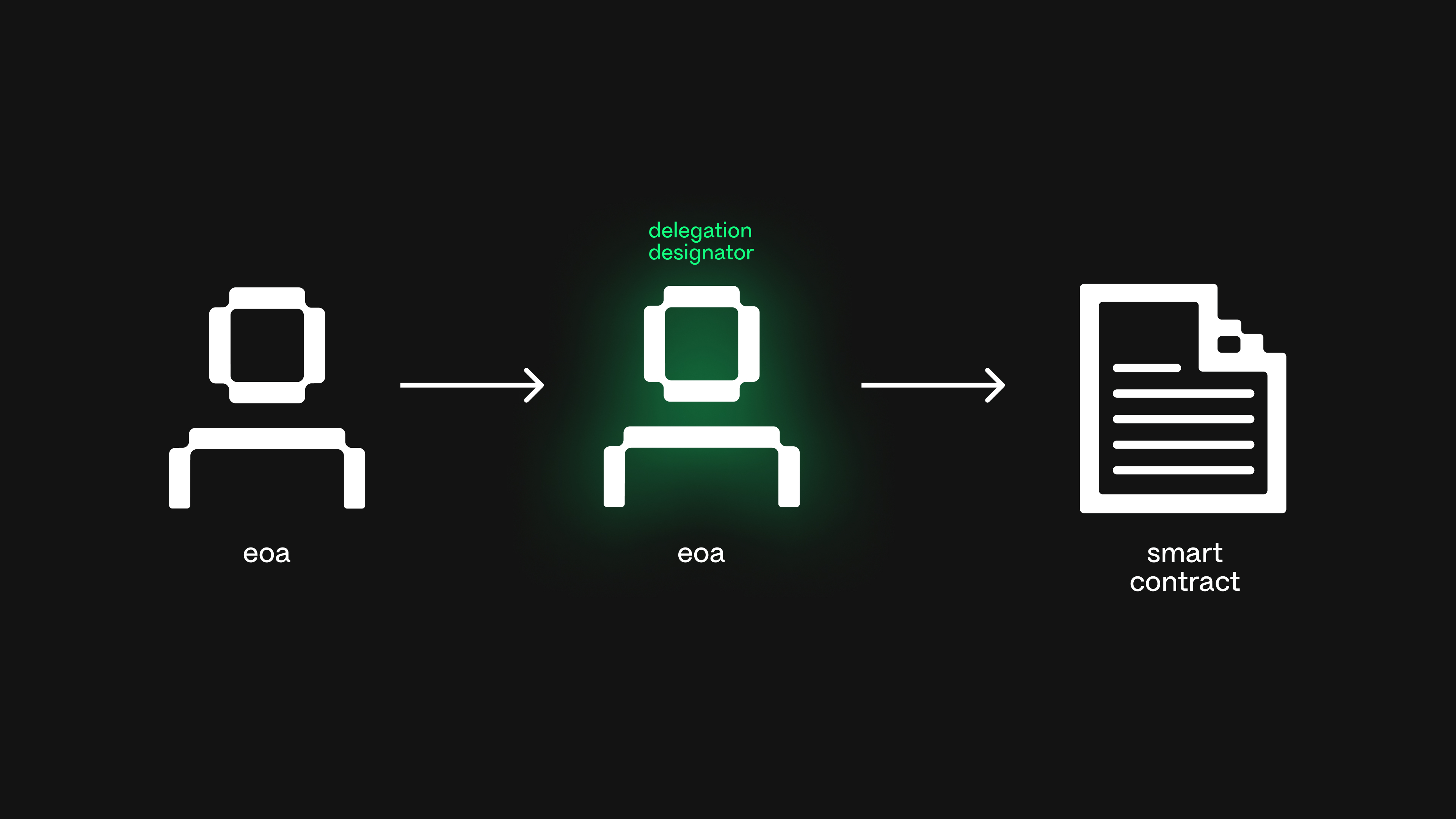
The 2026 EIP-7702 migration marks the end of the Externally Owned Account (EOA) era as the default standard. This upgrade allows EOAs to delegate execution to smart contracts without moving assets or changing addresses. For developers, this means legacy smart contracts that once required complex proxy patterns or separate wallet infrastructure can now be accessed directly through standard user keys.
The shift is not about forcing every user to become a smart contract wallet. It is about letting users retain their familiar private key experience while gaining programmable features like session keys, gas abstraction, and batched transactions. This hybrid approach reduces friction for onboarding while unlocking the flexibility that institutional and advanced users have needed for years.
Comparison: EOA vs. EIP-7702 Delegated Accounts
| Feature | Legacy EOA | EIP-7702 Delegated EOA |
|---|---|---|
| Code Execution | None | Delegates to smart contract logic |
| Asset Storage | Direct balance | Direct balance (no transfer needed) |
| Recovery Options | None | Social recovery, multi-sig logic |
| Gas Payment | ETH only | ERC-20, sponsorship, or session keys |
| Complexity | Low | Moderate (requires contract setup) |
Tradeoffs by Use Case
For consumer apps, EIP-7702 simplifies UX by enabling gasless transactions and social recovery without changing the user's address. Institutional users benefit from programmable custody rules and automated compliance checks embedded in the delegation logic. However, developers must manage the initial setup of the delegation code and ensure the smart contract logic is secure, as a bug in the delegated code can compromise the user's entire balance.
Decision Guide
Choose EIP-7702 if your application requires programmable transaction logic, gas sponsorship, or advanced security features like multi-signature approvals. Stick with legacy EOAs only if you are building simple, low-interaction tools where the overhead of setting up delegation outweighs the benefits. For most DeFi, NFT, and enterprise applications in 2026, EIP-7702 is the necessary foundation for a seamless user experience.
Eip-7702 migration 2026 choices that change the plan
Evaluating the shift to EIP-7702 requires weighing immediate operational convenience against long-term architectural shifts. The proposal allows Externally Owned Accounts (EOAs) to delegate authority to smart contracts without moving funds or changing addresses. This distinction defines the primary tradeoff: flexibility versus permanence.
Operational Simplicity vs. Contract Risk
The most compelling reason to adopt EIP-7702 is the reduction in friction. Users can enable features like multi-signature logic or gas sponsorship without leaving their familiar wallet address. This avoids the complex migration processes required by full account abstraction, where funds must be transferred to new contract addresses.
However, this convenience introduces smart contract risk to accounts that previously relied solely on private key security. If the delegated contract contains a vulnerability or is compromised, the EOA’s assets are at risk. Traditional EOAs offer a simpler, immutable security model that does not depend on external code execution.
Gas Efficiency vs. Implementation Complexity
EIP-7702 optimizes for gas efficiency by allowing EOAs to reuse existing contract logic. This is particularly valuable for Layer 2 solutions and high-frequency trading applications where transaction costs are a primary concern. The ability to batch operations or utilize paymasters can significantly lower the cost per transaction for end users.
Conversely, integrating EIP-7702 adds complexity for developers and wallet providers. Implementations must handle signature validation, code delegation, and state management for both EOAs and contracts. This increased technical debt can delay adoption and introduce bugs during the transition period, potentially offsetting the gas savings for smaller-scale applications.
Short-Term Gains vs. Long-Term Standardization
Adopting EIP-7702 now provides a bridge to account abstraction, allowing projects to test advanced features without committing to a full migration. This phased approach lets teams iterate on user experience improvements while maintaining compatibility with existing infrastructure.
Yet, relying on EIP-7702 may delay the adoption of more robust, native account abstraction standards. As the Ethereum ecosystem matures, full account abstraction may become the default, rendering EIP-7702 a transitional step rather than a final solution. Projects must decide whether the immediate benefits justify the potential need for future refactoring.
| Factor | EIP-7702 | Full Account Abstraction | Legacy EOA |
|---|---|---|---|
| Migration Required | No | Yes | N/A |
| Smart Contract Risk | Medium | High | None |
| Gas Efficiency | High | Medium | Low |
| Implementation Complexity | Medium | High | Low |
| Future Proofing | Transitional | Permanent | Limited |
Choose the next step for your migration
EIP-7702 allows Externally Owned Accounts (EOAs) to delegate signing authority to smart contracts without moving assets or changing addresses. This creates a hybrid model that blends the simplicity of legacy accounts with the programmability of account abstraction. For projects relying on legacy contracts, this shift offers a path to modernize without the friction of full account migration.
To decide whether to adopt EIP-7702 or stick with legacy patterns, evaluate your current infrastructure against these three criteria. The goal is to balance security, complexity, and user experience.
Identify which EOAs hold significant value or require complex multi-signature logic. Legacy contracts often rely on simple key management, which is vulnerable to single points of failure. If your users need session keys, social recovery, or batched transactions, EIP-7702 provides a direct upgrade path for these EOAs to act like smart accounts.
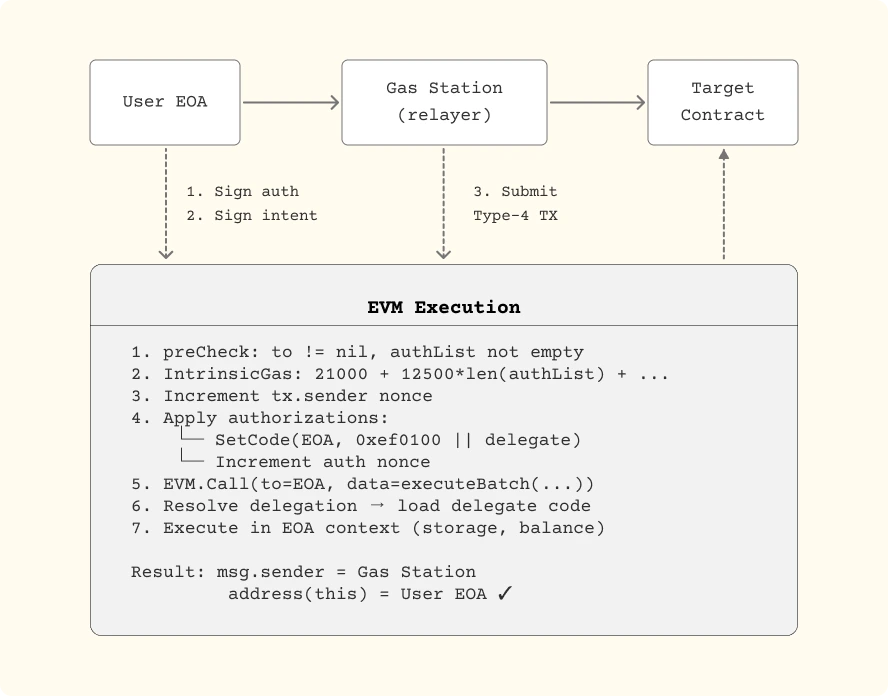
Legacy contracts avoid deployment costs but may incur higher per-transaction gas fees due to less optimized code. EIP-7702 introduces an initial setup cost to store the delegation code on-chain. For high-frequency trading or frequent micro-transactions, the long-term gas efficiency of a smart contract wallet often outweighs the one-time setup fee. Calculate your projected transaction volume to determine the break-even point.
If your smart contracts require frequent upgrades or modular features, EIP-7702 enables you to update the delegated logic without touching the user's address. Legacy systems often require complex proxy patterns or full address migrations to upgrade security. With EIP-7702, you can patch vulnerabilities in the delegation code while preserving user funds and history, reducing the risk of migration-related errors.
The choice between legacy and EIP-7702 ultimately depends on your users' behavior. For low-frequency, high-value transactions, the simplicity of legacy EOAs may still suffice. However, for platforms requiring advanced features like session management or batched operations, EIP-7702 offers a robust, non-disruptive upgrade path.
EIP-7702 Migration: The Weak Options You Should Avoid
The shift to EIP-7702 allows Externally Owned Accounts (EOAs) to delegate to smart contracts without moving assets. While this offers a migration path, several common approaches create security risks or operational friction. Identifying these weak options is essential for a safe transition in 2026.
1. Relying on Unaudited Delegation Code
Many tutorials suggest writing custom delegation logic. This is a high-risk mistake. EIP-7702 requires specific code signatures to be valid. Using unverified code exposes your EOA to permanent loss of funds if the delegation logic fails. Always use official, audited libraries from reputable providers like Safe or Openfort. Do not attempt to roll out your own delegation contracts for standard EOA upgrades.
2. Ignoring the Re-delegation Friction
A common misconception is that EIP-7702 is a one-time setup. In reality, every transaction that triggers the delegation check requires a signature. If your workflow involves high-frequency trading or automated payments, this can lead to latency issues or failed transactions if the signature verification fails. For high-volume use cases, consider migrating to a full smart contract wallet instead of relying on EOA delegation.
3. Assuming Full Account Abstraction
EIP-7702 is not full account abstraction. It does not provide session keys, social recovery, or gas sponsorship out of the box. Projects marketing EIP-7702 as a complete wallet replacement are misleading users. If you need advanced features like multi-sig or recovery, EIP-7702 is an incomplete solution. Use it for simple delegation, but plan for a full wallet migration if your security needs are complex.
The decision is clear: EIP-7702 is a useful intermediate step, but it is not a universal fix. Avoid weak implementations by sticking to official standards and recognizing the limitations of EOA delegation. For complex needs, full smart contract wallets remain the superior choice.
Eip-7702 migration 2026: what to check next
Do I need to migrate my wallet address to use EIP-7702?
No. The core design of EIP-7702 explicitly avoids requiring users to migrate assets or change addresses. Unlike full account migrations, you can delegate your existing Externally Owned Account (EOA) to a smart contract without moving funds. This preserves your address history and simplifies the transition for legacy wallets.
How does EIP-7702 differ from full Account Abstraction?
EIP-7702 is a stepping stone rather than a complete overhaul. It allows EOAs to have code and storage, bridging the gap between standard accounts and smart accounts. However, it does not offer a direct migration path to full Account Abstraction. It serves as a forward-compatible foundation that enhances UX without demanding a total infrastructure rebuild.
Will my existing smart contracts break after the Pectra upgrade?
The upgrade is designed to be compatible with existing systems. While legacy smart contracts may phase out as developers adopt EIP-7702 benefits, there is no forced deprecation. You can continue using standard EOAs, but delegating to smart contracts unlocks features like session keys and gas abstraction that legacy systems lack.
Is EIP-7702 secure for high-value holdings?
Security depends on the delegated contract's code. Since you are setting code in your EOA, the safety of your assets relies on the audit quality of the smart contract you delegate to. Always review the contract source before signing the delegation transaction. The protocol itself is secure, but user error in contract selection remains a risk.
No comments yet. Be the first to share your thoughts!